Cellar Tours Blog

Luxury Food & Wine Tours in France, Ireland, Italy, Portugal and Spain

Archive for April, 2010

Love Italian Cooking? Want to dedicate yourself to making Italian recipes from scratch, and need a list of the essential kitchen “musts” for gadgets and ingredients?

Here is our essential list, and readers: please send in your tips and advice so we can make the list even more complete!

Lavazza

THE ITALIAN PANTRY- CHECK LIST

1. Fresh herbs: basil, parsley, rosemary, sage, oregano, bay leaves, marjoram

2. Fruit and veg in season like:  fruit and veg in season, like garlic, onion, celery, carrot, Peperoncino (small chili peppers) lemons-  ALL YEAR ROUND; eggplant (aubergine), red peppers, zucchini (courgette), tomatoes (S. Marzano) figs- SUMMER ;  fennel,peas – SPRING;  radicchio, rocket,  spinach, butternut squash, endives, orange- AUTUMN AND WINTER

3 Cherished Italian food brands: Lavazza coffee (you can buy the beans and grind yourself), Illy (coffee), Bei & Nanini (coffee), Gerardo di Nola (pasta), Annalisa (canned tomatoes), Menabrea (beer), Baladin (beer), Mutti (passata), San Pellegrino (mineral water) , Nutella, Cedroni (sauces and preserves), Brezzo specialty foods, Prunotto (honey and jams).

4. Condiments: Extra virgin olive oil, Olive Oil, Truffle olive oil, Balsamic vinegar (aceto balsamico tradizionale di modena), butter (yes, butter!), black pepper mill, course sea salt, fine salt, Mostarda, etc. Here are some original and fabulous condiments from the Accademia Barrilla gourmet shop.

5. Small gadgets: mezzaluna cutter, scolapasta (pasta strainer), Ravioli wheel, pizza stone, pestle and mortar (stone or wood), mandolin, mozzarella slicer, Ravioli tin, Bodum Parma cheese grater, garlic press, pasta serving spoon, parmesan knife, peppermill.

6. Bigger gadgets: tirasfoglia (pasta machine), Espresso maker, De ‘ Longhi coffee maker, pizza oven.

7. Other Food ingredients to have in the pantry: canned tomatoes , passata (Mutti), anchovies, Colatura di alici, Capers from Salina, Cucunci from Salina, olives, chicken bouillon, canned cannellini beans, canned garbanzos (chickpeas), lentils, Pancetta or guanciale, Prosciutto di Parma, Bresaola, Salami, Italian sausages, cornmeal (farina gialla), Italian ‘OO’ Flour, Nutella, canned tuna, polenta, walnuts, hazelnuts, pine nuts, saffron.

8. Italian cheeses for cooking: Parmigiano, Pecorino, Mascarpone, Gorgonzola, Mozzarella, Ricotta, Taleggio, etc. More Italian cheese info here.

9. Pasta: Spaghetti, Penne, Rigatoni, Tagliatelle, Ditalini, etc- see more pasta here;  and good brands include Setaro, Garofalo, Pastai Gragnanesi, Senatore Cappelli, Martelli, etc. EASY TO FIND- Barilla  and De Cecco

10: Rice: Arborio and Superfino Carnaroli

11. Cooking wines: Dry Marsala, Moscato

12. Drinks Cellar: White wines (Friuli super whites, Falanghina from Campania, Gavi from Piedmont), Red wines (recommended wine estates here), Campari, Vermouth, Amaretto, Limoncello (keep in the freezer), etc. More on Italian spirits and liqueurs here.

13. Some Italian cookbooks we love: The Essentials of Classic Italian Cooking by Marcella Hazan, La Cucina: The Traditional Home Cooking of Italy by Italian Academy of Cuisine, Gennaro’s Italian Home Cooking: Quick and Simple Meals to Feed Family and Friends  by Gennaro Contaldo, Carluccio’s Complete Italian Food by Antonio Carluccio and Priscilla Carluccio.

14. Italian Culinary Tours: learn how to cook with the locals in Tuscany, Umbria, Lake Garda, Portofino, Modena, Milan, Venice and a Grand Gastronomic Tour of Italy´s Culinary Treasures.

Other useful links:

Alessi kitchenware

Mario Batali´s Italy

Italian Cooking Made Easy

A-Z Italian food Glossary

The Italian Kitchen

30 of 300: A short glossary of Italian pasta A-Z

Posted by gen On April - 16 - 2010

30 of 300: A short glossary of Italian pasta

by Martina Hemm

Tagliatelle Nest

Though pasta has only been present in European kitchens for the past 200 years, Italy has long nourished an ancient noodle culture.

Arab merchants were the first to carry itria, the predecessor of modern Italian pasta, from the far away Asian continent to the shores of Sicily. Pasta production flourished as early as 1154 thanks to the island’s traditional crop of durum wheat that went into the itria Sicilians produced and exported to all corners of the country.

Italy did not just specialize in production—nowhere in the world is the consumption of pasta higher. Compared to the 9kg consumed annually per person in the US, Italians eat an incredible 26kg of pasta a year. Typically eaten only with the aid of a fork, the pasta is cooked al dente- with a bit of a bite- allowing for better twirling.

Over 300 varieties of pasta certainly attest to Italians’ wit and love of their kitchen staple, but also undoubtedly make Italy today’s Mecca for pasta lovers the world over.

1.    Acini di pepe “peppercorns”: This bead-sized pasta is commonly used in soups and broths.

2.    Anellini “small rings”: These petite pasta rings are used for soups.

3.    Agnolotti “priest’s caps”: The shape of these pillows of pasta changes depending on region and filling. Try agnolotti filled with hearty pumpkin with a browned butter and sage, for a pure and satisfying primo piatto.

Agnolotti

4.    Campanelle “bells”: The small ruffled pasta is rolled into itself to shape a small funnel—perfect for capturing sauce.

5.    Cannelloni “large reeds”: This pasta is traditionally stuffed with a savory filling rolled up into tube shapes and baked in the oven with layers of béchamel and meat sauce.

6.    Capellini “fine hair”: Also known as angel hair pasta in English, this pasta is similar to spaghetti but much finer. It pairs nicely with juicy smooth sauces, such as Pomodoro.

7.    Cavatelli: Made by wrapping small circular pieces of pasta around a tube or finger to shape loose hollow shells, cavatelli hold thick meat sauces well.

8.    Conchiglie “shells”: Conchiglie are smaller shells of pasta compared to the larger conchiglioni, which are stuffed and baked. The smaller shells are nicely served with cream based sauces.

9.    Farfalle “butterflies”: Called bow tie pasta in English, farfalle also pair well with cream sauces. For a fresh summer pasta dish, try farfalle with cream, salmon, crispy snowpeas, and fresh parsley.

10.    Fetuccine “little ribbons”: Americans adapted the pronunciation of this Roman pasta to fetuccini.

11.    Fusili “little spindles”: To make fusili, the pasta band turned into a corkscrew shape that is excellent for catching sauce.

Whole Wheat Fusili

12.    Gnocchi: These Italian dumplings are made with a mixture of cooked potatoes and flour. Sometimes the dough is flavored and colored with natural ingredients such as spinach or saffron; it is then either rolled into thick strands and cut into small bites or shaped into little round or oval balls. Gnocchi can be served boiled, or then baked, or sautéed in a pan with butter and sage.

13.    Lasagna: The name for lasagna comes from the Roman’s word for “pot” (lasanum) in which this pasta dish is traditionally baked. The flat lasagna sheets are alternatively layered between tomato, meat, and cheese sauce, before being baked under a coating of grated cheese. However, vegetable lasagna and “white” lasagna dishes have also become popular.

14.    Linguine “little tongues”: Commonly described as flat spaghetti, linguine pair nicely with seafood and oil based pasta dishes.

15.    Maccheroni/Macaroni: The Italian term maccheroni can generally refer to all semolina and water based, dried pasta that is short in length and hollow, such as: penne or rigatoni. However, in Central Southern Italy maccheroni covers all pasta types, including spaghetti. The most common and popular maccheroni in the U.S are elbow shaped maccheroni, known to Americans as macaroni.

16.    Orecchiette “little ears”: These little indented circles of pasta are native of Puglia. The normal sized orechiette go well with vegetable based dishes, like the traditional orrechiette cime di rapa, which dishes up this pasta with turnip tops, also known as broccoli rabe in the U.S.

17.    Orzo “barley”: Though orzo means barley in Italian it has the appearance and shape of a grain of rice, and can also be used in similar respects: in side dishes or soups. The name of this grain-like pasta can change with producer, giving it the name “melon seed” by some.

18.    Paglia e Fieno “Straw and Hay”: A quirky spiel on the pasta’s name, where the yellow egg noodle tagliatelle represent the straw and the spinach colored tagliatelle the hay. Share the joke with your loved ones over a bowl of paglia e fieno with tomato sauce and freshly grated parmigiano.

19.    Papardelle: This broadly cut flat egg noodle from Tuscany is a dream accompanied with a hefty wild boar ragù, which will lead you to eat it as joyfully and greedily as the Italian verb pappare implies.

20.    Penne “quills”: Clearly a popular pasta shape, penne are small tubes of pasta whose tips have been cut at a diagonal to shape the quill of a pen.

21.    Penne rigate: Penne rigate is penne whose sides are covered in ridges to better catch sauces in traditional dishes like the spicy penne all’ arrabbiata.

22.    Ravioli: Traditional ravioli are square cuts of pasta that is filled with everything from seafood to cheese. Try lobster filled ravioli in a saffron butter sauce.

23.    Rigatoni: Similar to penne, rigatoni is a medium sized hollow pasta, the difference is that rigatoni are slightly larger, ridged, have a bit of a curve, and are cut straight across and not at a diagonal.

24.    Spaghetti “length of cord”: The worst word associated with pasta worldwide, spaghetti is perhaps the oldest cut of pasta known. The diameter of the round, long, slim spaghetti varies depending on region. No matter what size spaghetti alla carbonara, silky, eggy, cheesy, with specks of pancetta, is comfort food everywhere.

25.    Tagliatelle: This ribbon pasta is a touch thicker than fettucine, which makes it an ideal pasta to go along with gamey meat sauces.

Tagliatelle

26.    Tortellini: Supposedly inspired by the spellbinding shape of Venus’s navel, these small triangular pockets of pasta are typically filled with meat or cheese and then folded into pillows as beautiful as the goddess herself.

27.    Tortelloni: This version of pasta is the larger size of tortellini.

28.    Tortiglioni: Tortiglioni are similar to rigatoni, except narrower with ridges that curve around the pasta. Often they are used in oven-baked dishes.

29.    Vermicelli “little worms”: Very similar to spaghetti, this pasta is slimmer and very long. Vermicelli noodles are also prevalent in Asia, where they are produced with rice flour.

30.    Ziti “bridegrooms”: Traditionally from southern Italy, this long, narrow, pipe-like pasta is broken into pieces before it is cooked.  In the region of Apulia, ziti was prepared for weddings, which is why in the local dialect ziti also means “newlyweds”.

Bordeaux En Primeur Tasting, Futures- 2009 Vintage

Posted by gen On April - 12 - 2010

Bordeaux En Primeur Tasting,  Futures- 2009 Vintage

By Lindsay Morriss, Bordeaux correspondent

Bordeaux Futures 2009 Vintage

One of the world’s most renowned wine tastings is the Bordeaux Primeurs. This event is not open to the general public, but organized specifically for the wine trade as a venue to gather professionals from around the world to taste the most recent vintage. Each spring, thousands of journalists, critics, importers, sommeliers, and other influential personalities descend upon Bordeaux to sample wines from the most recent vintage.

These wines represent some of Bordeaux’s most prestigious labels, such as Lafite, Margaux, Petrus, Cheval Blanc and d’Yquem. The objective of tasting these wines is to get an overall feel for the quality of the most recent vintage, which will determine the price at which these wines should be released to the market. Once pricing has been set, they will be sold in the form of futures―otherwise referred to as selling the wine en primeur.

Bordeaux Futures 2009

Bordeaux wine purchased as futures is made from grapes harvested the previous fall. Those who purchase wine futures do so to secure supply for highly demanded wines, but also because it is anticipated that the wine’s price will increase by the time it is bottled and released to the market (generally 2-3 years post-harvest).

The wines tasted at the annual Primeurs are barrel samples of very youthful wine that is meant to age in barrel for approximately two more years, and then for many more years in bottle. Therefore, these wines are unfinished and generally unpleasant to taste. When evaluating unfinished wines, you are not looking for appealing flavor, but rather for characteristics indicating that the wine is balanced and has good aging ability such as structure, complexity, high acidity, and a long finish.

Primeurs 2009

During the last week of March into the beginning of April 2010, nearly 6,000 professionals traveled to Bordeaux to participate in Primeurs 2009. The Union des Grands Crus de Bordeaux (a club representing 132 of Bordeaux’s premier chateaux that stages events around the world to promote the region’s fine wine offering) organized a series of tastings grouped by appellation; whereas, the most prestigious Bordeaux chateaux held their own private tastings at the estate, which could be attended by appointment only.

Bordeaux Futures 2009

I had the opportunity to participate in these tastings because I am currently interning with the Bordeaux-based wine merchant, Millésima S.A.  Together with several members from the Marketing team, we attended all UGC tastings to cover the entire Bordeaux region. Our day began in Médoc on Bordeaux’s Left Bank, where we tasted all Médoc appellations, as well as Bordeaux’s sweet wines from Sauternes and Barsac. The following day we visited Graves/Pessac-Léognan, then traveled to St. Emilion and Pomerol on the Right Bank.

UGC Program: Primeurs 2009

Location                                           Appellation

Day 1

Château Batailley                       St. Julien, Pauillac & St. Estèphe
Château Desmirail                     Margaux
Château Cantemerle                 Médoc, Haut Médoc, Moulis & Listrac
Château Dauzac                          Sauternes & Barsac

Day 2

Château Smith Haut Lafitte   Graves & Pessac-Léognan
Château Beau Séjour Bécot      St. Emilion Grand Cru
Château Gazin                             Pomerol

Bordeaux Futures 2009

Overall, the 2009 Bordeaux vintage was a bit exceptional in that these wines were marked with intense fruit flavors and honestly, were not at all unpleasant to sample! This was the result of a long growing season with almost four months (July through October) of ideal weather, namely warm, dry days and cool nights. As a result, sugar levels were high and the berries were small (with less water), but contained very concentrated juice.

Bordeaux Futures 2009

There have been many claims that 2009 is among Bordeaux’s best vintages in recent memory. After reading the opinions of well-known wine journalists, as well as developing my own impressions from having sampled many of these wines, I would conclude that 2009 is overall a very good vintage featuring some outstanding wines; though, at the same time has also produced wines that are over-extracted or a bit green from not having been harvested at the right moment. In general, the long growing season favored wines with blends made from predominately Cabernet Sauvignon; whereas, the Merlot-based blends weren’t always as well balanced. However, that is not to say every wine will fit this mold.

Bordeaux Futures 2009

For anyone looking to purchase wine futures, I recommend reading several opinions on the same wine, as well as identifying a trusted merchant who can offer professional advice regarding which wines feature the best aging characteristics. As with buying futures of any traditional financial instrument, there is always a risk that the price will decrease. However, a well-made wine (especially from an acclaimed vintage) will have superb aging ability, leading the wine to appreciate in value over time.

Bordeaux Futures 2009

Parlez-Vous Fromage??

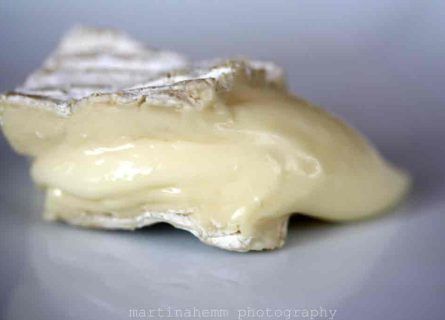
French Cheese- Brie de Meaux melting

by Martina Hemm

Navigating your way through a mélange of French cheeses can be a bit daunting and leave you speechless, not in the least because there are over 1000 varieties to choose from. But before you walk away from your local cheese monger overwhelmed by the sheer magnitude of creamy, milky, and smelly goodness that is French cheese, let me give you just a few names you would not want missing from your vocabulary, or table. After all, as the wise and clearly French lawyer and gourmet Jean Anthelme Brillat-Savarin once said, “A meal without cheese is like a beautiful woman with a missing eye”.

Most of the following cheeses have been designated with the Appellation d’Origine Contrôlée or AOC, which controls the production and origins of the cheeses affiliated with this status.

1.  Roquefort – AOC 1925

The oldest and maybe most famous cheese of France, Roquefort received its official designation of origin in 1925, but its patent dates back to 14th century.  This sheep’s milk cheese derives its signature taste and trademark green-blue veins from the mold that it forms while aging in the natural caves of Roquefort-sur-Soulzon. When it has reached its peak Roquefort will appear to melt— the semi-soft cheese becoming even softer in its prime. The French savor its strong, pungent flavor spread thickly on a slice of buttered bread. Now a bottle of Blanc de Blanc and you have yourself a meal.

2.  Bleu, de Bleu de Auvernia, de Bresse, de Sassenage, Bassignac…

As with Roquefort, blue and green veins of mold run through the semi-soft white cheese, marking it as a Bleu and lending a signature taste. However, since these cheeses are not aged in the caves of Roquefort, Bleu cheese neither has the same name nor flavor as a Roquefort, deriving their names from the individual villages they come from instead. Although Bleu cheese is usually made from cow’s milk, you can also find Bleu de Chevre, made from goat’s milk, or Bleu de Brebis, produced with sheep’s milk.

French Cheese Bleu d'Causses

3.   Camembert de Normandie – AOC 1983

Recreated throughout the world, the true Camembert traces its origin to 11 century Normandie, but only officially became known as Camembert in the 18th century. To best conserve the velvety soft cow cheese, it is sold in small wooden boxes. Keep an eye open for Camembert de Normandie; this is a ladle-molded Camembert that is usually made with unpasteurized milk, which helps the true, mild and creamy milk flavor of this cheese unfold.

4.  Brie de Meaux – AOC 1980; Brie de Melun – AOC 1990

Proclaimed “the king of all cheeses” during the Congress of Vienna in 1968, this soft cow’s milk cheese has proven its popularity as a mainstay on menus around the world. In its prime the white rind of fungus should smell like a fresh, damp forest in the springtime, while the cheese itself must be soft and yellow. The cheese must be yielding through and through, if you cannot easily glide through the cheese with a cheese or even butter knife, it is not yet ripe. Be wary of Brie that has a slight smell of ammonia, it is probably past its prime.

5. Reblochon- AOC 1958

The story as to why this softer than Brie cheese is made with the milk of three different breeds of cow attests to the ingenuity of Savoie farmers. In an effort to evade paying their landowners high taxes on milk, 13th century farmers would only partially milk their cows, only to return to milking once the inspectors had left. This act of re-blochaient, or re-milking, is an integral part of the cheese’s production, as it offers a creamier milk that affords Reblochon its extraordinary consistency. A true Reblochon is produced from the second milking of Abondance, Tarine, and Montbéliarde cows. To facilitate the aging process, Reblochon is washed in whey and turned every two days as it rests in caves or cellars. The nutty, musky, and slightly herbal taste of the cheese meshes well with a fruity Beaujolais-Villages. Be sure to try Rebolochon when it is just ripe, any longer and its flavor turns bitter.

6.  Munster-Géromé – AOC 1969

Munster’s origins lay behind the walls of Benedictine monasteries situated in the Munster valley.  To escape the dull drum of their vegetarian diet, the monks invented this cow’s milk cheese, best enjoyed by breaking through its soft rind and scooping out its gooey center with breadsticks.  During its maturation the cheese is continuously turned and washed with water from the Vosges, which develops the cheese’s signature red, furrowed rind. Follow in the monk’s footsteps and savor creamy threads of Munster with a glass of chilled Riesling.

French Cheese Munster

7. Époisses – 2004

Yet another spoonable French cheese, Epoisses is for the lovers of a truly smelly fromage. This cow’s milk cheese originated during the 18th century in the midst of Burgundy at the Abbey de Citeaux. The cows that produce the milk for a true Epoisses graze for three months in the meadows of Burgundy, after which their milk is coagulated, washed with brine, and finished with white wine or brandy. The dark orange rind hides a silky interior rich with a salty and pungent flavor, which is great with sweet bread like a buttery brioche or deep-flavored walnut bread.

8.  Comte

From the region of Franche-Comte, this cow’s milk cheese melts in your mouth dissolving into a nutty bite that pairs beautifully with a dry white wine. The texture is firm but soft to eat, and the buttery yellow color of the cheese contrasts beautifully with its dark rind.

9. Chevre
Chevre, meaning ‘goat’ in French, refers to all cheeses made of goat’s milk. Chevres are exclusively made from goat’s milk and may be enveloped in herbs or leaves of their region, bathed in white wine, or coated in vegetable ash. The texture ranges from fresh, soft, semi-soft, and cured.

10.  Crottin de Chavignol – AOC 1976

One of the most famous Chevres, Crottin de Chavignol is produced in the region of Berry and derives its name from the town of Chavignol where it was first crafted. The goat’s milk cheese is refined in a bath of Sancerre wine, which is also cultivated in the region.

11. Tome des Bauges – AOC 2002;  Tomme de Savoie

Tommes are traditionally named after the towns in which they are produced and generally low in fat since they are made from the skimmed milk left over after making butter. We differentiate between Tommes made with milk from the summer and those composed of winter milk.  In the summer cows graze in mountain pastures, while in the winter they feed on hay. The summer milk lends a fruitier taste to the cheese, resulting in very distinct flavors between seasonally produced Tommes.

12.  Neufchâtel – AOC 1969

Known to many as a flavor of cream cheese, Neufchatel has much more noble platforms than bagels. Made in the Normandie from unpasteurized whole milk, this cow’s milk cheese is handcrafted by letting the coagulated milk hang in cheese cloth for 12 hours, after which the bacteria in the milk will form a layer of snow white layer of mold around the cheese while it ages for at least three weeks in damp caves. One of the most curious and traditional shapes this cheese comes in is that of a heart. Supposedly this began during the 100-year war when a young French girl gifted her future husband with her heart made of Neufchatel.

French Cheese Comte Vieux


Sign up for our Email Newsletter