
Explore Alella's exquisite wines, rich history, and stunning vineyards. Plan your visit to experience the best wineries and scenic beauty today! Open region guide
Barcelona, Spain’s most exciting destination for culinary tours, is also considered one of the most cutting-edge cities in Europe for 20th-century avant-garde architecture. First, the city is famous for its “Modernista” style, a Catalan Art Nouveau movement launched at the end of the 19th century. Antoni Gaudi is the most renowned architect and is most famous for his unfinished masterpiece, “Sagrada Familia.” Secondly, in the last year, Barcelona has been propelled onto the world culinary scene as a serious hotspot of cutting-edge gastronomy. Exciting chefs, Michelin-starred restaurants, creative caterers, and artisan products are increasingly well-known abroad and highly respected. Read more about Barcelona’s culinary scene under the Gastronomy and Wine section below.
Barcelona began under the Romans after it was founded in 15BC on the Mons Taber, a hill between two streams that gave the colonizing Romans an excellent vantage point of the Mediterranean. They called it Barcino, and modern-day Barcino is in the Sant Jaume square, smack in the middle of the Barri Gotic. From the time of the Romans, various groups of people have inhabited Barcelona and the surrounding region of Catalonia, from Visigoths, Moors, Franks, Aragon Kings, and Catalan Counts.
In the 14th century, much of the Barri Gotic was built, and Barcelona was a vibrant multicultural mix of Jews, Christians, Arab traders, and immigrants from all over the Mediterranean. In 1492, Spain became unified, and non-Christians were expelled, which was significantly detrimental to Barcelona’s commerce and trade. Nevertheless, fantastic monuments can still be seen in modern-day, beautiful Barcelona, including parts of the ancient Roman wall, the medieval streets of the Gothic Quarter, the 13th-century cathedral, and a host of great historic squares, fountains, and busts.
Fast forward a few hundred years, and you have Barcelona at the end of the 1800s. Many French immigrants in the wine trade had arrived, as the Phylloxera epidemic had destroyed their vineyards back in France. They came to Spain to make a living in wine, bringing their champagne wine production method to the Penedès wine region, south of Barcelona. Spain was in political turmoil with revolts against the monarchy. However, at this time, Catalonia enjoyed a Renaissance of architecture, industrialization, and a boost in the quality of living for the middle classes.
The horrific civil war brought that to a temporary halt. Catalans were viciously opposed to Franco’s “Falangista” movement for various reasons, one being that they were very much on the left politically. Barcelona had always attracted liberals and intellectuals, including George Orwell, Ernest Hemingway, Andre Malraux, and Octavio Paz. After the civil war, Barcelona built itself back up slowly, and since the Olympics in Barcelona, the city has been improving at a fantastic pace. It’s said that when Franco died in 1975, virtually all of the citizens of Barcelona took to the streets to celebrate, and not a single bottle of Cava (Catalan bubbly) was left in the entire city by the following day!
Today, it is a delightful place for art, architecture, history lovers, foodies, and designers. Barcelona has become a Mecca for design, fashion, gourmet restaurants, and modern art. The following list is an incomplete guide to some of our favorite spots in fantastic Barcelona.
Barcelona is the capital of Catalonia. Since the Middle Ages, Catalonia has been noted for its delicious and refined cuisine. It is famous for its concept of “mar I montanya,” blending the products of the sea and the mountains to create inventive dishes. This is the land of Salvador Dali, whose favorite meal was lobster with chocolate sauce!
Regional dishes include “Xai a les dotxe cabeces d’all (lamb with 12 heads of garlic), “Arros Negre” (Rice with seafood and squid cooked in its own ink), “Bacallà a la Llauna” ( cod baked in a tomato, garlic, white wine, and Paprika) “Escudella I carn d’olla,” made of vegetables, rice, noodles, and potatoes, “Cocido con judias blancas de Butifarra (a typical stew with white beans and regional sausage), “Pilota” (a dish made with beef, bread, eggs, and white beans) and the ever-constant “pan amb tomaquet,” lovely rustic country bread smeared with fresh, juicy tomatoes and Olive Oil.
Fish specialties include “Empedrat” (fish cod salad), “Zarzuela,” a dish named after the Spanish operetta and made of cuttlefish, mussels, and prawns, and its more upmarket version, “La Opera,” with spiny lobster. Crema Catalana and the Moorish-inspired Postre del Musico (“The Musician’s Dessert”) are traditional desserts made with pine kernels and raisins.
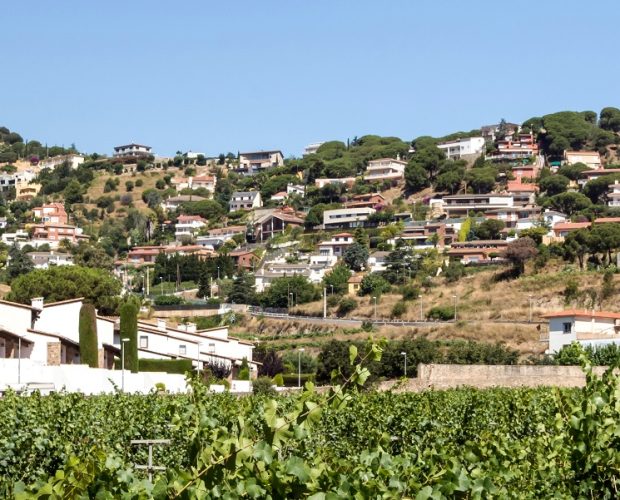
Mediterranean Catalonia is also home to some of the most interesting and diverse wine regions in Spain: Penedés (famous for its Traditional Method Cava made with the indigenous grapes of Xarel.lo and Parellada, and for important wineries like Miguel Torres and Jean Leon), Alella (excellent whites, made with the local Pansa Blanca, Carmenet and Bodegas Parxet being the top producers), Conca de Barberà (many of the Miguel Torres vineyards are here, including those used for the famous “Grans Muralles” wine) and Priorat (sturdy and elegant reds, some say very similar to France’s Burgundy, top producers being Alvaro Palacios and Rene Barbier).
Guide to Catalan Gastronomy: Read more
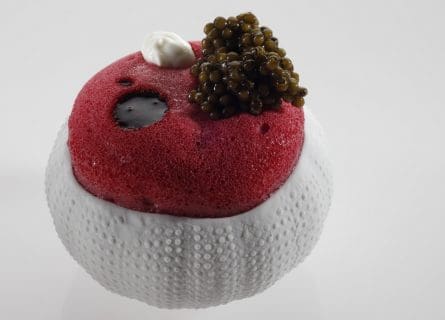
Disfrutar, a culinary gem in Barcelona’s Eixample district, has made a remarkable impact since its opening in December 2014. Founded by Mateu Casañas, Oriol Castro, and Eduard Xatruch, who honed their skills at elBulli and Compartir in Cadaques, the restaurant offers an unforgettable dining experience. With its striking design and imaginative gastronomic creations, Disfrutar quickly garnered accolades, including one Michelin star within its first year and two stars in 2018.
Situated across from the Ninot Market, Disfrutar presents four fantastic tasting menus to cater to diverse palates. Each menu promises a tantalizing journey from the classic Disfrutar to the adventurous Disfrutar Festival. Wine enthusiasts can indulge in the Disfrutar wine pairing, while those seeking non-alcoholic options can enjoy the “Medium alcohol-free wine pairing.” Disfrutar will satisfy even the most discerning taste buds with its boundless creativity and numerous awards.
A “Foodie” paradise, what a place! If you want to see sea scorpions and vegetables that look like an alien and broccoli had a child, check out this vast food market. The Mercat Sant Josep building dates back to the late 1800s and has a lovely Modernist rooftop. The market is one of Europe’s most spectacular food markets, with stall after stall of artichokes, figs, fresh herbs, dates, fennel, radicchio, peaches, bizarre seafood, expensive cured Spanish Ham, and olive oils.
If you like your wild mushrooms, there is a stall at the back of the market with a massive collection of truffles, “Setas” or “Bolets” (wild mushrooms), chanterelles, and porcini.
While it is true that the Barri Gotic is entirely overrun with tourists during the day and a tad unsafe at night (there is a multitude of organized pickpockets), this 15th-century perfectly preserved neighborhood is stunning. The winding streets are like a labyrinth once you enter, and on every corner, there seem to be gorgeous cafes, art galleries, and flowers everywhere. The modern-day square “Plaça Sant Jaume” in the heart of this neighborhood was the center of Roman Barcelona in the 1st century, and there are still remnants of the old Roman wall.
The Plaça del Rei is an exquisitely preserved medieval square. There is a famous café called “Els Quatre Gats” (The four cats) where Picasso and various bohemians and artists used to congregate, and where today you can enjoy a “Café Tallat” (expresso style coffee) while taking in the old photos and quaint atmosphere. Address: Calle Montsio, 3. The 13th-century cathedral in the nearby Plaça de la Seu is gorgeous and worth a visit. The long Ramblas Boulevard has street vendors, lovely old buildings, and stylish cafes. However, note that the Ramblas, while beautiful, is a center of petty crime, so be vigilant while walking through this part of town.
Called the “Rodeo Drive” of Barcelona, the Eixample neighborhood is swish, elegant, and full of fabulous “Modernista” architecture. There are tree-lined wide boulevards, chic shops, cute wine bars, and posh restaurants. The best shopping in Barcelona is here, with top-end boutiques, gourmet shops, old “Perfumeries,” and the atmospheric wine merchants with brick-vaulted cellars, many in lovely buildings dating back to the 1880s.
Architectural treasures include Casa Macaya, a superb “Modernista” (Art Nouveau) building designed in 1901 by Puig I Cadalfach (the “other” Gaudi); Casa Terrades (with Neo-gothic pointed towers), La Pedrera (Gaudi’s most beautiful palace, called “Casa Mila”) and the Hospital de Sant Pau, designed in 1901 by Domenech I Montaner, the other great Modernista architect.
If you are into Egyptology, don’t miss this fantastic small museum featuring mummies, ancient jewelry, and ceramics from the Nile. Interestingly, the owner of the Egyptian Museum, Jordi Clos, also owns one of Barcelona’s best 5-star hotels, the Hotel Claris. The Claris showcases many of his Egyptian treasures in the public rooms. Jordi’s collection of Roman, Greek, and Egyptian antiquities is one of the best private collections in the world.
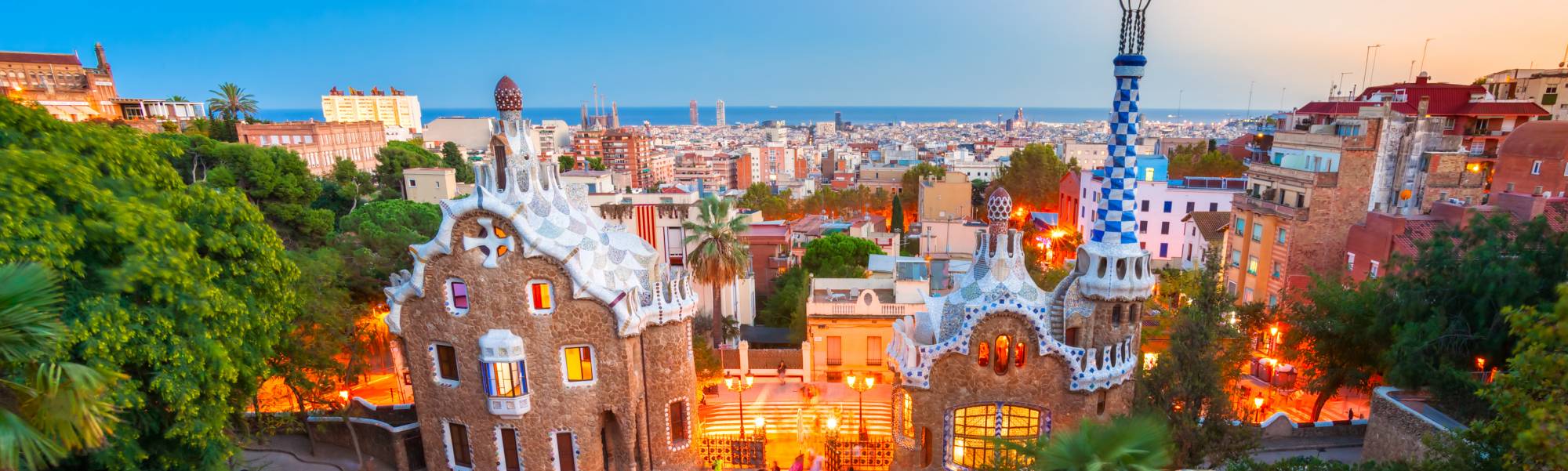
Barcelona wouldn’t be Barcelona if it weren’t for a certain Antoni Gaudi. This eccentric genius, the father of the “Modernista” movement, created landmarks such as Sagrada Familia, Parc Guell, and La Pedrera. He was an obsessive but brilliant man whose life was cut short at the height of his career by a tram in 1926. Born in Tarragona (home to the famous Priorat wine region) in 1852, he accomplished an astounding number of architectural feats. He had wealthy patrons, including Eusebi Guell, who gave him seemingly full license to indulge all his frivolities and bizarre ideas. One has only to visit the rooftop of Casa Mila, see the reptilian façade of Casa Batllo, and climb the winding steps of the incredible Sagrada Familia to understand his genius touched with madness. Gaudi was one of the most innovative architects of all time.
April 28, 2024
Learn what Cava is, how it is made, how it differs from Champagne and Prosecco, and where to taste it in Penedès.
Read article
August 5, 2024
Spain's wine industry excels in organic wine production, preserving terroir and ecosystems. Learn about organic winemaking, certifications, and top Spanish wineries.
Read article
July 1, 2024
Explore Spain's rich wine regions and indigenous grapes. A journey through diverse styles and deep heritage.
Read article
October 17, 2024
Discover the hidden gem of Spanish rosé wine! Explore the top regions, producers, and food pairings in this article.
Read article
July 12, 2022
Learn about Palomino, the grape behind most Sherry, including its flavor, vineyard role, Jerez terroir, and Fino, Manzanilla, and Oloroso styles.
Read article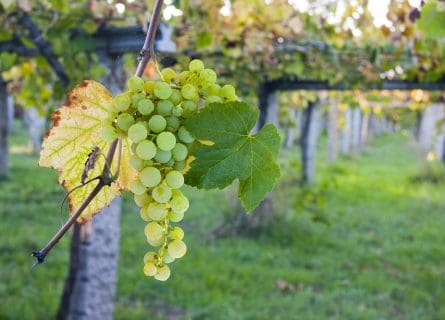
August 9, 2022
Unlock the secrets of Caíño Blanco grape, an intriguing Spanish variety. Delve into its characteristics and origins, and explore the wines it produces.
Read article