 46 tours
Country tours
Private Wine Tours in Italy
Private, Chauffeured Wine Journeys Across Italy’s Finest Regions
Explore the Alpine wines of Trentino and how unique growing conditions influence their flavor and elegance.
You walk the vineyard before anything is picked. Under the pergola, the canopy filters the light and slows the ripening a little. The ground is still wet from heavy overnight rain. It’s one of those seasons where timing has become harder to judge. You move along the row, noticing how unevenly the grapes are ripening. Some clusters are ready, others are not: harvest will not happen all at once.
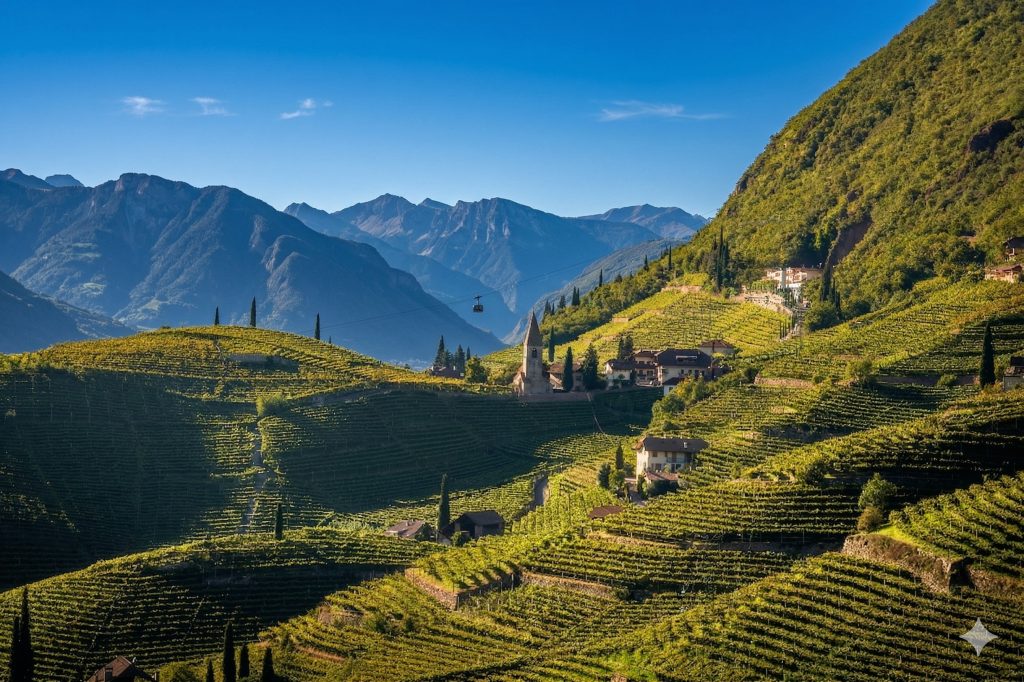
Alpine elegance starts here in the vineyard. The mountains set tight limits, and ripening happens within a narrow window. Fruit can hang longer on the vine, but timing matters! The tension you find in the glass originates here, where small shifts can quickly affect the fruit’s balance.
In Trentino, altitude changes quickly. Vineyards sit close together but behave differently, depending on slope and exposure. Warmth builds during the day, especially in sheltered areas, but rarely settles. At night, temperatures drop, slowing ripening and helping the fruit retain its shape.
Air is always moving here. The valleys channel it up from Lake Garda and keep it circulating through the vineyards. For growers, this is a working condition; the air dries the canopy, reduces disease pressure, and extends the picking window. In places like the Valle dei Laghi, it makes certain practices possible – such as the long drying of Nosiola required for Vino Santo, where steady ventilation allows the fruit to dehydrate without developing rot.
Exposure is also a big factor: South-facing slopes ripen earlier, cooler sites later. Even within the same vineyard, small differences can shift timing, and harvest often happens in stages.
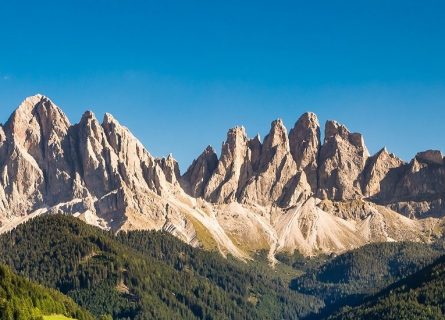
The Dolomites belong to this system, and at the same time stretch well beyond it. Since their recognition as a UNESCO World Heritage Site in 2009, formalized in the Declaration of Seville, they have become one of the most recognizable mountain landscapes worldwide.
When the landscape gains this kind of visibility, land values rise, tourism expands, and vineyard work competes with tourism. At the same time, the language used to describe these mountains often simplifies the wines: “alpine” is often reduced to a shorthand for freshness, with little attention to the conditions that shape it. In Trentino, this creates a tension: the wines rely on precise work under difficult conditions, yet they are often presented in overly simple terms.
In Trentino, vine training adapts to site conditions, and the pergola remains common across much of the region. In flat areas, it creates a wide canopy that filters light and slows ripening. On steeper ground, growers adapt it to the slope while maintaining that same protection from direct sunlight. As a result, the grapes tend to retain more acidity.
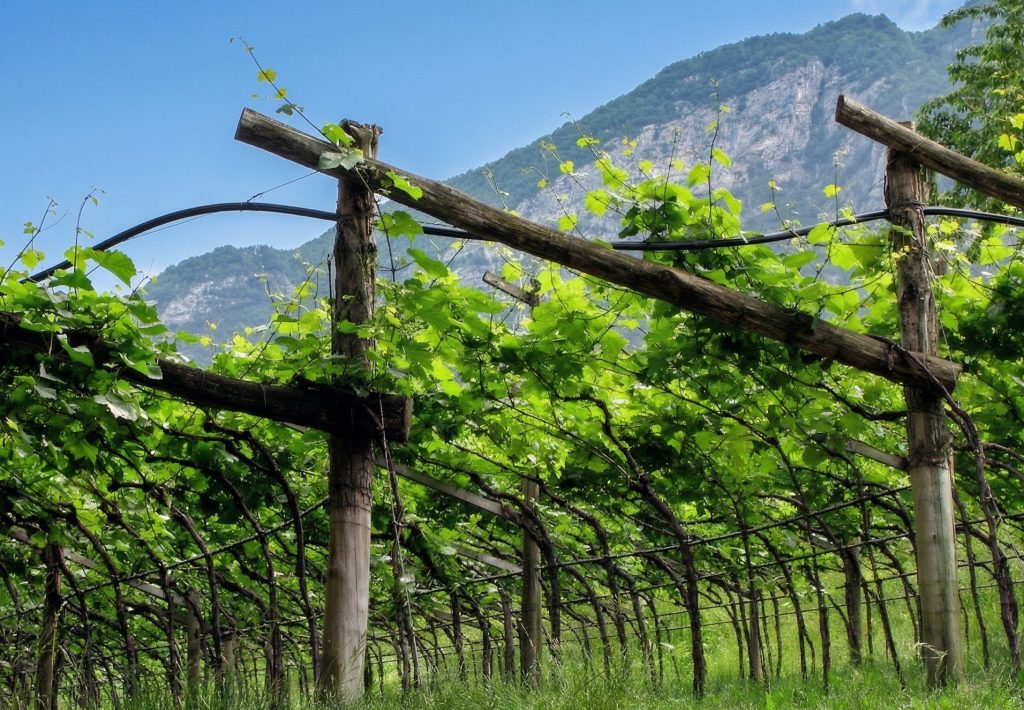
This structure also carries a history that is easy to overlook: the pergola was not designed solely for wine; instead, it once supported a mixed-culture system in which vines coexisted with forage and food crops.
As Emilio Zierock of Azienda Agricola Foradori explained in an interview with Identità Golose,
“the pergola originally was meant to feed both people and animals: between the rows you would grow hay and vegetables; if the year was good, you also made wine.”
What survives today is a structure that still mediates growth, even if its original logic has been stripped away.
At higher altitudes or in more exposed sites, some producers move away from the pergola entirely. In projects like Vin de la Neu, planted at close to 1,000 meters in the Val di Non, vines are trained low and densely, using a fan-shaped alberello. The goal is not efficiency but ripening: yields are deliberately kept low because of the more difficult conditions. All work is done by hand.
Labor is constant. Much of Trentino’s vineyard surface cannot be mechanized, so work is slow and manual.
Nosiola occupies a narrow space within Trentino, both geographically and in terms of scale. It is the region’s only native white grape, and its name comes from nocciola – hazelnut – a reference to the slight hazelnut note that can appear in the wine. Today, it survives in sites where one condition is non-negotiable: air must keep moving.
The grape is demanding; without constant airflow, rot develops quickly and acidity drops. The bunches are loose, which helps, but ripening is uneven and hard to read, so picking is often delayed or staggered across several passes to bring the fruit in at the right point, without losing freshness or pushing sugar too far.
In the glass, Nosiola is often understated at first. It leans toward restraint rather than immediate expression. Notes can range from dried herbs to citrus peel to a subtle nuttiness. There is structure, but it builds gradually, especially with time in the bottle.
At the cantina Foradori, where the grapes are grown on the hills above Trento, they are treated with minimal interference.
As Elisabetta Foradori explains,
“the aim is to preserve as much as possible all the vitality and information created in the vineyard, allowing fermentation to follow its own course.”
The result is a wine that reveals itself slowly, gaining depth with age rather than showing it upfront.
The same grape reaches an extreme form in Vino Santo Trentino. In the Valle dei Laghi, selected bunches are dried for months on wooden racks in open lofts, with air from Lake Garda circulating constantly and concentrating the fruit. The result is one of the great dessert wines of Italy – and, I would argue, of Europe. Production is tiny, and the process behind it is unusually long and exacting.
The name, however, does not help with recognition. In Italy, Vin Santo – holy wine – almost always brings to mind the Tuscan version, the one that arrives at the end of a meal with cantucci to dip into the glass. Everyone knows that Vin Santo; very few come across this one, which, if I may, is the “holier” of the two.
Nosiola has never been easy to scale, and that is part of why it remains marginal. But in the right sites, it says something essential about Trentino: a wine shaped by airflow, timing, and very little room for error.
The Piana Rotaliana opens suddenly: a flat, alluvial plain enclosed by steep rock walls that hold back cold air and concentrate light, with the Noce river running through it. Teroldego has been grown here for centuries.
This grape accumulates color easily, builds sugar, and reaches full ripeness without much encouragement. It would be easy to push it further, but what defines its best expressions is the opposite: acidity remains present, tannins stay fine, and the fruit does not thicken beyond recognition.
At Foradori, this balance has been approached as a long-term problem rather than a stylistic choice. When Elisabetta Foradori started working with Teroldego in the 1980s, the available plant material consisted of a single commercial clone selected for yield. The decision was to move in another direction. Together with her husband Rainer Zierock, she carried out a massal selection from older vineyards, identifying vines with looser bunches and greater variability: they ended up with a vineyard “composed of different individuals” as she describes it, each supplying a slightly different character.
This diversity does not lead toward uniform ripeness: some fruit brings more acidity, some more concentration. What matters is the way these elements sit together at harvest, forming a profile built from variation rather than produced by a single strain.
In a region often described in terms of its whites, Teroldego offers another reading of what Alpine structure can be.
Marzemino is a native red grape variety long established in northern Italy, with its most convincing expression in Trentino, particularly in the Vallagarina between Isera and Volano. Despite this, it’s rarely been considered central to the country’s wine identity.
Its most famous reference comes from opera. In Don Giovanni, the title character calls for “eccellente Marzemino,” a line that has kept the name in circulation far beyond wine (Wolfgang Amadeus Mozart is unlikely to have formed a direct connection with the Trentino version of the grape; the reference probably owes more to Lorenzo Da Ponte, who wrote the libretto and was familiar with the variety in other parts of northern Italy).
As wine writer Fabio Giavedoni has observed in Slow Wine, grapes like Marzemino have often been labeled “minor” not because of any structural limitation, but because they never entered the mainstream of widely recognized Italian varieties.
In the vineyard, Marzemino is vigorous and usually trained on a pergola, which helps contain growth and regulate ripening. In the glass, it tends to show a distinctive aromatic profile: violet is typical, followed by fresh red fruit. There can be a slightly vegetal note, sometimes with a touch of bitterness on the finish. The structure is present but measured, tannins stay fine, and alcohol rarely takes over.
Marzemino is not immediately identifiable in the way some other varieties have become: as a result, it often remains under-read. But within Trentino, it offers a different way of thinking about red wine: not built on extraction or volume, but on balance.
Mountain viticulture is underpinned by a persistent assumption: altitude offers protection through cooler air and slower ripening. In Trentino, this has long been part of the narrative.
But in recent years, the weather patterns have shifted: the heat arrives earlier, and rain tends to fall in shorter, more concentrated bursts, often at the wrong time.

In 2024, Elisabetta Foradori noted that by July, rainfall had already reached the total of the entire previous year. Water arrived in a way that altered vineyard work and increased disease pressure at a stage when intervention becomes more delicate.
It’s true that cooler sites delay ripening, but they also narrow the decision-making window, and high humidity increases the risk of rot. Slopes and terraces slow down and increase the cost of intervention.
I have discussed similar dynamics in Valtellina’s alpine vineyards in an earlier article
As a response, some producers have begun working with resistant varieties – often referred to as PIWI (an abbreviation for the German term pilzwiderstandsfähige Rebsorten, which translates to fungus-resistant) – which require fewer treatments and can better withstand fungal pressure. At Pojer e Sandri, these varieties have been integrated as part of an effort to reduce vineyard interventions. The outstanding Vin de la Neu, a personal favorite of mine, is made from Johanniter, a PIWI cross of Riesling and Pinot Gris, planted at close to 1,000 meters in the Alta Val di Non.
At Foradori, the focus has been on reinforcing the system from within.
As Elisabetta puts it,
“we are in a moment of transition… and there are no simple solutions.”
The work has centered on soil life, genetic diversity, and a more complex agricultural structure, allowing the vineyard to absorb variation rather than react to it.
In Trentino, the same conditions – altitude, fragmented sites, labor intensity – lead to different ways of working, and ultimately to very different readings of the same landscape.
Elisabetta Foradori runs arguably the region’s reference estate, based in Mezzolombardo in the Piana Rotaliana and family-owned since 1939. Today, she works alongside three of her children – Emilio, Theo, and Myrtha – and has farmed the vineyards biodynamically since the early 2000s.
A different trajectory began in 1975, when two very young partners – Mario Pojer and Fiorentino Sandri – started with just two hectares of vines and an unusually open approach to what winemaking could be. Today, Pojer e Sandri remains one of the most technically curious estates in the region, shaped by the restless intelligence of Mario Pojer – a major figure in Trentino wine, and something of an evangelist.
The estate produces one of the finest vinegars in Italy (and, at least to me, a winemaker who cares deeply about vinegar is usually paying attention to the right things). I have often seen Pojer at tastings and industry events, where he seems less interested in presenting his own wines than in talking to people, moving through the room with the same kind of open curiosity he applies to wine.
In the cellar, this translates into a precise, deliberate use of technique. As Mario Pojer has put it, the aim is to produce wines “non-standardised, that leave a lasting impression,” while maintaining what he calls an “enology of respect.”
Both approaches respond to the same conditions: what they share is an attentiveness to how place is translated into wine.
For years, I had an almost-daily relationship with a wine that, in hindsight, says a lot about how these wines are priced and perceived: the Incrocio Manzoni from Elisabetta Foradori — a cross between Riesling and Pinot Bianco created in the 1930s by Luigi Manzoni. I used to buy it from a fairly unremarkable neighborhood wine shop that somehow, miraculously, always had it. It cost around €8, and for a while I kept a bottle in the fridge at all times, half-jokingly calling it my “afternoon wine” – I would drink a glass to close a day of writing, before the evening properly began.
In Italy, this is not unusual. The idea of vino quotidiano – everyday wine – has long been part of the culture. Until a few years ago, Slow Food’s Slow Wine guide used to include a “vino quotidiano” category for wines of high quality priced at no more than €12 in a wine shop – before the term was replaced with “Best Buys” (whether that shift shows the disappearance of truly well-made wines at a price that makes daily drinking plausible, or a broader adjustment to the idea that perhaps wine should not be normalised as an everyday habit – it is hard to say). But let’s look at it from another angle: when wines formed by altitude, manual labor, and structurally difficult sites remain underpriced, what is being missed?
The issue is not, of course, that these wines are affordable; it is that “affordability” has become their primary identity.
Trentino has all the elements that define other mountain regions now recognized as fine wine – fragmentation, labor intensity, a strong link to place – yet it has not translated them into a clear category. Part of the difficulty is structural: there are still few widely recognizable producers, the territory is highly fragmented, and the range of grape varieties is unusually broad. This complexity does not translate easily into a clear narrative.
And yet, there is growing attention to wines that privilege definition over volume and reflect conditions rather than cancel them out. Within that shift, Trentino is already there. It has been working within those parameters for decades. What remains is for that work to find the recognition it has long anticipated.

Explore further
Discover private journeys, regional guides, and expert stories to help you plan an unforgettable trip through Italy.
46 tours
Private, Chauffeured Wine Journeys Across Italy’s Finest Regions
 7 days
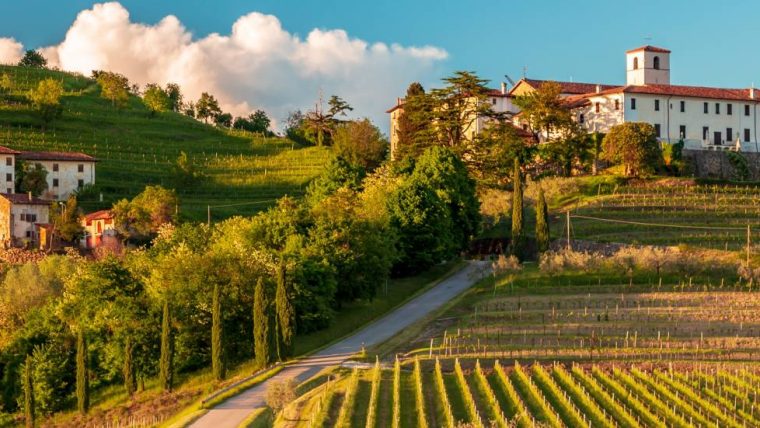
Collio, Carso and Trieste with Friulian whites and orange wines.
 1 day (ideal from Florence)
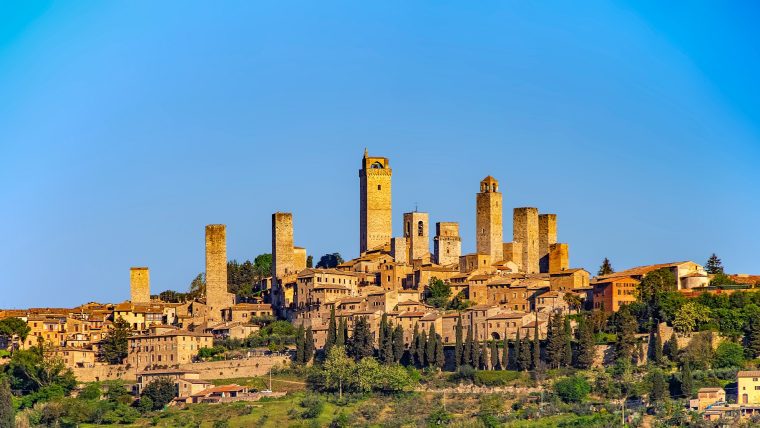
Vernaccia, medieval towers and Tuscan wine country from Florence.
Compare Italy’s leading wine regions by signature wines, scenery, best base, travel time and ideal stay
Explore regions
Cellar Tours' Comprehensive Catalogue of Italian Grape Varieties
Read article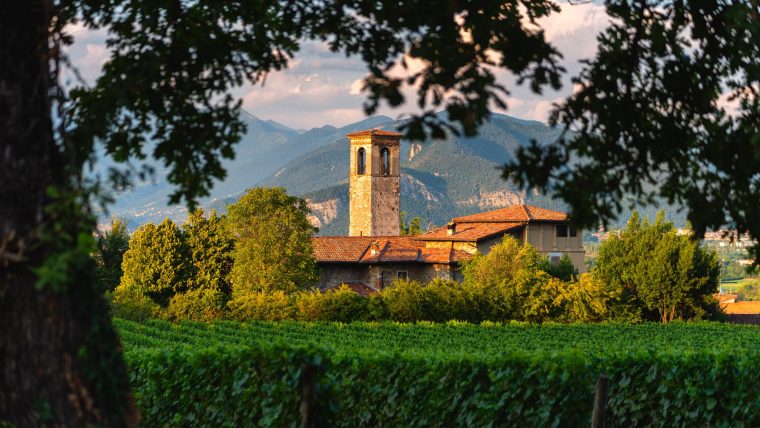
Explore the beauty of Franciacorta and discover the unique qualities of Franciacorta sparkling wine from Northern Italy.
Read article