 21 tours
Country tours
Private Wine Tours in France
Unveiling France's Finest: Customized VIP Wine Tours and Gourmet Escapes
Atlantic Cool, Precision Wines: The New Pays Nantais and the Rise of Muscadet Crus
A glass of Clisson, the stony intensity of Gorges, or a chilled magnum of Saint-Fiacre—today, Nantais village names are becoming more commonplace than the generic ‘Muscadet,’ especially in places like the new muscadotheque.fr wine bar and shop in Nantes, the former capital city of Brittany. The presence of an establishment dedicated to exclusively selling Nantais wines is unsurprising, given that some of France’s most compelling wines are now being produced in this region.
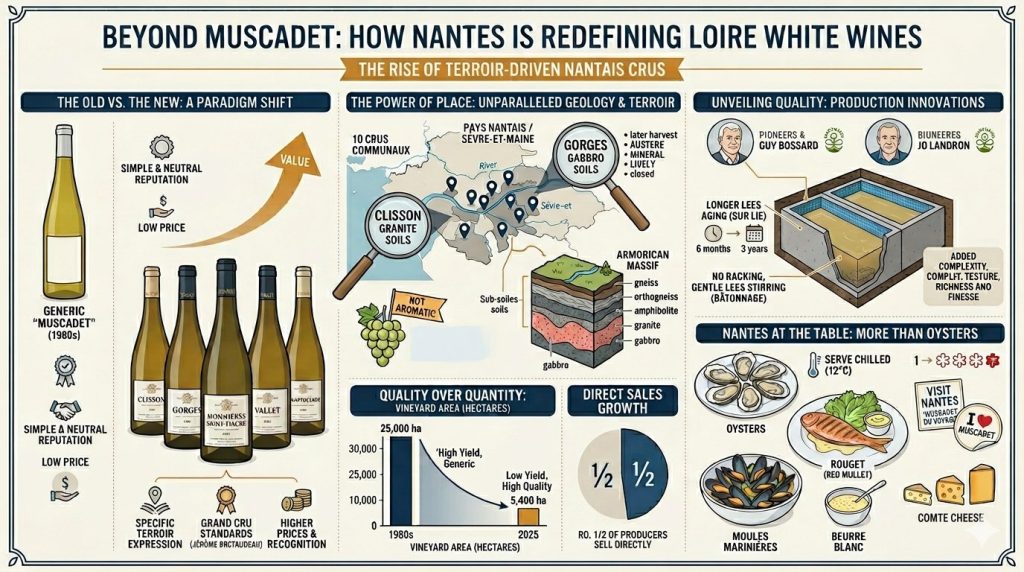
Such wines are distinctively fresher and lighter in alcohol at this western end of the Loire, often combining mouthwatering tension, creaminess, salted caramel, and seashell-like minerality. Aged longer on the lees, the top Muscadet wines are defined by vines rooted in the striking gabbro and granite geology of the ancient Armorican Massif and its range of decomposed crystalline metamorphic rocks. This is a very different expression of the Loire.
Unlike other French wine names, Muscadet does not refer to a specific place, such as a city or region. The name’s origin is mysterious. To understand Muscadet, you must look to its roots in the Pays Nantais, a lush, rocky landscape once part of southern Brittany. In 1941, the Nazi-backed Vichy regime separated the region from Brittany. Here, the wines are shaped by a maritime climate, where the Atlantic meets the Loire.
At the top of the modern Muscadet hierarchy sit the crus communaux: village-based wines shaped by stricter rules, lower yields, and longer lees ageing than standard appellation Muscadet. Crossing the Loire south from the five-star hotel Maison Maubreuil in central Nantes, the dark slate roofs give way to the contrasting orange-coloured tiles of wineries and dwellings. Following the river south brings you to the Sèvre and its sister tributary, the Maine. The majority of Muscadet is made at the confluence of these two rivers.
During the 1990s, adventurous biodynamic producers of terroir-driven wines made from specific vineyard plots, notably the late Guy Bossard at Domaine de l’Ecu and the now-retired Jo Landron, paved the way for the remarkable transformation of the Pays Nantais and Nantes wines.
France’s eventual approval of 10 Muscadet Crus Communaux, the first three in 2011, has helped vignerons who were already well ahead of official administrative recognition to raise their profile. As early as 1997, the Association of Gorges Crus winemakers brought together producers dedicated to this distinctive terroir.
Once largely unknown, village names have come to the fore. These wines are made with longer lees aging, typically a minimum of 24 months, and lower yields, setting them apart from ‘Sur Lie’ designated wines. They stand apart from generic Muscadet by expressing the characteristics of their terroir, including specific sub-soils.
| Cru | ||
|---|---|---|
| Clisson | Soil Type: Granite | Leading the charge for AOC status |
| Gorges | Soil Type: Gabbro | Known as the “Long-Distance Runner” |
| Goulaine | Soil Type: Schist/Sand | The “Early Ripener” |
At the top end of the hierarchy of Muscadet classification, the villages of Clisson, Gorges, Château-Thébaud, Le Pallet, Monnières-Saint-Fiacre, Mouzillon-Tillières, Goulaine, Vallet, and La Haye Fouassière are technically and officially Dénominations Géographiques Complémentaires (DGC) – Complementary Geographical Denominations of the Muscadet Sèvre-et-Maine appellation. Meanwhile, Champtoceaux is a DGC of Muscadet Côteaux de la Loire. Until now, producers have been allowed to call them ‘Crus’.
François Lieubeau, winemaker at the esteemed Famille Lieubeau estate in Château-Thébaud, tells me that now the word ‘Crus’ can be used to communicate about wines. This is despite the French administration’s indicating that communication should focus on village or commune names, such as Clisson, Gorges, and Monnières-Saint-Fiacre, rather than the word ‘Cru’. Going forward, on wine bottles, you are more likely to read the names of villages or communes than the word ‘Cru’. Perhaps Premier Crus and Grands Crus designations are on the horizon?
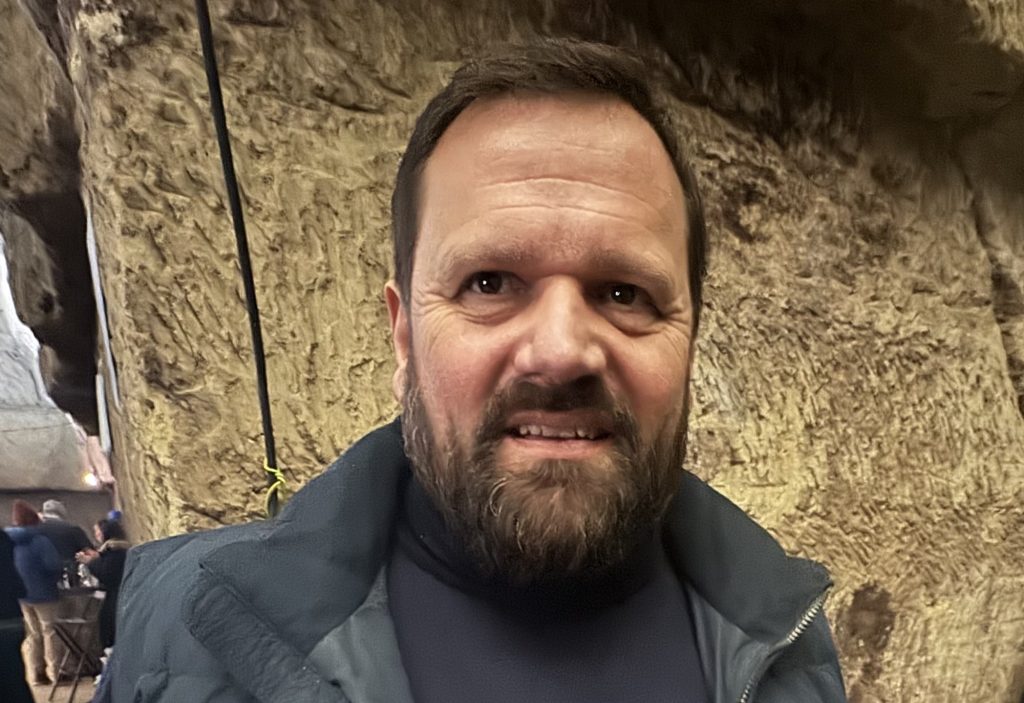
Jérôme Bretaudeau, a well-known Nantais producer, has decided to use the Vin de France designation rather than DGC. He says his production, which uses hand-picked biodynamic grapes, already exceeds the requirements for Crus Communaux.
Jérôme is unequivocal:
“My production matches Grand Cru standards. And my wines sell at higher prices than ‘Cru’ wines.”
Whatever disagreements producers have with the French administration over the confusing terminology of designations, they’re pursuing this further in the quest to make top wines from small plots of vineyard, including Lieux-dits.
In that direction, and amidst swelling demand for modern fine Nantais wine, veteran Muscadet producer Jérémie Huchet and local entrepreneur Joceylin Douillard told me lately that they had acquired the emblematic Domaine du Grand Mouton – Louis Métaireau Muscadet estate. This estate is home to 15 hectares of organically farmed land, including 9 hectares of old-vine vineyards dating back to 1937.
The estate is located on the River Maine, in the village of St Fiacre-sur-Maine, in the Commune of Monnières-Saint-Fiacre, where the prized terroir of inclining vineyards sprawls across the lush green, hilly terrain.
As Huchet said,
“Rather than any Bordeaux influence, we’re going to take a Burgundian approach to production of fine Muscadet wines here, with individual wines made from small plots of vineyards including a Monnières-Saint-Fiacre Cru Communale from vines grown on gabbro soils.”
Already under organic conversion, Huchet indicated they are also adopting biodynamic farming practices at the estate.
The new owners of Grand Mouton plan to build a winery and wine tourism facilities at the estate. Coincidentally, Huchet’s partner, Douillard, opened the new wine hotel Hôtel Rivella this year in Clisson, Pays Nantais. Clisson is considered one of the prettiest villages in France and is known for a range of modern Muscadet wines.
Fresh wine investment in the Pays Nantais is driving international traction. Vignerons are increasingly making fine wines with moderate alcohol levels from single-vineyard plots farmed organically and biodynamically. Muscadet wines are aged longer on the lees prior to sale.
In October 2023, Champagne producer Billecart-Salmon announced it had become a minority investor in Jérôme Bretaudeau’s Domaine de Bellevue in Getigne, near Clisson. A new 2,500 m2 winery at the estate is now under construction.
Author Guy Saindrenan, whose latest book Muscadet, Le Vin de Nantes, likens Muscadet’s fortunes to those of Beaujolais; both regions declined in the 1980s after producers and unscrupulous négociants increased yields and lowered quality, giving Muscadet a reputation for a neutral, two-buck-chuck wine. Saindrenan says Beaujolais had the advantage of having village names recognized as early as the 1930s, when the first French wine appellations, including those of Muscadet, emerged.
Historically, the most widely planted grape variety in the Pays Nantais was Folle Blanche (Gros Plant), used to make eau-de-vie for traders, including those involved in the slave trade. Saindrenan’s recent research prompted Muscadet Cru producer Famille Lieubeau to unearth documentation showing that Melon de Bourgogne, thought to have originated in Burgundy, was planted on one of their sites as early as 1616. Plantings of Muscadet’s Melon de Bourgogne grape, now known as Melon B, increased during the post-phylloxera years. It became the region’s main grape.
There has been a tremendous reduction in vineyard area in recent years, down from around 25,000 hectares in the 1980s to 5,400 hectares in 2025. At the same time, the production of quality wine has risen. Far more producers now sell wine directly, with around half doing so rather than selling through intermediaries.
High-quality wines sold at relatively low prices mean the tables have changed. Top-end Muscadets, known by their village names, are now found in France and are often compared to top Burgundy whites, even in Paris and New York.
“Muscadet wines are now amongst the world’s best white wines. I place them in the same category as the white wines of Burgundy,”
said Pascaline Lepeltier, a winner of Best Sommelier in France back in 2022.
The making of fine Crus Communaux wines has helped the region dispel outdated views of Muscadet as a cheap, neutral wine. Yet, it was not long ago that a pompous French wine merchant based in London, who specializes in Bordeaux, falsely claimed to me that Muscadet wines can’t age. This is despite countless examples of their age worthiness.
Rocks matter in the Pays Nantais, perhaps more than elsewhere. I discovered this at an exemplary ‘10 Terroirs’ tasting I attended in February with Saindrenan. The event was hosted at the Federation des Vins de Nantes’ Château de la Frémoire in Vertou.
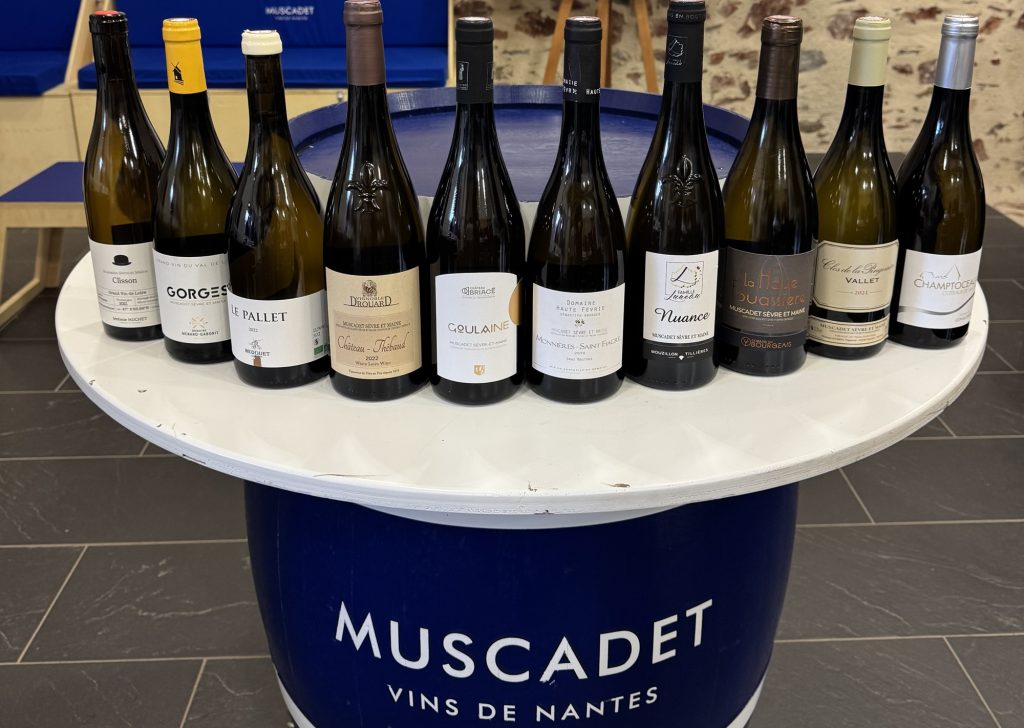
Tasting revealed significant terroir differences among Muscadet Crus Communaux, even though they are geographically close.
Because Melon B, which descends from Pinot Noir and Gouais, is not aromatic, the ancient sub-soils of the vineyards become crucial in shaping the flavors of Muscadet wines. The influence of different subsoils is especially significant.
For instance, in his book Muscadet, Le Vin de Nantes, Saindrenan explains how grape harvest times and thus maturity levels can differ by around 8 days between Clisson and nearby Gorges. Clisson is home to granite sub-soils, while Gorges is a municipality renowned for its gabbro sub-soils.
How do these terroirs reveal themselves in a glass of Clisson or the stony intensity of Gorges? In their youth, Gorges wines are a bit more austere and minerally, but lively and lighter, yet closed. This means they need to age longer before fully developing their citrus and mint flavors and overall drinkability. Clisson wines are rounder and more powerful, but also show finesse when young.
Clisson wines are known to have higher alcohol levels than those of Gorges; for instance, it’s the subsoils that influence potential alcohol levels, as does the harvest date. According to Saindrenan, Gabbro subsoils retain water better than granite: the vineyards of Gorges thus heat up more slowly in spring than sites without Gabbro, and the vegetative growing cycle progresses more gradually, with budburst in vines emerging later than in Clisson.
Vineyards of the Pays Nantais sit on the ancient Armorican Massif, formed by the collision of the Gondwana and Armorica lithospheric plates. It was this collision that raised the Armorican plaque, revealing sub-soils such as Gabbro, an unusual stone. Together with Gabbro and Granite, the sub-soils of vineyards are home to metamorphic rocks, including gneiss, orthogneiss, and amphibolite.
Amphibolite is the sub-soil of the specific plot of the prized Gras Moutons vineyards of Domaine Haute Fevrie, classed as a Monnières-Saint-Fiacre Cru Communal.
Tasting the remarkable 2020 vintage, aged on the lees for 61 months, is like sipping a fresh, pure, and tantalizing waterfall running over crystalline stones, with hints of mint and anise. It shows just how incredible the quality of modern, vivid, mouthwatering Muscadet can be. (*All vintages of this wine are aged at least 33 months – aging varies according to each vintage).
If the Pays Nantais has much to do with Rock, the Roll part is also singular in terms of the ‘sur lie’ lees-aging and lees-stirring undertaken in rectangular underground concrete tanks. Such underground tanks are widely found in the Pays Nantais but rare elsewhere in France; it is understood that many were built by Italian artisans in the 1920s. Some of the tanks are visually arresting, that’s for sure; think glass blue tiles lining the concrete walls. Christian Maillard, former oenology teacher at Briacé, says rectangular tanks offer a significantly larger surface area for contact between the lees and the wine than cylindrical tanks do. The shape of the tank is thought to facilitate the aging of Muscadet on the lees.
Concrete tanks, which do not impart flavors to wine, are key to wine stability; the temperature inside a tank is usually a constant 12 degrees, according to winemaker Cyrille Paquereau, co-owner of the certified-organic estate Domaine De L’Epinay in Clisson. Grabbing hold of a metal lees-stirring stick, Rouabe shows me how the gentle lees-stirring is done.
Cyrille explained,
“We put the fine lees in suspension. We stir them to nourish the wine, giving it texture, mouthfeel, and complexity.”
Paquereau ages Muscadet ‘sur lie’ for a minimum of six months to roughly 3 years for the best Cru wines. Lees-aging (of dead yeast cells) is a key part of production rules – as wines are kept in tanks for at least over winter, with no racking permitted. Longer lees aging and stirring provide wines with greater richness, complexity, and finesse. At Domaine De L’Epinay, four underground concrete tanks hold 100,000 liters of wine.
Arriving at the five-star Château de Maubreuil (Official Website), head sommelier Anthony Bignon welcomes me with a stunning glass of Château de Chasseloir’s 2019, Compte Leloup, a fine wine made from grapes picked from vines more than 100 years old.
Sommeliers like Bignon are now invariably communicating the graceful aging potential of Muscadet and particular vineyards of longer-aged wine, showing it is much more than a simple wine to be enjoyed with Oysters. Bignon recommends the following pairing:
Domaine Luneau-Papin’s outstanding Muscadet Sèvre-et-Maine, cuvée Pueri Solis 2016, aged for 32 months on the lees with sufficient depth and texture to savor with the fresh local grilled Rouget (Red Mullet) served with the seafood sauce, Jus à la bouillabaisse, and grilled Sucrine lettuce.
The best-known Pays Nantais sauce for fish is Beurre Blanc, which typically includes Muscadet, butter, vinegar, shallots, and cream, though cream is traditionally omitted.
With subtle, saline characteristics, Muscadet is famously the best match for Moules marinières, a dish cooked in it.
Running parallel to the rise of fine, longer-aged Muscadet wines is, incidentally, the evolution in restaurant diversity, including fine dining: the city of Nantes now has seven Michelin-starred restaurants, whereas it had only one back in 2019. On the doors and windows of restaurants, you now see the I Love Muscadet stickers, which indicate they serve at least 5 Muscadet wines. In recognition of the rise of terroir-driven Muscadet and to celebrate the fine 2025 vintage, the Visit Nantes: Le Voyage à Nantes tourism board is, for the first time, making its own organic Muscadet wine called ‘Le Muscadet du Voyage’, a cuvee made from a blend of wines selected from top producers.
Restaurants in Nantes and the surrounding area serve Muscadet at around 12 degrees Celsius, with a Cru bottle opened at least an hour beforehand to allow it to breathe. 2025 is a top vintage in terms of quality, as are wines from 2020, 2015, and 2010, but the best years don’t all fall in the 5s.
Top vintages: include 2022, 2023, 2019, 2016, 2009, 2002, 1996, and 1976.
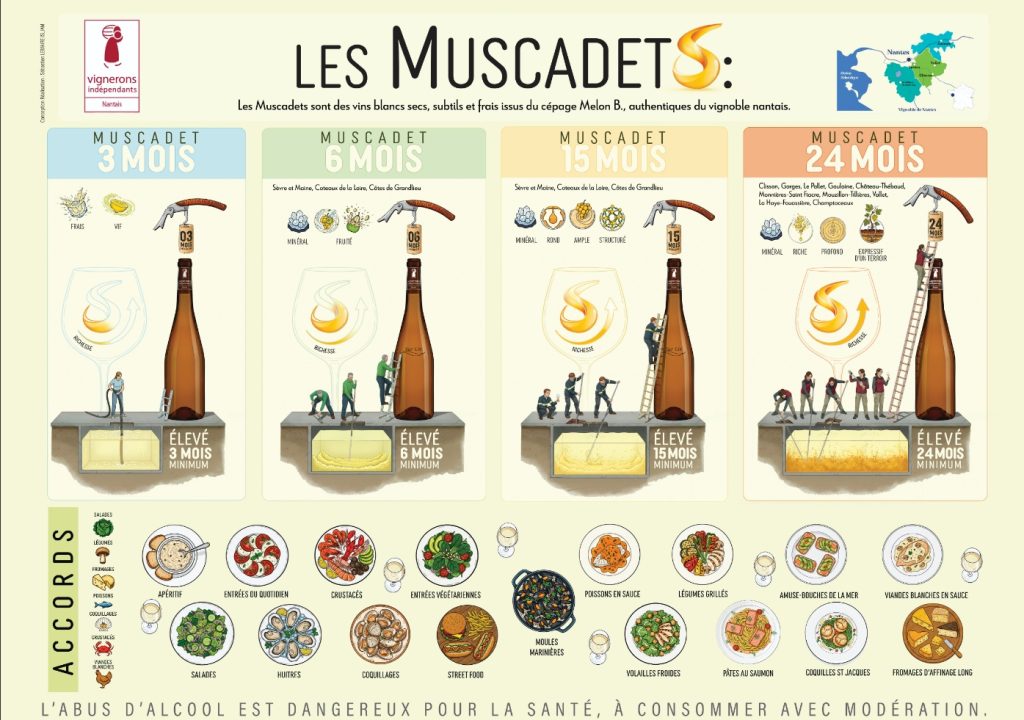
With village names of wines increasingly coming to the fore, the maturation levels of Comté cheese are the inspiration behind a new Muscadet communication campaign showing age differences between young fresh vintage wines that go with oysters, the ‘Sur Lie’ designated wines, and those finer, longer-aged expressions better suited to more elaborate dishes. As Comté cheese matures, the depth of its flavors increases, and so does its price – it’s the same with Muscadet. The Syndicat des Vignerons Independents hopes the new campaign will clarify any confusion over the distinctive Muscadet wines and their designations, differences which have largely raised the profile of contemporary Muscadet wines. (See photo of new campaign).
Discover more about the gastronomy of the Loire
Returning to the Nantes and Pays Nantais for the first time in almost seven years, one of the best places to contemplate the evolution of local wines is walking through the serene village of Clisson, home to a striking and unique juxtaposition of Tuscan and medieval Breton architecture. A natural feel-good factor lingers in the air. Together with the much-heralded finesse of longer-aged Muscadet white wines, the Pays Nantais’ fine vinous output now includes the production of top Folle Blanche, Gamay, Pinot Noir, and Syrah, with producers like Poiron Dabin, recovering the fine grape variety Berligou, a clone of Pinot Noir, a wine once championed by the Dukes of Brittany.
A new generation of young producers, including Mikael Salmon and Jean Baptiste Hardy, is growing grapes that gradually reach phenolic ripeness, with adequate acidity and without excessive potential alcohol levels. Sipping on a velvety glass of Clisson at the Best Western Plus Villa St Antoine Hotel, the river Sèvre ripples fast over granite stones. Up from an old stone bridge looms the Château of Clisson, which, like Muscadet, has stood the test of time over the centuries. The Muscadet no-sayers are now blushing; Muscadet and wines of Pays Nantais are now better than ever.
Muscadet’s renaissance is not merely a technical story of lees ageing, geology, and cru hierarchies. It is also a reminder that the Pays Nantais — cool, maritime, understated, and gastronomically rich — has become one of the Loire’s most rewarding destinations for wine lovers willing to look beyond the obvious.

Explore further
Discover private journeys, regional guides, and expert stories to help you plan an unforgettable trip through France.
21 tours
Unveiling France's Finest: Customized VIP Wine Tours and Gourmet Escapes
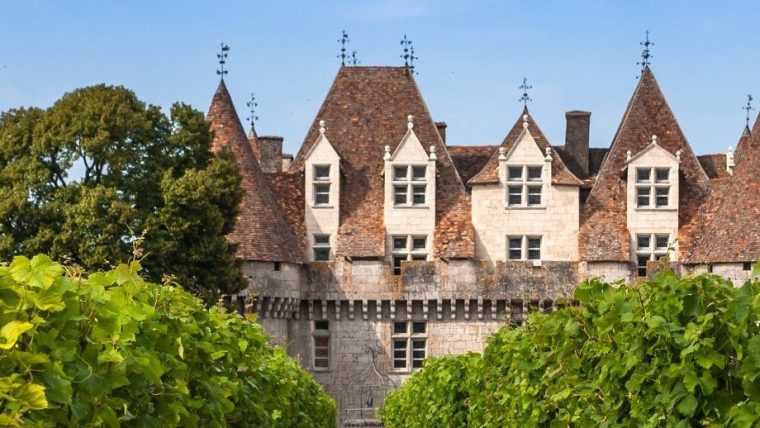 1 day (ideal from Bordeaux / Bergerac / Sarlat)
Monbazillac, Saussignac and honeyed sweet wines in the Dordogne.
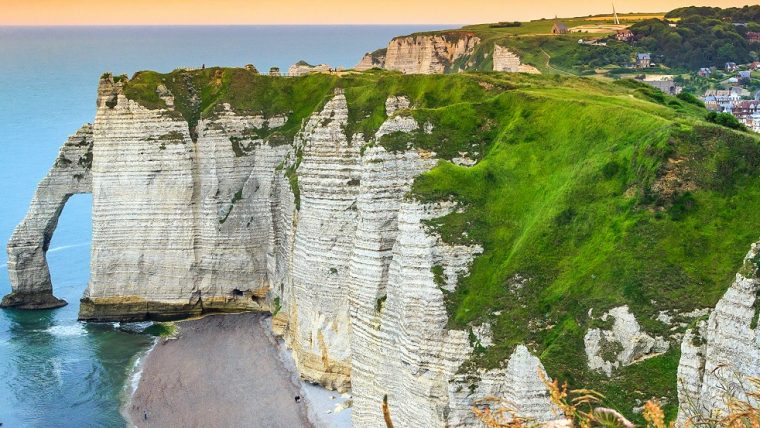 8 days
Calvados, coastal villages and Mont Saint-Michel in Normandy.
Compare France’s leading wine regions by grapes, wine styles, scenery, best base and ideal stay
Explore regions
Explore Bordeaux's En Primeur and discover the legendary 1982 vintage praised by Robert Parker and its lasting impact.
Read article
Explore Loire Chenin Blanc from Anjou and Saumur, from schist and tuffeau soils to dry, sparkling, and sweet wines shaping today’s Loire.
Read article