 21 tours
Country tours
Private Wine Tours in France
Unveiling France's Finest: Customized VIP Wine Tours and Gourmet Escapes
Explore Loire Chenin Blanc from Anjou and Saumur, from schist and tuffeau soils to dry, sparkling, and sweet wines shaping today’s Loire.
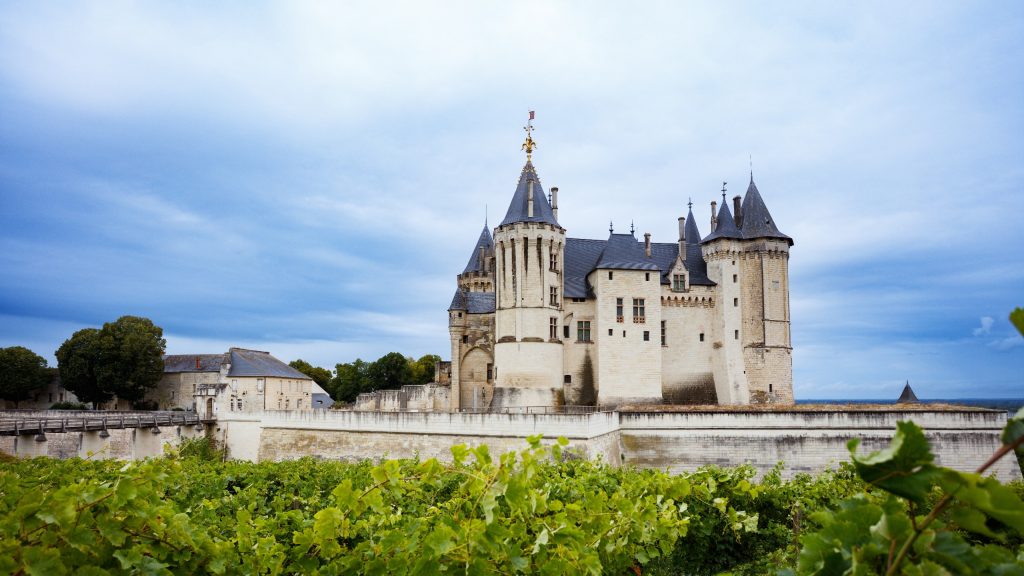
Across the Anjou heartlands of Chenin, just a twenty-minute train ride takes you from the historic city of Angers to the limestone fiefdom of Saumur. The journey along this stretch of the Loire may be short, but in the surrounding vineyards, the diversity in terroir extends much further. Those differences influence the Chenin in your glass: whether it be a vibrant sparkling wine, a sprightly wine of the ‘Spring’ as young wines are known locally, or a powerful expression of barrel aged Chenin from vines grown on the Angevin schist subsoils in the Chaume hill or Savennières on the north bank of the Loire, or a wine made from organic grapes grown on the prized hilltops of Brézé.
Near Angers, not far below my feet, lie the rocks of the Armorican Massif: an ancient geological mass that extends from Brittany and the Pays Nantais east into Anjou. This is the land of Anjou Noir, with vineyards planted on dark schist soils and often blue shale.
Unlike the lower valleys of Saumur, where tuffeau limestone dominates the landscape, the vineyards here are planted on steeper slopes and benefit from a stronger Atlantic influence. The Loire and its tributaries, including the Layon and the Aubance, also play their part. Here, morning mist curls around sloped vineyards, helping shape the concentration of flavors and sugars in the grapes.
Wines from Anjou Noir are distinctly more powerful and concentrated, rich in personality, with stony minerality and often higher alcohol levels than the Saumur wines of Anjou Blanc.
“In essence, power and finesse meet in a beguiling way.”
The predominant schist rocks are known to retain heat, whereas the limestone of Saumur is valued for its drainage capacity and ability to retain water, slowing the growing cycle.
A French Vine Institute (IFV) study in 2018 found that Saumur Chenin had lower pH levels than its Anjou Noir counterparts.
If long, dense, and complex Anjou Noir wines are more horizontal, with greater breadth across the mid-palate, Saumur Chenin is often more vertical: softer but fresher, with crunchy tension, salivating acidity, a fine chalky texture, and a long, aerial finish.
Sandy and clay-rich topsoils, as well as soil depth, also influence wine profiles. The Anjou Blanc appellations of Vouvray and Montlouis-sur-Loire are known for their Perruches topsoils: silex (flint stones) mixed with clay, which can lend flinty aromas.
Whether Anjou Noir or Anjou Blanc, the wines usually retain Chenin’s hallmark acidity, a key signature of the Loire.
Historically, before the current sparkling and still-dry Chenin wine boom, Loire Chenin was all about its sweet wines, a style spoken of since the 16th century. Known for its prominent acidity levels, Chenin, a late ripening grape variety, is prone to noble rot (Botrytis cinerea).
Grown in a relatively cool climate, with vineyards influenced by the morning mist rising from the Loire and key tributaries, the Layon and Aubance, conditions have historically been perfect for making sweet wine where minerality, lushness, and longevity combine in tantalizing ways to make some of the world’s finest but rarely consumed wines.
A dry wine revolution, which Guy Rochais started in the 1990s and reflects changing consumer habits (lower sugar consumption), has largely reshaped that identity. Granted, sweet wines continue to be the only wines permitted in the Grand Crus Quarts de Chaume and Premier Cru Chaume – the only Crus in the whole of the Loire.
However, the INAO’s (France’s appellation body) refusal to grant dry white wine Cru status is a growing grievance for contemporary winemakers who’ve made Chenin more prominent by putting dry Chenin on the map of fine wine through the production of organic and biodynamic wines from single vineyards.
In recognition of their efforts to champion and highlight distinctive terroir, producers are currently battling French authorities for a new status for the dry, fine-wine limestone subsoils of Brézé, Berrie Brossay, Courchamps, La Côte et Le Puy-Notre-Dame in the Saumur Blanc. Similar to what happened in the Pays Nantais. The six Anjou blanc areas aim to obtain DGC status (Dénominations Géographiques Complémentaires – Complementary Geographical Denominations of the Saumur appellation), a commune status with stricter production rules, and to serve as a potential precursor to eventual Cru status.
For anyone traveling through the Loire, this is where Chenin starts to make sense: not as one wine, but as a thread running from the dark schists of Anjou to the cool limestone cellars of Saumur.
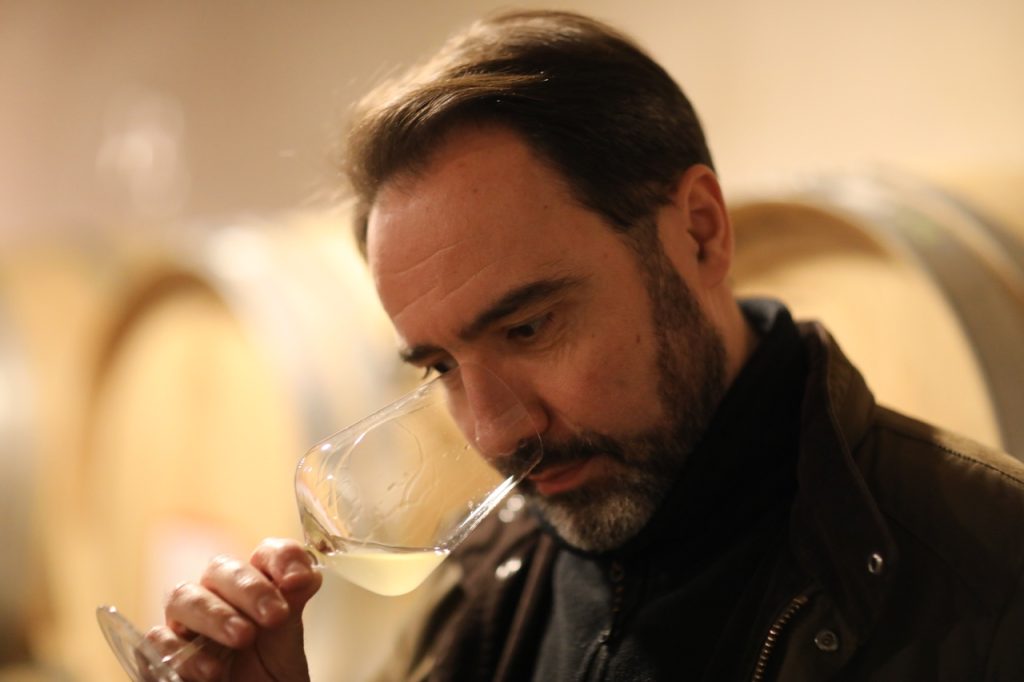
Alongside the dry white ‘revolution’ and shift away from sweet and red wine production in recent years, there’s been an important radical change in mindset, which winemaker Sylvie Augereau partly says has come from newcomer producers who’ve revitalized the Loire region by looking at Chenin in a new way.
“The whole region looks at itself differently now, with pride, with ambition, knowing there’s a market out there,”
says Ivan Massonet, Loire investor, winemaker, and owner of Belargus estate.
Massonet proved his case audaciously by making fine, dry, powerful Chenin with distinctive profiles from low-yielding single-vineyard sites grown on schist in the Anjou Noir, and selling them for over €100.
When I first met Massonet in the Loire in 2019, he’d just invested in vineyards in Quarts de Chaume to make dry white wine.
According to Massonet,
“A lot of local estates that have been in the family for several generations, are all going organic – they are all focussing on Chenin; some make reds but for most of them the focus has turned to Chenin, on single vineyard production, and moving to the longer ageing of wines. And that’s why it’s a revolution,”
Massonet’s acquisition of the emblematic Savennières biodynamic estate Domaine Closel, in mid-May this year, suggests there are more wines from specific plots that will soon emerge onto the market. In a further endorsement of Loire fine wines, Massonet has vowed to push production at the estate toward terroir-driven wines, for which the estate is renowned, including those from 17th-century Château des Vaults.
Alexandre Cady, winemaker at Domaine Cady in Coteaux du Layon, who also has vineyards in the Savennières appellation, says Savennières wines have a weightier mid-palate when compared to Vouvray and Saumur Chenin. Sipping on refined, barrel-fermented, and aged Cheninsolite wine in the Anjou Noir hills of Coteaux du Layon reveals how contemporary fine Chenin Blanc pairs well with foods often associated with red wine.
On slopes overlooking the Loire River in Le Thouriel, near Gennes, in the historic Saumur heartland of Chenin, winemaker Sylvie Augereau tends to old vines growing on ‘Tuffeau’ limestone sub-soil near the Abbaye-Saint Maur, where monks are thought to have planted Chenin in 845. Large white stones sit amid sandy, iron-rich topsoil. While Augereau, who always hand-picks her grapes, embraces the local tradition of using large oak barrels to ferment Chenin into slightly oxidative wines with a rich spectrum of layers and flavors, she now also uses clay qvevri; the gentle maceration of grapes in clay for nine months gives her wine greater creaminess, a unified structure, and a velvety texture over time. Loire chenin producers are increasingly experimental, using diverse aging techniques; lighter toasted wood, big foudres, cement eggs, and amphorae to showcase what Chenin can reveal. Richard Leroy, a renowned producer who’s taught many vignerons and known for his low intervention Chenin wines, sometimes made with notes of reduction: gunflint, struck match.
Many producers favor the micro-oxygenation of wines in wood for freshness and to reduce the impact of wood-induced flavors; Alexandre Cady, for instance, uses lightly toasted 225-liter barrels, which, he says,
“lend wines complexity, volume, fatness, and weight on the palate.”
In a changing climate (resulting in lower acidity levels in some vintages) and in light of producers aging wines for longer periods to achieve the full potential of Chenin, Malolactic conversion (also known as malolactic fermentation) is now usually blocked or used only partially in wines.
Once used to soften the acidity in wines and round them off, malolactic conversion is now often stopped using SO2. That said, sulfur additions are generally minimized and are often used just before bottling.
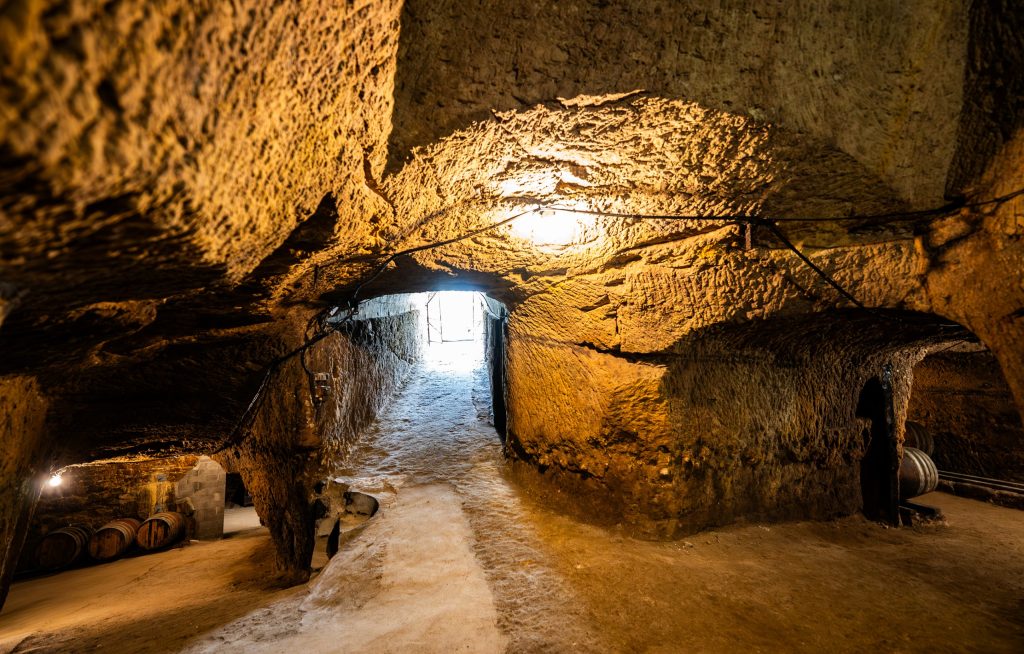
If Tuffeau plays a role in viticulture and in the profile of Chenin wines, it also plays a unique and emphatic role in the aging and production of sparkling wines. Saumur and the surrounding vineyards are famed for the extensive underground tunnels and troglodyte caves that extend for around 1,200 km beneath the surface. Controlled light, humidity and usually a natural constant temperature of 12’C mean the tunnels and caves are propitious for the secondary fermentation in bottle and ageing of traditional method Saumur and Crémant de Loire (Saumur sparkling wine production and stricter rules on the use of grape varieties including a 60% Chenin obligation and the ageing of wines) sparkling wine, pioneered by Belgian entrepreneur Jean Baptiste Ackermann in the 19th century.
Contemporary sparkling Chenin became renowned thanks to the late Jacky Blot, who as a Breton, was another pioneering outsider: In 1993, Blot made Triple Zero, a bone dry organic sparkling made 100% with Chenin – the wine has become a Loire icon, known as the Loire’s first pet Nat championed for its richness of ripe organic fruit (instead of the use of unripe fruit) grown on limestone soils, and long lees aging of up to the three years prior to bottling.
Despite the growing prominence of dry and sparkling Chenin over the past thirty years, talk in the Anjou has turned to a resurgence, albeit a timid one, in the production of lush and enigmatic golden sweet wines drank at the hour of the aperitif: chilled, and paired with blue, salty cheeses, pork rillettes or with the Loire’s very own tarte Tatin, the upside-down apple tart. Producers want to preserve a key part identity of Chenin wine production. Walking on the hills of Quarts de Chaume, above the Layon river, the Loire’s only Grand Cru appellation (obtained in 2011), located on 40 hectares in Rochefort-Sur-Loire, I get a sense of history; here the wind and fog from the river Layon flows on Brioverien schist rock, where noble rot (botryisation), late ripening Chenin is slow, but elsewhere the process on Carboniferous pudding stones quickens over slopes facing east. The Loire and its tributaries play a considerable moderating role in temperature; their buffering effect (which affects pH levels) is key to producing fresh, mineral-rich yet lush and sweet wines that age for decades.
General Chenin Sweetness Levels (residual sugar) – As a late ripening grape variety producing relatively high acidity levels, Chenin can be produced in diverse styles, as residual sugar levels show:
Known for its versatility in terms of production, Chenin has been called a ‘master of disguise’ and often the ‘chameleon’ grape. Renowned for its vibrant acidity, a boon amid the world’s climate crisis, Chenin nevertheless presents growers in the Loire with challenges associated with low yields.
“2025 was a most wonderful year in terms of quality, probably the best recent vintage since 2005, but yields were low as a result of mildew,”
says Vouvray producer Benoit Coulon, owner of the Domaine du Clos des Aumônes.
Budburst starts very early in Loire Chenin; it’s exposed to spring frost, a major yield risk, as well as vine rot. As a late-ripening grape, Chenin ripens at the very end of the growing cycle, usually at the end of September. For some, the 2026 harvest will start in August for the first time ever.
“In the cool or wet years of 2023 and 2024, we lost half of the harvest, due to rot at the end of the growing cycle,” says Ivan Massonet, owner of Belargus estate.
Overall, many Loire producers believe Chenin has largely benefited from climate change (in terms of maturity) and changing consumer habits. Despite low yields, “90% of the work, including canopy management and reducing yields to ensure quality production is done prior to the harvest in the vineyards where we have adopted climate adaptation measures,” argues Alexandre Cady, wine producer at Domaine Cady in the Coteaux du Layon.
With thirst growing for Loire Chenin sparkling and white wines, producers increasingly focusing on wines that showcase the diverse particularities of place have been busy building new wine tourism facilities in a calm, spacious, and relatively mild-climate area of France, where rivers of terroir and history flow and interconnect.
“We are geographically in the right place at the right time for fine production and in terms of quality price ratio of wines,” says Philippe Porché, producer at Domaine de Rocheville in Saumur, speaking to me at the annual Angers Wine Fair.
To taste the depths of contemporary Loire Chenin dynamism, head to La Paulée de L’Anjou, a series of tastings, seminars, outings, and notable fine dinners held each June.
As winemaker Sylvie Augereau says:
‘Chenin is like a diamond, multi-faceted, able to shine in distinctive ways.’
It continues to do so now, arguably more than ever!
Explore further
Discover private journeys, regional guides, and expert stories to help you plan an unforgettable trip through France.
21 tours
Unveiling France's Finest: Customized VIP Wine Tours and Gourmet Escapes
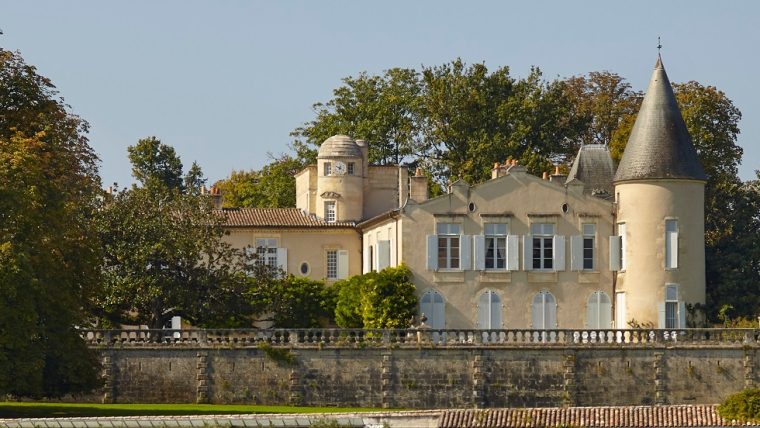 1 day (ideal from Bordeaux)
A private full-day journey through the Médoc’s classified-growth château country from Bordeaux
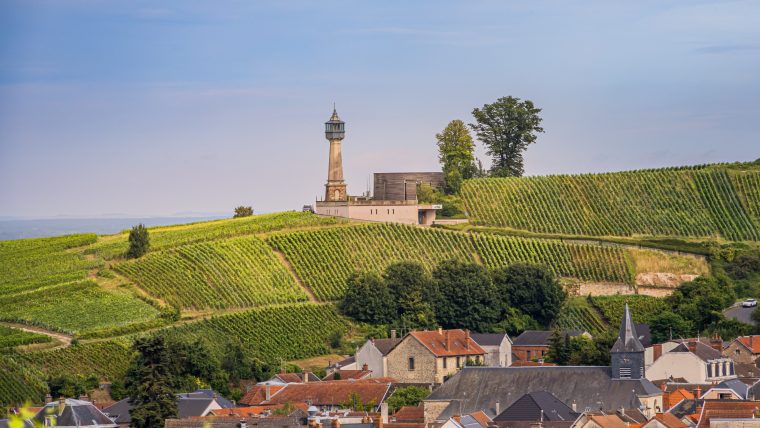 4 days
From Paris to Reims and Épernay, with prestige Champagne houses, boutique growers, Michelin dining, and chauffeured travel.
Compare France’s leading wine regions by grapes, wine styles, scenery, best base and ideal stay
Explore regions
Explore the unique flavors of Loire Wines at Nantes’ first five-star hotel, Maison Maubreuil, featuring exquisite selections.
Read article
Explore the exquisite french red wine regions and discover how they maintain their charm amidst global changes in the wine industry.
Read article