
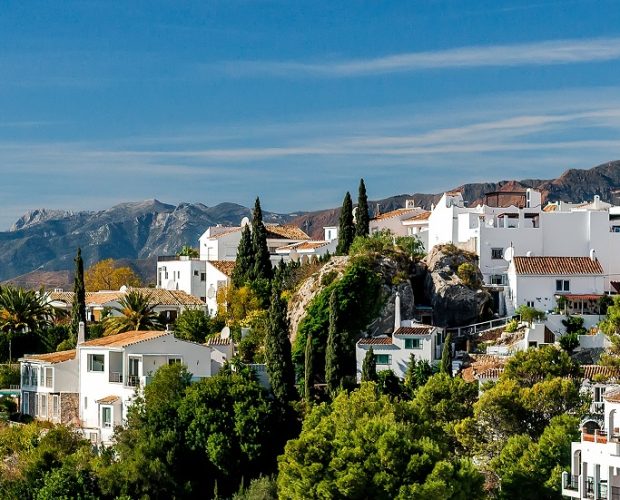
Embark on a journey through Andalucía's rich wine culture and vineyards. Explore flavors, traditions, and hidden gems. Plan your trip! Open region guide
Jerez de la Frontera was one of the “Frontier” towns between areas ruled by the Moorish Caliphs and Christian Monarchs. “De la Frontera” (on the border) was attached to many of the town names that existed on this fuzzy border, including Chiclana, Arcos, Conil, and Vejer. Jerez was reconquered from the Moors by Fernando III in 1251, only to be lost again, and on and on it went for centuries.
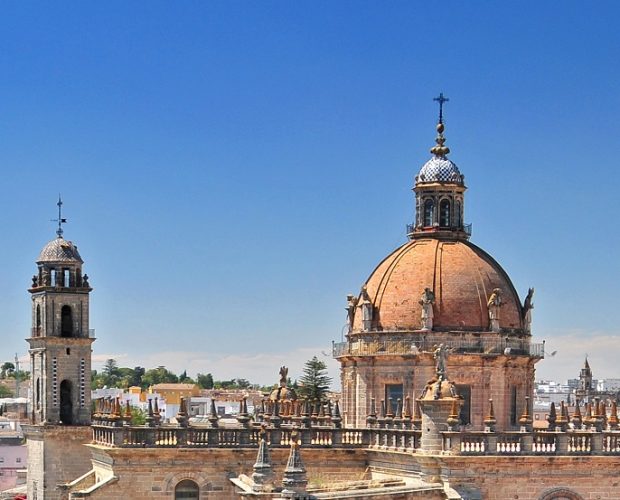
Jerez is the capital of Sherry country. “Jerez” is “Sherry,” mispronounced centuries ago by British wine importers. It is home to many big names (González Byass, Emilio Lustau, Garvey, Emilio Hidalgo, John Harvey). The town has an aristocratic air, broad palm-lined avenues, and many lovely squares. The two most impressive architectural monuments are the Cathedral of Salvador (boasting a masterpiece painting by Zurbarán, “The Sleeping Girl,” in the Sacristy) and the remains of an 11th-century Moorish fortress (called the Alcazaba, which contains a maintained mosque).
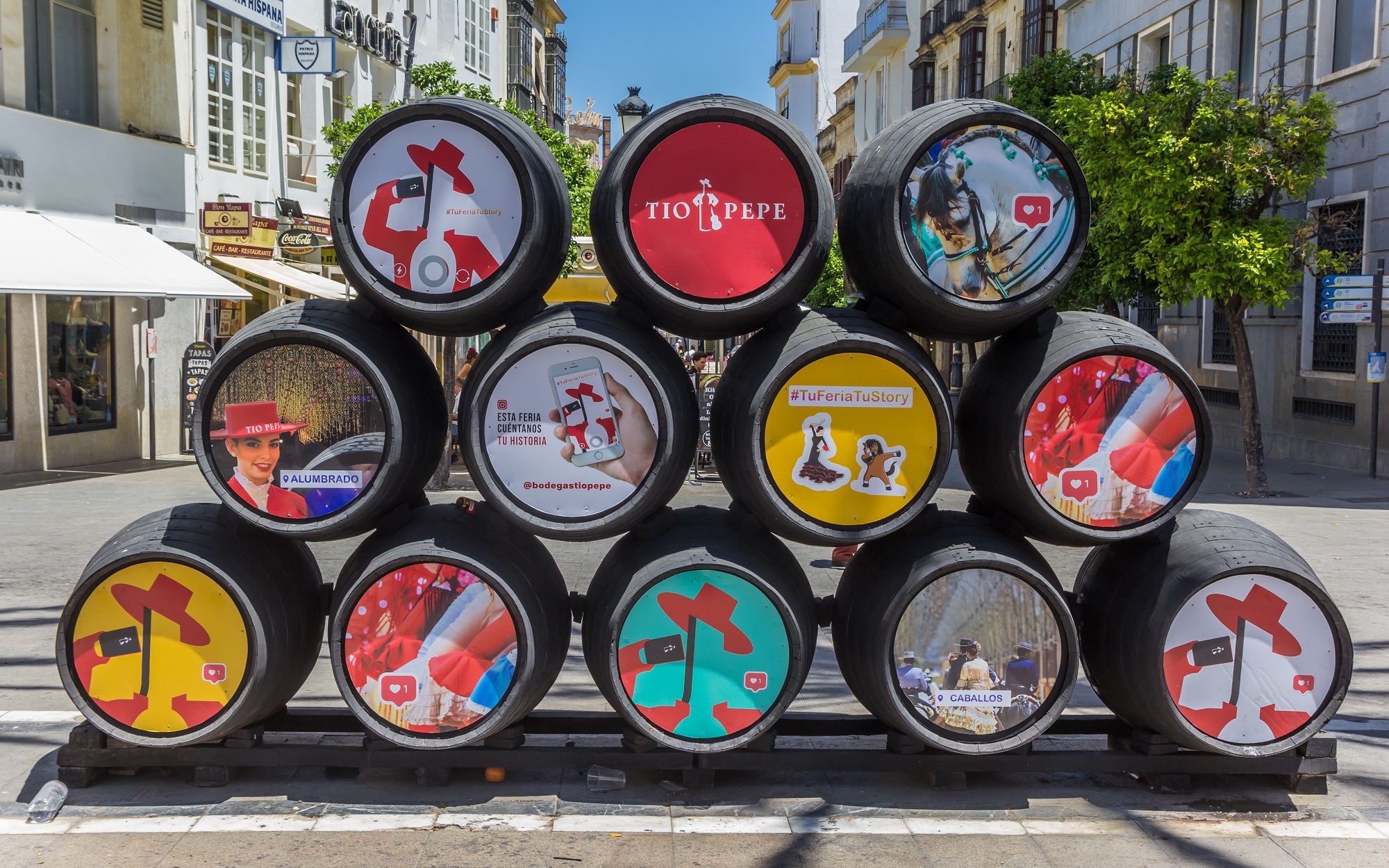
Jerez came onto the world scene with a massive increase in demand for its local fortified wine, Sherry. The story goes that Sir Francis Drake sacked the town of Cádiz, making off with barrel after barrel of the sweet tipple. As a result, England got a taste for the wine, including Shakespeare, one of Sherry’s biggest fans. Sherry has an ancient history, with a wine history dating back thousands of years to the Phoenicians. Before Sir Francis Drake brought the wine back to England, many wineries had made Sherry commercially for centuries. For example, the history of Valdespino winery in Jerez dates back to 1264 when the King of Spain granted one of his knights, Alonso Valdespino, 30 acres of vineyards. More than 700 years later, Valdespino is still selling wine and is one of the oldest bodegas in the Sherry Region. Visiting the ancient bodegas (the wineries) is undoubtedly a “must-do” for wine lovers visiting Jerez de la Frontera.
Sherry is quite obviously the most identifiable wine from the region. Made from Palomino grapes (along with Pedro Ximenez), sherry comes in various styles. It is considered by many to be the perfect aperitif, and it is served in all of the bars with “Tapas,” like olives, strong cheeses, and “Chorizo” cured sausage slices and salted almonds.
The “Gastronomia Gaditana” (meaning food from the region of Cadiz, to which Jerez belongs) is varied and delicious. You will find freshly caught seafood (Flounder, Sea bass, Plaice, Mahi Mahi, Hake) and a variety of shellfish; Oxtail soup (made fresh after the bullfights), lovely cold soups (gazpacho, almond, Tomato with mint, pureed melon with bacon); Braised quail; tender beef and many more delicious, typical dishes including: “Langostinos al ajillo” (giant prawns in a garlic sauce), “Urta a la Roteña” (Perch sautéed with sherry, tomatoes, and onions), and “Dorada a la sal” (Mahi Mahi cooked in a salt crust).
Guide to Andalusian Gastronomy: Read more

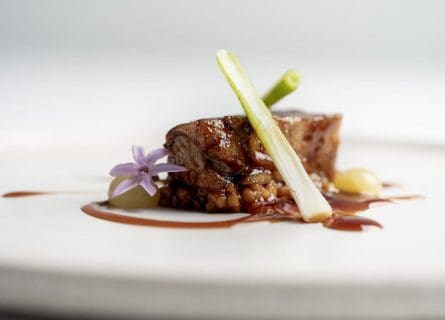
Restaurante Aponiente, located in the charming port town of El Puerto de Santa María in southern Spain, is a Michelin three-star restaurant with international recognition for its innovative and sustainable cuisine. Helmed by renowned chef Ángel León, Aponiente’s menu is inspired by the bounty of the nearby Atlantic Ocean, with a focus on seafood and marine products. The dining experience at Aponiente is a true journey of the senses, with each dish carefully crafted to showcase the flavors and textures of the sea. From the stunning presentation to the impeccable service, a meal at Restaurante Aponiente is an unforgettable culinary experience. A must for very foodie!
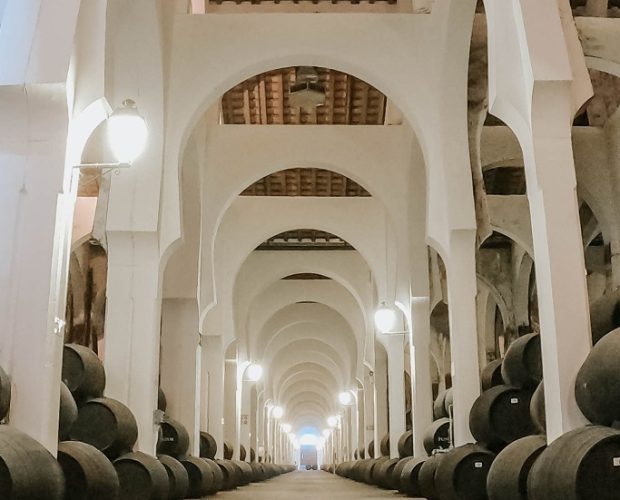
Many of the historic bodegas in Jerez, Sanlucar de Barrameda, and El Puerto de Santa Maria (the Sherry Triangle) are open to the general public. González Byass is an exquisite winery with an impressive dome designed by Gustav Eiffel (of the Eiffel Tower). Pedro Domecq is another exceptional winery with graceful arches resembling a mosque (called “La Mezquita”), which Cordoba’s superb Mosque inspired. On our wine tours, guests receive special private tours with the winemakers (not tour guides) where we can taste “the excellent stuff” (not on offer to general public tours). Hear their stories and anecdotes and get a closer look at the passion and dedication behind the wine.
This elegant 19th-century mansion, designed by the architect of the Opera House in Paris, is home to one of Spain’s most unique art forms, the “Dancing Horses.” Apart from scheduled shows (accompanied by flamenco dancers and guitar players), the training sessions are also impressive. The show is called “Symphony on Horseback, an Equestrian ballet.”
The Arabic baths date back to when Jerez was part of the Caliphate of Cordoba under Moorish rule. At one point, the mosque in Cordoba (12 centuries old) was the biggest in the Muslim world.
Perhaps the most bizarre tourist attraction is the “Museo de Reloj.” Its collection of over 300 clocks, many from the 16th-19th centuries, is one of the biggest in Europe. The museum is located in a palace famous for its wandering peacocks.
This 18th-century building houses a vast collection of historical musical instruments made for Andalusia’s unique performing art form, Flamenco.

March 10, 2024
Escape to Spain's wine country! La Rioja beckons with breathtaking views, unique wines & cultural treasures.
Read article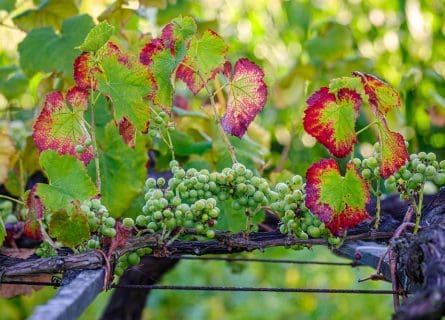
August 1, 2022
Explore the captivating world of the Loureiro grape. Discover its aromatic charm, origins, and the remarkable wines it produces.
Read article
July 9, 2022
Indulge in the Sweetness of Pedro Ximénez: A Resplendent Grape for Andalusia's Montilla-Moriles. Experience the Richness of Sweet Sherries & Fortified Wines.
Read article
April 1, 2024
Demystify Spanish wine labels and understand the key terminology. Learn about the diverse wine regions, classifications, and varietals of Spain.
Read article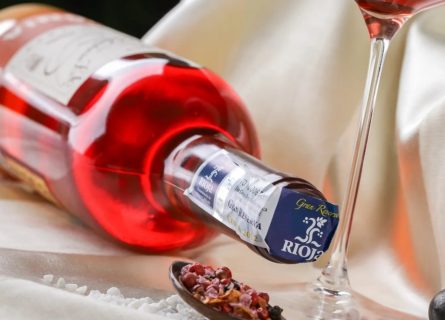
October 17, 2024
Discover the hidden gem of Spanish rosé wine! Explore the top regions, producers, and food pairings in this article.
Read article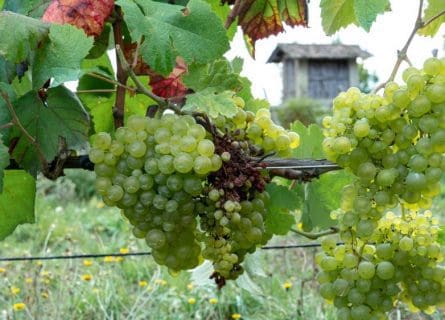
July 29, 2022
Discover Treixadura grape: Origins, Flavor Profile, and Exceptional Wines—a must-read for wine enthusiasts seeking new taste sensations.
Read article