
Explore the unique character of Terret noir, a dark-skinned grape from France's Rhône valley. Plan your trip! Open region guide
An important crossroads in the ancient world, Avignon is one of the most fascinating cities in Southern France, historically famous for receiving some notorious guests such as Cesare Borgia and Louis XIV. Few other places in Provence combine all the region’s charms as well as Avignon. Its position on the Rhône makes it a natural gateway to the treasures of this captivating part of France.
Avignon has played a crucial role in the economic and cultural life of the Rhône valley since 500 BC when the Rhône constituted a principal trading route for Greek and Phoenician sailors and Etruscan merchants. It was founded by a Celtic tribe from Italy, the Cavares. The city was named “Aouen(n)ion,” a name to which historians have given two interpretations: “City of violent wind” or “Lord of the River.” We like the former, although the latter seems more likely! Avignon quickly grew in importance in ancient times and rapidly became the main port of call for traders along the lengthy passage of the Rhône.
The city was too tempting a prize for the Roman invaders to ignore, who finally took control of the settlement from the Cavares in 121 BC. They quickly settled into their new home and established the transalpine province “Narbonnaise,” which extended from the Alps to the Pyrenees, and of which Narbonne was the capital. Avignon was considered a key outpost for the empire, endowed with temples, Senate buildings, and triumphal arches. Although Avignon did not influence neighboring Arles or Nimes, it was an important religious, administrative, and commercial center for several centuries.
Unfortunately, during the Roman empire’s collapse, Avignon paid the price for its desirable location – in the passage between North and Southern Europe – and was devastated by the barbarian invasions. The Franks and the Alemans paid a visit more than once and wreaked havoc, reducing the city to a seventh of its former size.
As if that was not enough, the Vandals devastated the region, followed by the Goths and the Burgundes, who established themselves there. In 474 A.D., Avignon became a part of their realm, and some stability eventually returned to the battered and bruised settlement. In 500 AD, the Burgundian King, Gondebaud, pursued by the Frankish King Clovis, took refuge in Avignon. Despite several attempts, Clovis did not take the heavily fortified city, which remained in Gondebaud’s control until 506 AD, when the Visigoths came knocking and took control. However, in 537 AD, the current ruler, King Vitiges, ceded Avignon to the Frankish king. The city was fully incorporated into the Frankish kingdom until the second half of the 8th Century.
Avignon benefited enormously from this stability, and with trade flourishing in all of Western Europe, Avignon fully utilized its position on the trade route between Italy and Spain. Artisans and tradesmen’s operations developed and installed themselves at the foot of the city’s cliff. Enriched noblemen, knights, and ombudsmen gained importance and enjoyed non-negligible authority over the city’s inhabitants. Politically, the city was under the control of various Counts and Bishops until Raymond VI, Count of Toulouse, and Louis VIII, King of France, came to blows over control of the region. The region was loyal to the stewardship of the count of Toulouse, who subsequently lost control when Louis VIII arrived with an immense army. Avignon’s inhabitants were in no hurry to cede power to the French King and closed their gates to the King, denying him passage down the Rhône Valley.
A brutal siege lasted three months, from June 10 to September 12, 1226. In the end, the starved and overpowered city surrendered just a few days before the swelling of the Rhône flooded the positions where the King and his army had held fast for so long! The fortifications were dismantled, and Louis proclaimed the territory conquered.
So ended the independence of Avignon; following the death of the Count of Toulouse – Raymond VII – the city came under the double protectorate of Charles I of Anjou, Count of Provence, and Alphonse of Poitiers, Count of Toulouse, both of whom were brothers of the King, Louis. In the 14th Century, Avignon recovered from the preceding Century’s events, and the population swelled to 6,000 inhabitants, which was a high number for the Middle Ages. A new golden age would dawn on the city as events conspired to make Avignon the Papacy’s new seat, an event that no one could have foreseen.
When Pope Clement V came to Avignon in 1309 AD, he had no intention of establishing himself permanently or creating a new Christian capital in Avignon. It was, nonetheless, the city’s role for a hundred years. This was mainly because the Pope no longer wanted to stay in Rome, a city torn apart by rival clans prone to riots and uprisings. From 1309 to 1376, six successive Popes resided in Avignon: Clement V, Jean XXII, Benoit XII, Clement VI, Innocent VI, and Urban V. These 67 years radically transformed the city and left a marked imprint, to which the city owes its world-renown today. Great monuments were constructed, and their courts provoked a tremendous increase in population. This elevated number for the time made Avignon one of the largest cities in Europe and certainly the most cosmopolitan.
The city continued to prosper, with this Golden age lasting until 1408, when the last of the Avignon popes, Benoit XIII, died. Their departure provoked a massive revolt amongst the city’s citizens, who even addressed themselves directly to the Pope to regain its importance as the seat of the Catholic Church. Nonetheless, the political and economic decline was inevitable, and the city would never again see a permanent pope in residence. However, enclosed within the French realm, as the Pope’s subjects, Avignon’s inhabitants benefited from the double protectorate of the Pope and the French King. The economy recovered, based on tobacco, silk production, and printing (in particular, playing cards and counterfeiting!)
This prosperity rested on a fragile base, relying on the good relations between the King and the Pope. These relations were excellent during the 16th Century. Still, they became strained in Louis XIV’s reign, with Avignon’s merchants favoring integration into the French Kingdom with the peasants loyal to the Pope’s authority. The French Revolution was a catalyst for a bloody revolution within the region; atrocities were committed on either side, those loyal to the Pope and those who favored full integration. Calm was finally restored under the rule of Napoleon Bonaparte. With the Treaty of Tolentino, the Pope accepted the definite unification of Avignon into the French Empire. The era of the papacy’s influence and control had ended.
The arrival of Napoleon in power brought peace to the country and the beginning of economic recovery. For all that, the imperial regime was unpopular with the citizens of Avignon. After his first abdication, Napoleon stopped in Avignon on his way to Elba on April 25, 1814, where he narrowly escaped being torn to pieces by the masses. From 1815, the city’s political role in France declined, although it kept its position as regional economic capital, thanks to the silk trade at the beginning of the 19th Century. Culturally, things had never been better as Avignon was the cradle of a renewal of Provençal culture; during the 19th Century, the city counted as many painters as Paris.
In the 20th Century, Avignon suffered terribly from the horrors of The First World War and lost 1200 of its sons in battle. The onset of World War II would bring more misery to its inhabitants, and the German army occupied the city on November 11, 1942. Allied bombings destroyed many buildings and caused over 450 deaths. The attacks continued until the city’s liberation by Allied troops on August 25, 1944.
Emerging from the onslaught of the Two World Wars, the city nonetheless enjoyed unprecedented economic growth – Avignon and the region profited from a developing industry based on tourism, fresh produce, and wine. Its image as a cultural city was propagated worldwide thanks to the Theatre Festival created in 1946 by Jean Vilar.
Today, the city’s climate, proximity to the vineyards of the Rhône, and unparalleled heritage make Avignon a major European tourist and cultural capital. Visitors cannot fail to be captivated by its immense beauty and the wealth of historical buildings. Being the elected European City of Culture in 2000 has only added to its profile and was a fitting start to the 21st Century. The perfect base from which to explore the wonders of the Rhône Valley!

It is an especially heady experience to stand, look, and sniff in a Provençal market. The freshest local ingredients are the order of the day in Avignon; the city has little need for freezers! The waters of coastal Provence provide a bountiful sea harvest, including mussels, oysters, and clams. The area is noted for its fish dishes, particularly bouillabaisse. Lamb is the most common meat in Provencal cuisine; the best comes from an area known as the Camargue, where lambs graze on herbs and salt marsh grass.
Avignon has many excellent restaurants; many can be found in the historic town center – Avignon Intramuros – surrounded by medieval walls from Papal times! Local dishes included Ratatouille, a stew of onions, eggplants, tomatoes, and Salad Niçoise. Wine lovers are well catered for; the region supplies an abundance of excellent rosé and delicious, aromatic reds perfect for a leisurely roast lamb dinner on a warm evening. Make sure to sample a bottle of Bandol during your stay; you will be converted for life!
A Gastronomy Guide to the Cusine of Provence: Read more
The grandiose Palais Des Papes is, without a doubt, the dominant feature and biggest attraction in Avignon, in addition to its other riches. Pope Clement V moved the papal court to Avignon in 1309, and here it remained until 1377. His successors transformed the original modest episcopal building into the present magnificent palace we see today. Highlights include the Great Chapel with its beautiful tapestries and the Consistory Hall containing frescoes by Simone Martine.
To the North of the Palais Des Papes is the 13th century Petit Palais, once the Archbishop of Avignon’s residence. It has received such guests as Louis XIV and Cesare Borgia. Now a museum, it displays Roman and Gothic sculptures and paintings of the Avignon and Italian schools, with works by Botticelli and Carpaccio.
A definite highlight of any trip to Avignon, the museum features a superb array of exhibits, including Roman finds. It also gives an overview of French art during the past 500 years, with works by Rodin, Manet, and Dufy. An art lovers paradise!
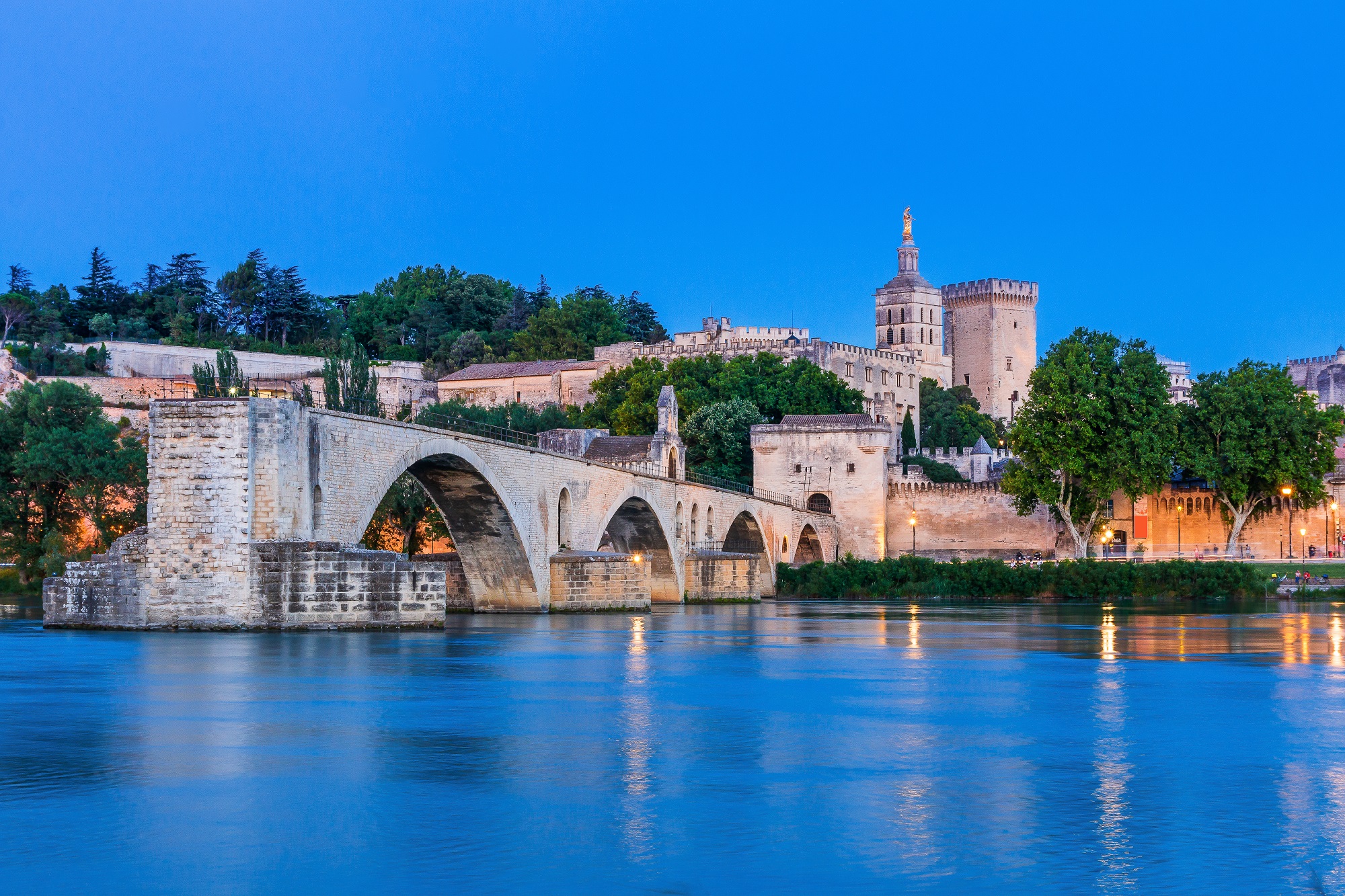
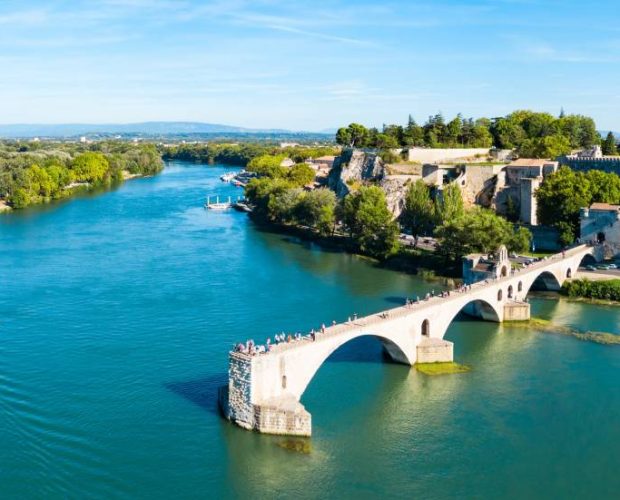
Also worth a look is the St Benezet bridge, one of the largest and oldest in Provence. Built from 1171-1185, it once had 22 arches, but most were destroyed by heavy floods in 1668. One of the remaining arches houses the tiny but beautiful Chapelle St Nicolas.
October 3, 2022
Pinot Gris is a white-wine grape variety originally from Burgundy. It is thought to be a mutant clone of Pinot Noir.
Read article
October 4, 2022
Learn about Roussanne, the elegant white grape native to Rhône. Often blended with Marsanne, explore its unique qualities and rich heritage in our guide.
Read article
August 9, 2024
Uncover the fascinating story behind Bordeaux's 1855 classification. Learn how it shaped the world's most renowned fine wine region.
Read article
September 29, 2022
Pinot blanc is a white wine grape varietal, that is a mutation of Pinot noir grape. It is planted in mostly Alsace, Germany and Northern Italy.
Read article
October 10, 2022
The sauvignon blanc grape varietal, originally from the Bordeaux region of France, is now one of the world's most loved white varieties.
Read article
April 4, 2025
Uncover the rich history of French wine, from its Roman roots to the prestigious Bordeaux, Burgundy, and Champagne.
Read article