Immerse yourself in Santiago de Compostela's vibrant flavors and uncover hidden culinary gems with our expert insider guides. Plan an unforgettable trip today!
Read moreRias Baixas Wine Region Guide
Discover the Essence of Coastal Elegance: Unveiling Rias Baixas, Where Wine and Ocean Meet
Introduction
Let’s collectively banish any notion that Spain is a uniform wine country bathed in endless sunshine. Nothing could be further from the truth: the landscapes of Rias Baixas in Galicia are defined by lush verdant scenery and a great deal of rain. Indeed, the Galicians have little interest in bullfighting and flamenco; the region is Celtic in its origins, as evidenced by the traditional regional instrument, the bagpipe, known as ‘la Gaita.’ In this spiritual and dreamy destination, winegrowers produce one of Spain’s finest white wines: Albariño.
Once upon a time, this wonderful grape was restricted to the taverns of Galicia, enjoyed by locals and the lucky tourists who set foot in this magical region. However, a massive focus on expanding production and international marketing has made Albariño a globally-recognized wine icon. Today, only a fool would omit Rias Baixas and its wines from their list. It’s becoming as big as Sauvignon Blanc.
Discover more about Spanish Wine
History
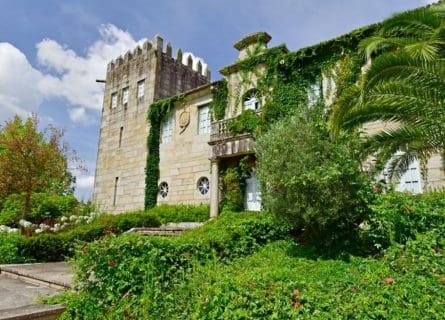
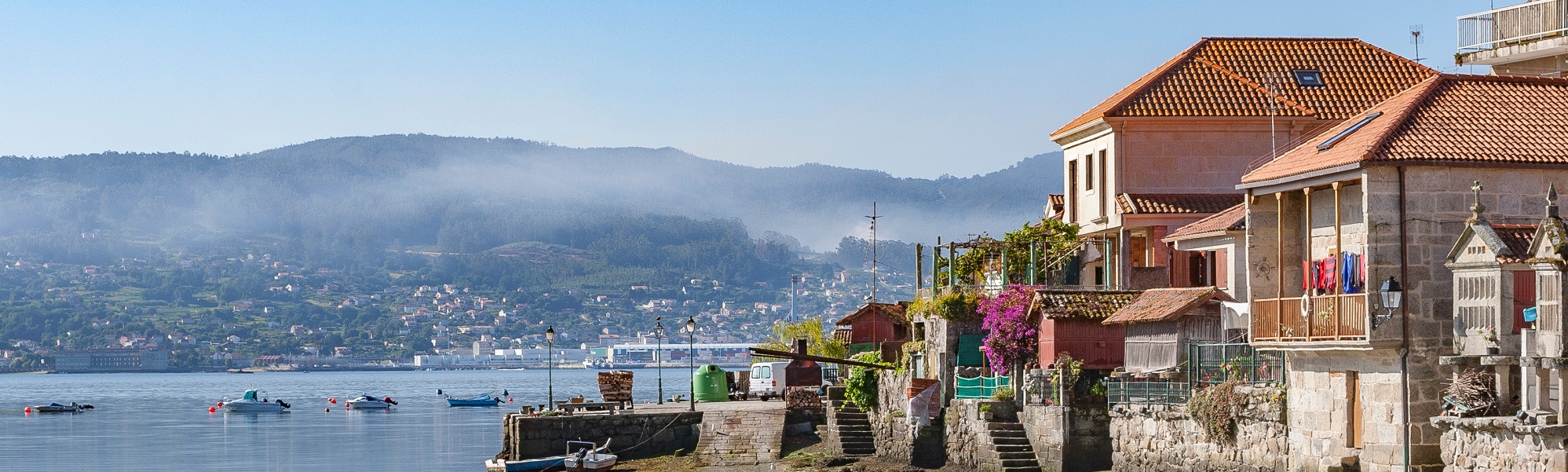
Galicia’s scenery is as evocative as the region’s rich and tumultuous history. In the interior, rolling emerald green hills covered in mist give way to medieval castles and ‘Pazos’ (beautiful, historic manor houses, many converted into small, charming hotels). The extensive coastline, meanwhile, is stunning, with romantic coves and sandy white beaches spotted with quaint fishing villages.
As you might expect, Galicia is Spain’s main seafaring nation. The Galicians have a language distinct from Spanish, called ‘Gallego,’ which resembles a mix of Portuguese and Spanish. It originates in the language used by the ancient Celtic tribes, responsible for keeping the Romans out of northwestern Spain for over a hundred years. However, during the first century BC Cantabrian Wars, they were either killed or absorbed into the Romans’ expanding empire, conquered by the emperor Octavian.
Shifting Powers and Medieval Kingdoms
Yet Rome lost control of the Iberian Peninsula in the 5th century as the Western Empire fell into ruin; a Germanic tribe known as the Suebi arrived in Galicia in 409, founding the kingdom of Galicia. They managed to keep rivals at bay until the Visigothic King Leovigild claimed Hispania for his people. The Visigoths, however, were swept from power by the Moors after Tariq landed an invasion force in 711.
These Arab and Berber armies from North Africa quickly subjugated most of the Iberian Peninsula, albeit Galicia was never properly conquered by Tariq’s men. Instead, medieval Galicia was eventually absorbed into Castilla y Leon following two brief spells of independence in the 10th and 11th centuries. By 1492, the catholic monarchs Fernando and Isabel had retaken the entire country and ejected the Muslims for good.
The discovery of the (supposed) tomb of St James the Apostle in the 9th century was a vital part of the Reconquista; it served as a rallying cry for Christians across Spain. Today pilgrims and tourists still follow the ancient route of religious pilgrimage across northern Spain – one of the most spectacular parts of the route traverses Rias Baixas in the west. Modern Galicia is prosperous; however, the late 1800s were a time of great poverty and despair.
As a result, hundreds of thousands of Galicians emigrated to South America for a better life. Thankfully, restoring democracy following Franco’s dictatorship in the 1970s set the region back on its feet. Galicia is a powerhouse of wine production, agriculture, fishing, and tourism today.
Geography and terroir
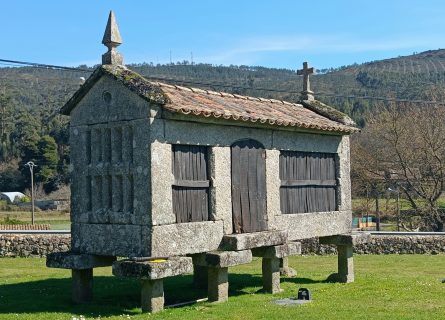
The southern part of Galicia’s west coast is stunningly beautiful. It comprises four large rias or shallow fjords sandwiched between pine-covered hills. The vineyards are found south of Santiago de Compostela, running for about 89 kilometers to within touching distance of northern Portugal.
Unsurprisingly, the prevailing climate is Atlantic, with heavy rainfall and high humidity. Temperatures are mild, only dropping in December and January. There is an average of 2,200 hours of direct sunlight per year, not enough to make rich red wines but perfect for producing the region’s famed whites and light reds.
Ideal Conditions for High-Quality Wine Production
Indeed, the oceanic conditions are highly conducive to slowing the vine’s metabolism, yielding small berries of high-quality fruit bursting with fresh acidity. The soils, meanwhile, are very heterogeneous: alluvial, granite, and clay terroirs can be harnessed in Rias Baixas to make a variety of wine styles.
Yet many growers favor granite, claiming it is responsible for imbuing the whites with a distinct minerality and saline hit that consumers find so appealing.
The wine production area is subdivided into five areas: Val do Salnes, Condado do Tea, O Rosal, Soutomaior, and Ribera do Ulla. Val do Salnés, scattered around the picturesque village of Cambados, is largely planted to Albariño; Rosal is the southernmost zone located just south of the lovely town of Baiona (which has a beautiful Parador hotel).
Albariño and Loureira are required to account for 70% of wine production in Condado de Tea, a mountainous vineyard along the right bank of the Miño River. Meanwhile, Soutomaior (south of Pontevedra) is famous for its gorgeous castle. At the same time, Ribera del Ulla is the newest addition to the Rias Baixas DO, located east of the Valle del Salnés.
Winemaking and regional classifications
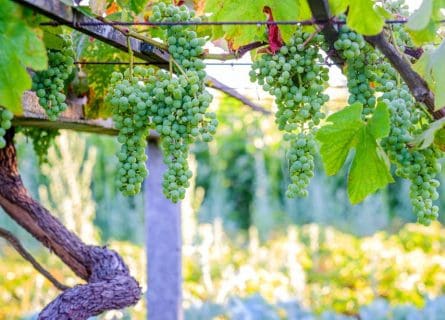
The Rias Baixas DO (appellation) is one of Spain’s most dynamic and successful regulatory councils. In addition to building up a formidable export presence worldwide, the Consejo awards its members a great deal of freedom as long as they comply with high-quality requirements.
As a result, winemaking philosophies vary considerably in the region. Experimentation with fermentation and/or maturation in oak is currently in vogue, as is aging on the fine lees.
Focus on Crisp and Aromatic White Wines
Nevertheless, producing a crisp and aromatic style is the primary objective of the critical mass. This inevitably calls for a slow, cool vinification in stainless steel, yielding a fruit-driven and fresh wine. Most wines produced in the zone are white, often 100% Albariño. However, the authorities permit white and red blends, potentially mixing in a dollop of Loureiro, Treixadura, Caiño Tinto, or Torrontés. The final entry on the list is used as a blending variety in Galicia.
Still, interestingly this grape is being used frequently as a single varietal in Argentina, perhaps evidence of the massive migration of Galicians to Argentina, where Argentines even refer to Spaniards as ‘Gallegos.’ On occasion, Godello will also make an appearance, although its natural home is Valdeorras.
The small volume of Mencia produced in Rias Baixas is excellent: wonderfully fragrant and juicy reds with elegant tannins. In addition, a minuscule amount of bubbly is crafted by a few growers – a niche that should be expanded!
Facts & Figures
-
Key wine styles
- Aromatic dry whites
- light red wines
- a tiny volume of sparkling wine.
-
Appellation structure
- Rias Baixas DO
-
Hectares under vine
- Approximately 4321
-
Average annual production
28 million liters of wine
-
Approximate number of wineries
179
The lowdown
Although every investment carries a degree of risk, shareholders can be confident of a decent return in the bucolic scenery of Rias Baixas.
Thanks to the dynamism of its key stakeholders, the last ten years have seen sustained growth in the production and export of (mainly) white wines, conquering markets as diverse as the US, Japan, and Australia.
Twenty-five years ago, few people outside of Galicia had heard of Albariño, much less Godello or Mencia.
Today, the region’s signature grape has stolen some of Sauvignon’s thunder, competing for the world’s most popular white title.
London-based restauranteur Jose Pizarro says:
“We have always pushed the stylistic link between Albariño and Sauvignon Blanc. Spanish whites are a natural progression for people tired of that variety – we find that consumers love them nine times out of ten.”
So it would not be hyperbole to suggest that the Kiwis should be worried; a small but growing firmament of wineries in the New World have embraced Albariño, particularly in Marlborough and California. Nevertheless, the style of wine they produce is quite different from the Galician benchmark: richer and riper, with less acid and more texture. Thus, the Spanish can rest assured of their near-hegemonic position. There is little chance of an Albariño coup in the South Pacific!
Still, it doesn’t bold well to slip into complacency. The Galicians understand that there are plenty of rivals, not least the attractively priced wines of Rueda in Castilla y Leon. To that end, more and more producers are welcoming barrels into their cellars, using a well-judged degree of oak maturation to add texture and depth to their wines.
Skin contact can also bring a new dimension to Galician whites, in addition to lees aging. Purists might argue that such ’embellishments’ are unnecessary – sacrilegious even. Yet influential sommeliers clearly like a point of difference, and they are the gatekeepers to status and recognition in the on-trade.
The Influence of Rias Baixas’ Superstar Wineries
The DO is also fortunate to host several superstar wineries that have done much to keep the region on its toes. Martin Codax (known for its superb Albariño wines under the Martina Codax, Burgans, and Organistrum brands) is one of the most famous producers; Adegas Galegas and Adegas Morgadío (hugely successful, excellent-value Albariño under the Morgadío label) are also part of the A-list in Rias Baixas.
Bodegas Pazo de Barrantes, meanwhile, is a very stylish, upmarket Albariño made by the same family that owns the world-famous Rioja estate, Marqués de Murrieta, run by the Count of Creixell, Vicente Cebrian, and his sisters. Their job is to ensure that fame doesn’t breed laziness or apathy. So far, they appear to have succeeded.
Key Grape Varietals
-
White grape
Albariño
Savor the Essence of Albariño: Northwest Spain's Delightful White Grape for Seafood Pairings. Explore the Lightness and High Acidity of this Galician Gem. View grape -
White grape
Caino Blanco
Unlock the secrets of Caíño Blanco grape, an intriguing Spanish variety. Delve into its characteristics and origins, and explore the wines it produces. View grape -
White grape
Godello
Discover Godello: Galicia's Exquisite White Wine Grape from Valdeorras. Unveiling the Delights of this Northwestern Spanish Varietal. View grape -
White grape
Loureiro
Explore the captivating world of the Loureiro grape. Discover its aromatic charm, origins, and the remarkable wines it produces. View grape -
White grape
Treixadura
Discover Treixadura grape: Origins, Flavor Profile, and Exceptional Wines—a must-read for wine enthusiasts seeking new taste sensations. View grape -
White grape -
Red grape Caino Tinto
Caino Tinto is a red grape variety that is primarily grown in the Galicia region of northwest Spain. It is known for its high acidity and bright fruit... -
Red grape
Mencia
Unearth Mencía: Spain's captivating red gem. Original and alluring, it emerges from the shadows, captivating wine enthusiasts worldwide. View grape -
Red grape Espadeiro
A red grape variety often used in Vinho Verde blends, with fresh acidity and berry flavors
Rias Baixas gastronomy
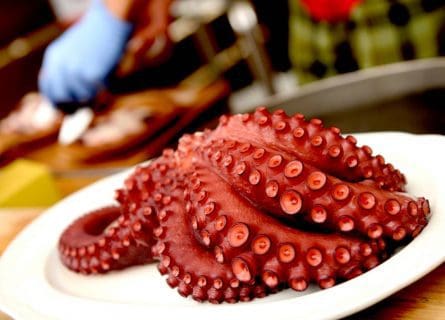
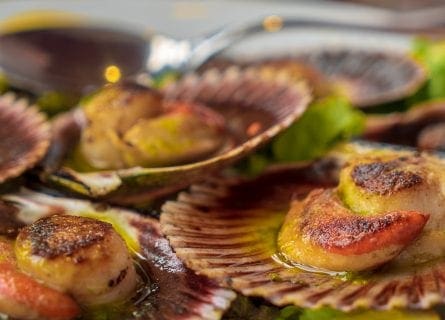
It must be said that Galicia lacks the cachet of the Basque Country (at least in gastronomic terms). Yet the region can hold its own regarding fresh ingredients and exquisite tapas. Your best bet is to head to the nearest bar in Santiago de Compostela, grab a stool, and enjoy. We’d probably start by ordering a chilled glass of white – Albariño, of course – and perhaps some empanadas, jamon, cured sausage, anchovies, and gambas (prawns).
Local cheeses, such as the always delicious tetilla, work fantastically well with Galicia’s fresh and saline whites. But the real highlight is the seafood – expect a smorgasbord of every type of Atlantic fish available.
Cellar Tours Selection of Recommended Wineries
- Adegas Galegas Discover the exceptional flavors of Adegas Galegas, award-winning wines from Rias Baixas, Galicia. Plan your trip today! View winery
- Martín Códax Explore the enchanting world of Bodegas Martín Códax Winery. Uncover one of the finest Galician Albariño wines. Plan your trip today! View winery
- Bodegas Terras Gauda Visit website
- Bodegas del Palacio Fefiñanes Visit website
- Bodegas Zárate Visit website
Nearby Charming Towns and Cities
-

Further Reading
The Cuisine of La Rioja: One of Spain’s Best Wine Producing Regions
January 20, 2022
Unlock the Secrets of La Rioja's Gastronomy: Savor Delectable Tapas & Exquisite Wine Pairings. Plan Your Unforgettable Food Adventure Today!
Read article
Perfect Pairings: Discover the Delightful Harmony of Paella and Wine
April 16, 2018
Embark on a culinary adventure: Paella Wine Pairing - the perfect blend of Spanish flavors elevated by exquisite wine choices. Taste the harmony!
Read article
Discover the Finest Godello and Albariño Wines: A Guide to the Top 10 Bottles
April 26, 2013
Explore the enchanting world of Albariño and Godello, aromatic Spanish white wines with a delightful range of flavors.
Read article
How to Plan and Host a Spanish Tapas and Wine Party
January 9, 2009
Master the art of hosting a Spanish Tapas and Wine Party with our expert guide. Curate an authentic menu, pair tapas with fine wines. Start planning now!
Read article
Basque Cuisine: The Best Pintxos, Seafood & Spanish Wines in Basque Country
January 26, 2022
Embark on a culinary adventure through Basque gastronomy! Our comprehensive guide unveils the flavors of pintxos, cider, and indulgent Basque cheesecakes 🍴
Read article
The Best Paradores for Food and Wine Lovers
April 26, 2021
Embark on a gastronomic journey at our handpicked selection of 10 Parador hotels, perfect for food and wine enthusiasts.
Read articleAuthor