 19 tours
Country tours
Private Wine Tours in Spain
Luxury Food & Wine Journeys Across Spain’s Finest Regions
Rueda is a white-wine-focused DO in Castilla y Leon, centered on Verdejo and spanning 74 municipalities across Valladolid, Segovia and Avila. Its reputation rests on fresh aromatic whites, but old vines, lees aging, oak, and Gran Vino de Rueda increasingly reveal a more ambitious side to the region.
In the 20th century, Spain built an enduring reputation for its versatile, delectable red wines; Rioja, Ribera Del Duero, and Priorat are now major household names. From London to New York, you’ll hardly come across a wine store or restaurant list without at least a broad selection of Spanish wines. Yet the past two decades have also seen a phenomenal explosion of delicious, zesty whites from Spain, with massive buzz around regions like Galicia’s Rías Baixas and Valdeorras, key sources of the mega-trendy Albariño and Godello. Modern Spain, dynamic and innovative, wears its diversity on its sleeve.
However, the greatest revolution in Spanish white winemaking took place in the vineyards of Rueda in Castilla y Leon. Indeed, Rueda can legitimately claim to be the Godfather of modern Spanish whites: Rioja stalwart Marques de Riscal started the ball rolling in the 1970s, transforming a forgotten part of Castilla y Leon into an epicenter of aromatic white wines. The region hasn’t looked back since, with new bodegas, high-end tourism facilities, and a stylistic shift away from the ‘unoaked and fruity’ stereotype keeping the DO relevant and exciting. With the ‘Gran Vino de Rueda’ category now established, there’s no chance of Rueda going stale.
Discover more about Spanish Wine
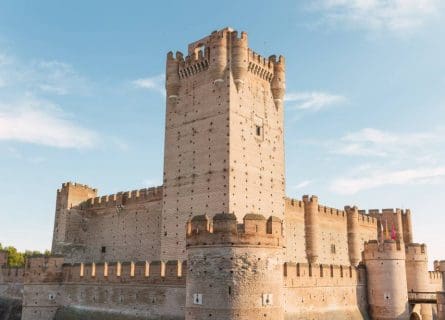
Winegrowing has been a feature of life in Castilla y Leon for many centuries. The Romans were its biggest champions, planting vines throughout their dominions in Western Europe.
In the Middle Ages, viticulture in Castilla y Leon was encouraged by the arrival of Cistercian monks from northern Europe – Spain’s self-appointed wine guardians! In the 11th century, the now-signature Verdejo grape was planted in the Rueda zone; its popularity soared, and the harvests became spectacularly large, far greater than anything seen currently in the region.
By the mid-19th century, Rueda wines didn’t resemble the clean-cut, appetizing thirst-quenchers we enjoy today. Instead, Rueda wines were classically vinified and fortified like sherry, in a style that would be a complete anathema to today’s consumers. Tragically, phylloxera wiped out most of the acreage in the late 1800s until very few vines were left. The industry was devastated.
Fortunately, a turnaround came in the 1970s when leading winery Marques de Riscal explored modern white winemaking in Rueda.
Then other investors caught the scent, flocking to the vineyards of Castilla y Leon as the market for saline white wines exploded into the late 20th century. At the same time, a younger generation of post-Franco winemakers brought modern techniques and a more international outlook to Spanish winemaking.
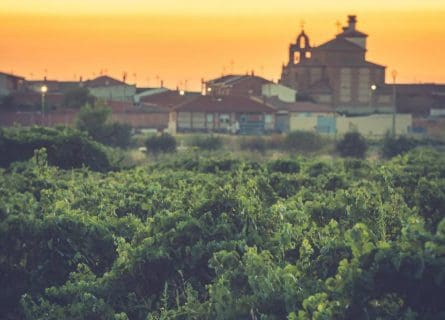
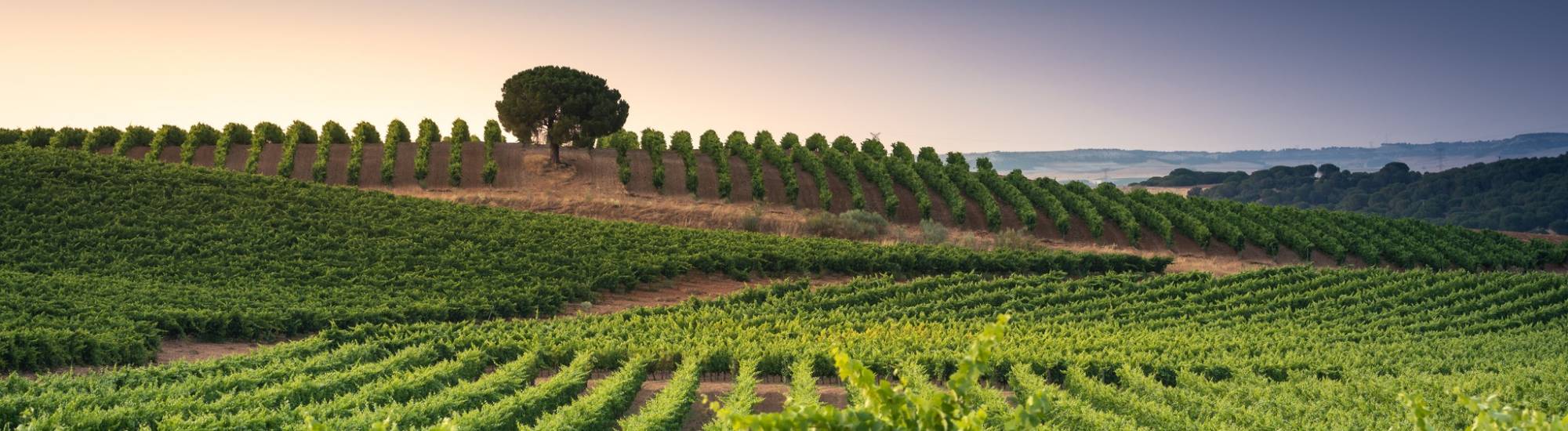
Rueda is a jewel in the vast expanse of Castilla y Leon. Its vineyards stretch across 74 municipalities in Valladolid, Segovia, and Ávila, although the greatest concentration is around La Seca, Rueda, and Serrada. The most important landmark is the river Duero – or the Douro in Portuguese – which forms much of the northern boundary of the appellation.
Mirroring the conditions in neighboring Ribera del Duero, the region’s climate is primarily continental, offering growers sometimes bitterly cold winters and hot summers. Summer days are hot, although temperatures drop considerably at night. Indeed, diurnal temperature variations are key in maintaining the all-important acidity and freshness in the wines.
Diverse Terroir
However, Rueda’s terroir is far from homogeneous. The soils in the region are predominately poor and infertile, ideal for keeping yields sufficiently low for producing high-quality wines. The vineyards near the Duero River benefit from the alluvial deposits and high lime content in the soil; these are considered some of the finest sites for making age-worthy, structured wines.
Growers and producers jealously guard the locations of their most prized vineyards, usually old bush vines that give low yields and are planted on extremely poor, gravelly soils. Elsewhere, there is more sand in the topsoil, typically found in the middle and lower areas of the old Duero terraces.
Verdejo: The Mainstay of Rueda’s Wine Production
The charming Verdejo grape planted across the zone remains the mainstay of production in Rueda. It is Spain’s answer to Sauvignon Blanc. It blends well with the other principal white varieties: Sauvignon Blanc, Viura, Chardonnay, and Viognier. A smattering of red grapes—principally Tempranillo, alongside permitted varieties including Cenicienta, Cabernet Sauvignon, Garnacha, Merlot, Syrah, and Bruñal—are also planted. However, these are primarily inconsequential compared to the volume of premium whites produced in the region.
Valladolid makes a great base for travelers exploring the wider wine country of Castilla y Leon, especially if you pair Rueda with Ribera del Duero. But resist the temptation to cram too much into one day. Two winery visits are ample: one in the morning and another after lunch, with enough time in between for a proper Castilian meal and a bottle of Verdejo rather than a sandwich consumed at motorway speed.
Arrange winery appointments in advance, and let a private driver remove the inevitable debate over who has to spit. Cellar Tours can organize private winery visits, a carefully chosen lunch, and chauffeured transport, so you can focus on the important business of tasting the wines.
Rueda is a relatively young appellation within Spain’s mosaic of established DOs, yet its wines have quickly become a hit with consumers both within and outside of Spain. The timing of its rise to prominence was most opportune: consumers have rejected heavy and extracted styles in favor of gracefulness and lower alcohol. So, in an era where people love fresh, clean, and aromatic whites, Rueda ticks all the boxes.
However, the regulations actually permit the production of dry whites and sparkling, in addition to red, rosé, and a tiny volume of fortified ‘Vinos Dorados.’ But, as you might expect, most wineries focus on exporting still white wines, although interest in sparkling is growing.
Regulations and Versatile Wine Styles
Under the regulations updated in 2024, a Rueda white must contain at least 75 percent principal white varieties. The remaining 25 percent can incorporate a growing list of secondary varieties – the DO is one of Spain’s most progressive and adaptable. Verdejo and Chardonnay work surprisingly well together!
Meanwhile, the niche sparkling category focuses on traditional method wines (minimum 75% Verdejo or Sauvignon Blanc) aged on their fine lees for nine months before disgorgement. The term “gran añada” (great vintage) refers to a vintage sparkling wine aged for over 36 months.
Late-Harvest and Dessert Wines
A few producers like Jose Pariente have also experimented with producing late-harvest dessert wines from the Rueda terroir; their late harvest, 100% Sauvignon Blanc is a thoroughly delicious wine and a match for more famous sweet wine styles like Sauternes. It offers green fruit notes, a gorgeous creamy palate, and that all-important balancing acidity, preventing the wine from cloying.
Of course, a great deal of wine made in the DO is 100% Verdejo. The cliché is a fresh and crisp white for early consumption. Yet Rueda is something of an adaptable chameleon. It ranges from a fruity, refreshing thirst quencher to a structured white of considerable depth, texture, and elegance. A good example offers potent citrus, tropical fruit aromas, and a zesty palate underpinned by that attractive minerality often found in good Chablis. Great Rueda is quite a striking wine, a fitting rebuttal to the critics who suggest Spain cannot produce world-class whites.
20,756 hectares
144.84 million kg of grapes
78
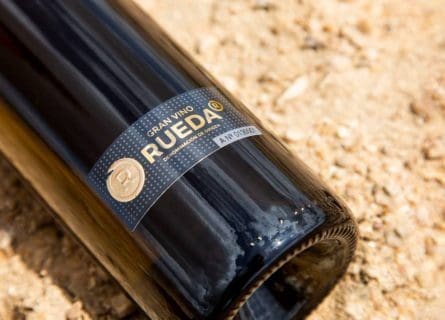
In less than half a century, Rueda’s dynamic firmament of producers has transformed a once-unknown backwater into one of Spain’s leading white wine regions. It has sufficient capacity, a bold vision, and the cachet. Rueda has the domestic – and increasingly international – market for aromatic wines sewn up.
Yet despite achieving this success, the region’s dynamic wineries continue to drive innovation and push for higher quality standards in the DO. In recent times, the use of oak has become a hot topic, with some wineries choosing to ignore the lure of barrel fermentation and aging. In contrast, others insist it adds an extra dimension to an already well-established wine. In addition, barrel-fermented versions are increasingly becoming fashionable and add weight and texture, although some feel that this detracts from the pure, saline quality of Rueda.
Gran Vino de Rueda
The crux of the argument concerns Rueda’s future as a major player in premium white wines. A growing number of producers want to broaden the style’s appeal and tap into the super-premium/luxury segment. This catalyzed the Gran Vino de Rueda category, introduced as part of the DO’s new classification framework.
To qualify as a Gran Vino de Rueda, growers must source their fruit from old vines (over 30 years old) and harvest a restricted yield of 6,500kg per hectare. In addition, only 65% of the total yield can be made into wine. The wine must also remain in the winery for at least 12 months.
The Future of Rueda
What emerges in your glass resembles white Rioja: pungent and full-bodied, with a depth that unoaked Verdejo can sometimes lack. Does Gran Vino represent Rueda’s new face? Probably not – the market continues to demand saline whites at affordable prices. However, diversification into the luxury segment can do no harm to the region. Rueda has added a new string to its bow.
Castilla y Leon is renowned for the quality of its meat: exquisite roast suckling pig, milk-fed lamb, wild boar, and seasonal game. Yet a chilled glass of Rueda calls for something on the lighter side. Fear not: plenty of freshwater fish is available in the region’s many excellent restaurants, prepared by chefs who value traditional recipes and fresh ingredients above all else. But, for many visitors, the true magic of dining out in Spain is wandering from tapas bar to tapas bar, drinking in the atmosphere with a glass of Verdejo in tow.
Guide to the gastronomy of Castilla y Leon: Read more
Explore further
Discover private journeys, the complete wine region guide, and expert stories from across Spain.
19 tours
Luxury Food & Wine Journeys Across Spain’s Finest Regions
 5 days
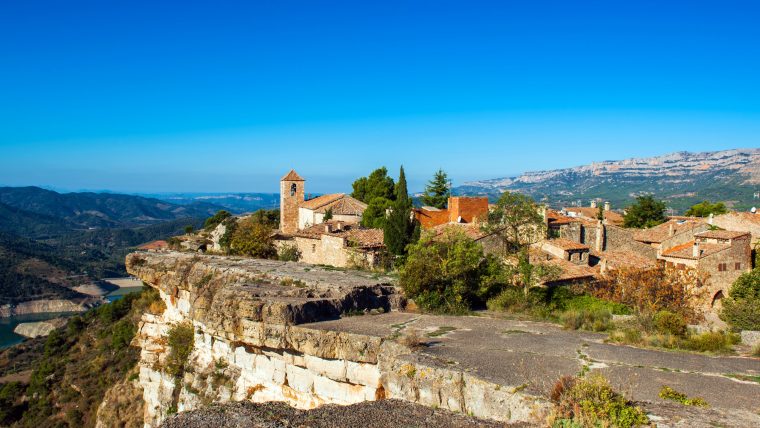
Old-vine Garnacha, slate soils and Montsant scenery.
 3 days
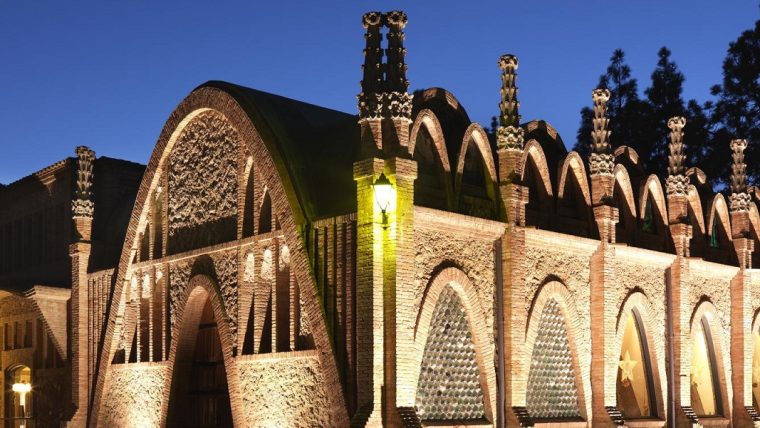
Private Cava and Corpinnat visits, vineyard lodging and Catalan dining over three days.
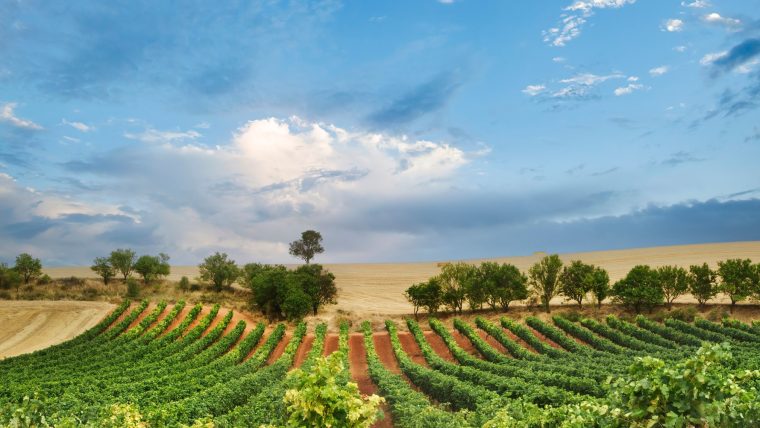
Compare Spain’s leading wine regions by signature grapes, scenery, best base, travel time, and ideal stay.
Explore regions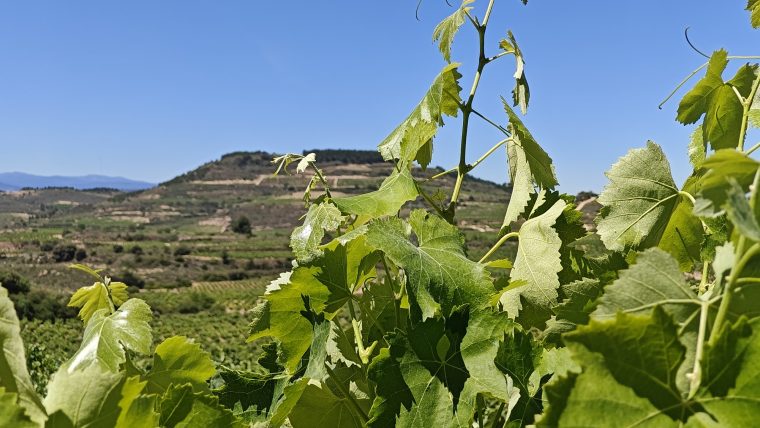
Spain's wine industry excels in organic wine production, preserving terroir and ecosystems. Learn about organic winemaking, certifications, and top Spanish wineries.
Read article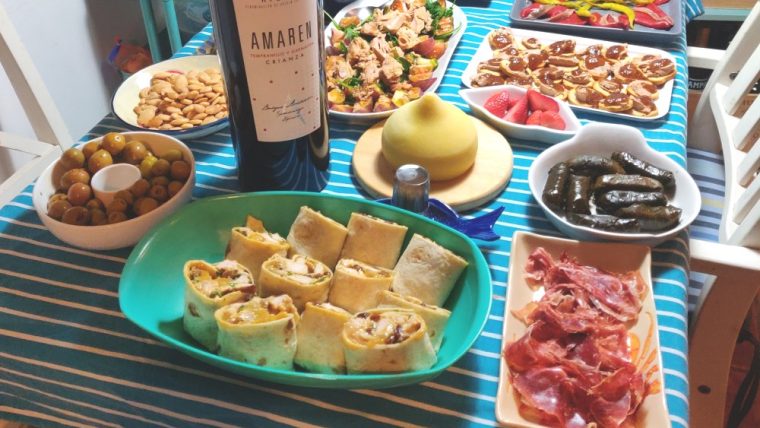
Explore the diverse flavors of Spanish wines. Learn to master the art of pairing wines like Albariño, Rioja, and Cava with your favorite dishes.
Read article