Ribeira Sacra Wine Region Guide
Mencía, Godello and heroic vineyards above the Sil and Miño.
Introduction
Galicia is a white wine powerhouse, exporting Spain’s most fashionable white variety: Albariño. Yet this exquisite drop is far from being the only local specialty in northwestern Spain. In the impossibly steep slate terraces of Ribeira Sacra, growers produce an ever-growing volume of Mencía. Heard of it? If not, we implore you to give Mencía a try: Galicia’s star red grape yields a style of wine that is most definitely in vogue – all sappy fruit this and low alcohol that. Supple in tannin and powerful in flavor, Mencía deserves to be Galicia’s next big thing. Sommeliers, buyers, and critics are busy making it happen.
Discover more about Spanish Wine
History

No one knows precisely when winegrowing began in Galicia, although viticulturists are fairly sure that it predates the Romans. By the Roman period, however, viticulture was firmly established in Ribeira Sacra, and tradition attributes the construction of some of the steep vineyard terraces to Roman growers.
A new winegrowing culture began to emerge in Ribeira Sacra during the Middle Ages, as Benedictine and Cistercian monks established communities throughout the region. These religious orders greatly expanded viticulture across the terraced slopes – locally known as socalcos – that now define the landscape of this spectacular region. The area’s wine industry thrived for centuries until phylloxera wiped out most vineyards.
Yet the vines returned. Mencía, already present in the region, emerged as the dominant red variety after growers replanted on resistant rootstocks. Awarded DO (appellation) status in 1996, Ribeira Sacra has gone from strength to strength.
Geography and terroir

Welcome to the ‘Sacred Shore’ of Galicia – a name long associated with the region’s extraordinary concentration of monasteries and religious foundations. Situated northeast of Ourense, Ribeira Sacra’s vineyards flank both the Sil and Miño Rivers, planted on vertiginous terraced vineyards that invoke the awesome beauty of the Douro – home of Port. Indeed, with gradients rising to over 80 percent, it is little wonder that only the most dedicated farmers remain committed to growing grapes in the zone. Machine harvesting, the most cost-saving of mechanical inputs, is simply not feasible in much of the land.
Yet the terroir is undeniably first-rate. The local macroclimate is less influenced by the Atlantic than Rías Baixas, with consequently less rainfall in the summer and fall. Moreover, there is less humidity in Ribeira Sacra; fungal diseases can plague the coastal regions of Galicia, a problem that decreases as you move into the interior.
Metamorphic slate and granite soils provide warmth during the spring and offer excellent drainage during the rainy winter. The best climats (vineyard sites) enjoy a south-facing aspect and an elevated position over the river, with diurnal temperature variation responsible for the crunchy fruit and vibrant acidity that defines Galician red and white wines.
Subzones of Ribeira Sacra
The appellation is divided into five subzones:
- Amandi
- Chantada
- Quiroga-Bibei
- Ribeiras do Miño
- Ribeiras do Sil
Many growers consider the vineyards of Amandi to be Ribeira Sacra’s finest, cultivated on the north bank of the River Sil. Everything is perfect here: drainage, slope, aspect, and elevation. The vineyards of Chantada on the western shore are no less privileged in terms of aspect, although the closer proximity to the Atlantic can be a challenge in wetter years. In contrast, the mesoclimate of Quiroga-Bibei is decidedly warm due to the distance from the ocean.
However, Ribeiras do Sil on the southern shore of its namesake river was once considered too cool to successfully ripen Mencía. Today, climate change has reevaluated the zone’s potential. Ribeiras do Miño on the eastern slope of the river produces some of Ribeira Sacra’s best white wines: perfumed and fresh. Yet the Reds are no less impressive.
Planning a wine trip
Monforte de Lemos is a good place to base yourself while exploring Ribeira Sacra, particularly Amandi and the vineyards above the Sil. The Parador de Monforte de Lemos is a comfortable hotel set in the former palace and monastery of San Vicente.
Distances in Ribeira Sacra are deceptive. On the map, two wineries may appear to be practically neighbors; on the ground, steep valleys, narrow roads and endless bends can turn a short transfer into something considerably longer. Anyone prone to car sickness should take note.
Nor should you plan on more than two winery visits in a day. It is wiser to hire a chauffeur, take your time, and stop for a long lunch with a bottle of local Mencía or Godello.
Planning resources
Winemaking and regional classifications

Ribeira Sacra wines fall into two main categories: Ribeira Sacra and Ribeira Sacra Súmmum. To qualify as Súmmum, at least 85 percent of the wine must come from the appellation’s principal grape varieties. Ribeira Sacra reds, meanwhile, must contain at least 70 percent Mencía.
The list of principal red grapes extends beyond Mencía to Brancellao, Merenzao, Sousón, Caíño Tinto, Caíño Longo and Caíño Bravo. Garnacha Tintorera, Mouratón, Tempranillo and Gran Negro are also authorized as secondary varieties.
Emphasis on Mono-Varietal Wines
Opinions vary wildly regarding whether a Burgundian or Bordeaux philosophy should reign supreme in northwestern Spain. We find that Mencía and Godello rarely need other grape varieties in the blend. Pure Mencía delights with its beautiful, sappy fruit and expressive bouquet; it doesn’t need embellishments.
That said, some level of maturation in wood can bring welcome structure and complexity to both Mencía and Godello wines – Albariño is easily overwhelmed by new barrique. An official DO-sanctioned designation, creatively entitled ‘Barrica,’ covers the production of oak-aged wines in Ribeira Sacra. But the requirements are hardly stringent: three months in oak for the whites and six months for local reds. Wines labeled ‘Guarda’ must age at least four months for whites and seven months for reds in approved vessels other than steel or polyester.
Future Prospects
Of course, leading bodegas do not have to comply with the bare minimum regulations – this becomes glaringly obvious during any tasting of the region’s top labels. Ribeira Sacra is the flavor of the month right now, producing an astonishing volume of high-quality wines that, for the most part, are very affordable. Expect more labels at your nearest restaurant and wine store in the future.
Facts & Figures
-
Key wine styles
- Light red wines
- aromatic dry whites
-
Appellation structure
- Ribeira Sacra DO
-
Hectares under vine
- Approximately 2,500 hectares
-
Average annual production
2025 harvest: 4.62 million kg of grapes
-
Approximate number of wineries
83 (2025)
The lowdown

In the 20th century, the garagiste wineries and micro-production cuvées concept was an anathema to the Spanish wine establishment. The nation’s industry was based on volume and a generally low average price, one or two exceptions aside. Indeed, Rioja’s Consejo Regulador imposed strict rules that limited the ability of smaller estates to send their wines abroad, ensuring that the big brands dominated foreign markets. This only changed in the early 2000s, after the emerging Spanish fine wine sector introduced consumers to flavors beyond Sherry, Cava, and Rioja.
The Rise of Artisan Labels
However, artisan labels are now all the rage in Spain; about 20 percent of Ribeira Sacra’s growers market less than 5,000 bottles of wine. The rise of single-vineyard expression, meanwhile, continues to excite the critics and lure in buyers; Guímaro Finca Pombeiras is a beguiling mix of Caíño Tinto, Garnacha Tinta, Mencía, and Sousón. These wines represent the future of Spanish fine wine, bringing younger drinkers into the category; older connoisseurs are likely to gravitate towards Rioja and iconic names like Vega Sicilia.
Some of the best labels, such as Dominio do Bibei’s Lapena, are produced in tiny volumes, often less than five barrels of wine. This would have been simply unthinkable in the 1900s.
Of course, marketing scarcity from a relatively new face in fine wine can be challenging. Often sold via tight distribution channels to a very niche audience, Ribeira Sacra’s growing club of small-production labels need every advantage they can muster. Fortunately, the rise of social media marketing has made it easier to reach consumers directly, while hipster sommeliers are very much on board with the DO’s fresh and fragrant style. Today no self-respecting New York restaurant wine list can omit Ribeira Sacra. It’s just too damn cool.
Key Grape Varietals
-
White grape
Albariño
The dominant grape of Rías Baixas, particularly in Val do Salnés. Its naturally high acidity and pronounced aromatics underpin the region's fresh, Atlantic white wines. View grape -
White grape
Godello
Godello is a Galician white grape known for freshness, perfume and texture, producing both crisp young wines and richer, age-worthy styles. View grape -
White grape
Loureira (Loureiro)
Loureira is an aromatic, high-acid white grape central to O Rosal blends, where it traditionally works alongside Albariño and other local varieties. View grape -
White grape
Treixadura
Treixadura is most closely associated in Rías Baixas with Condado do Tea, bringing freshness, balanced acidity and floral-fruit character to white blends. View grape -
Red grape -
Red grape
Garnacha Tintorera (Alicante Bouschet)
Alicant Bouschet is a red wine grape popular in the Alentejo located in Southern Portugal. It's a cross of Petite Bouschet and Grenache grapes. View grape -
Red grape Caíño Tinto
Caíño Tinto is a red grape variety that is primarily grown in the Galicia region of northwest Spain. It is known for its high acidity and bright fruit... -
Red grape
Mencía
Mencía is an aromatic red grape from northwestern Spain, known for fresh acidity, red fruit, floral notes and supple tannins. View grape -
Red grape Merenzao
Merenzao is a red grape variety found in Galicia, Spain, known for producing wines with vibrant flavors, moderate tannins, and a distinctive character that reflects the region's unique... -
Red grape
Sousón (Sousao)
Discover Sezão, the dark-skinned Portuguese grape used in port and table wines, boasting rich flavors and a captivating history. 🍇🍷 View grape
Ribeira Sacra gastronomy
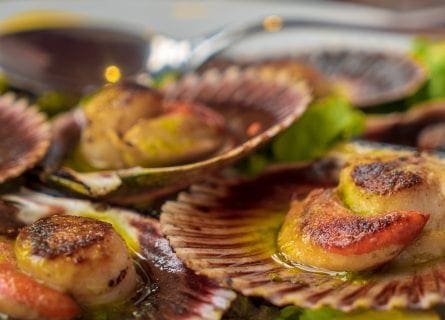
When you visit Galicia, you must try the famous Tarta de Santiago, a moreish almond cake that even sugar-phobics find irresistible! Yet much of the local cuisine is a guilt-free experience, based on fresh ingredients and diet-conscious choices like Atlantic seafood, shellfish, seasonal produce, and fruit grown in market gardens. Of course, there is plenty of opportunity for gastronomes to indulge in the numerous tapas bars of Galicia, where bite-sized morsels must be enjoyed with a glass of Ribeira Sacra Godello or Mencía.
Guide to Galician Gastronomy: Read more
Wineries Recommended by Cellar Tours
Explore further
Continue Exploring Spain
Discover private journeys, the complete wine region guide, and expert stories from across Spain.
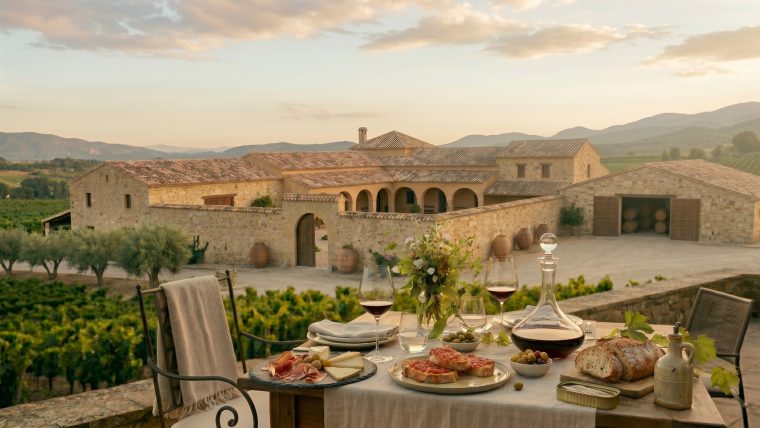 19 tours
Country tours
Private Wine Tours in Spain
Luxury Food & Wine Journeys Across Spain’s Finest Regions
 14 days
Private tour
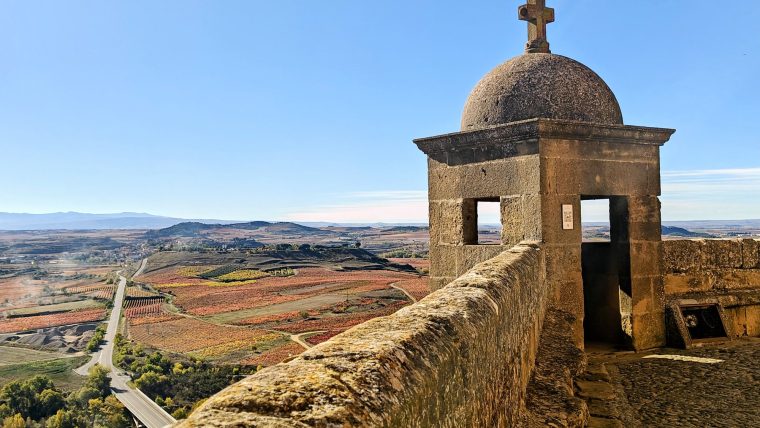
Private Food & Wine Tour in Northern Spain
Ribera del Duero, Rioja and the Basque Country, all in one private journey.
 1 day (ideal from Madrid)
Private tour
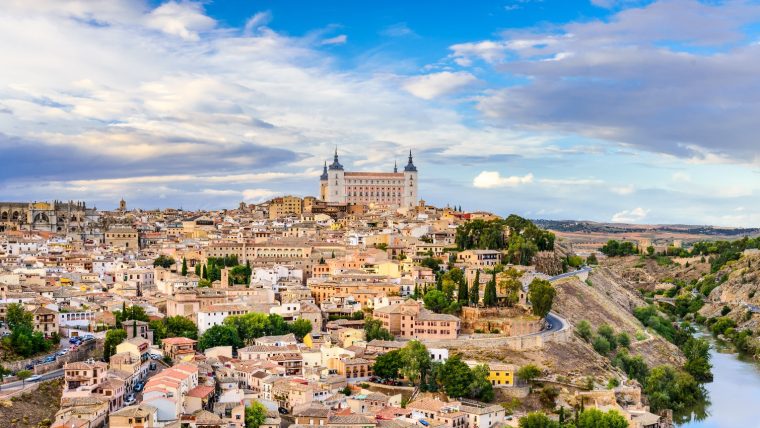
Private Toledo Wine Tour from Madrid
From Madrid, discover Toledo-area wines, historic Toledo, and a gourmet lunch.
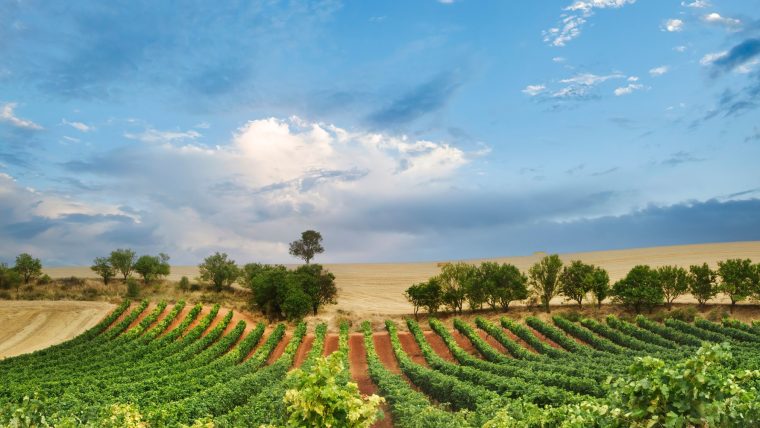
Wine regions
Best Wine Regions in Spain
Compare Spain’s leading wine regions by signature grapes, scenery, best base, travel time, and ideal stay.
Explore regions
Article
10 Godello & Albariño Wines to Try from Galicia
Discover 10 standout Godello and Albariño wines from Galicia, selected by wine expert Genevieve Mc Carthy, with tasting notes and food pairings.
Read article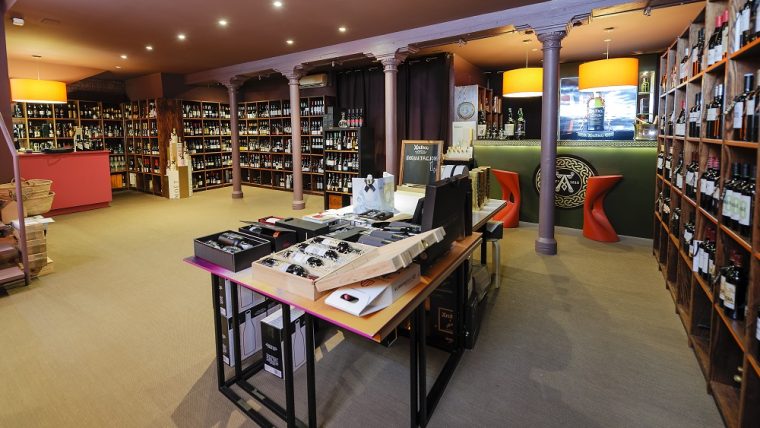
Article
Best Gourmet Food & Wine Shops in Madrid
Discover Madrid's Best Gourmet Food & Wine Shops. Indulge in Culinary Delights & Exquisite Wines in the Vibrant City.
Read articleAuthor