Franciacorta Wine Region Guide
Franciacorta: Beyond a Mere Imitation – A Unique Symphony of Terroir, Tradition, and Quality
Introduction
The standard approach to Franciacorta is to describe it as “an Italian facsimile of Champagne.” This generalization works up to a point: the appellation is renowned for its traditional-method sparkling wines, typically involving blends of Chardonnay and Pinot Noir. Similarly, Champagne has a culture of long aging for the best cuvées, producing wines of incredible depth and complexity. And, like Champagne, the crème de la crème of Franciacorta is seldom cheap.
There are significant differences in terroir, climate, and philosophy when comparing Franciacorta to France’s premier sparkling wine region. The area under vine in Franciacorta is relatively small, about one-tenth the size of that renowned French vineyard. Furthermore, Franciacorta is still carving out its niche in export markets, unlike its well-established Gallic counterpart, and notably, Pinot Meunier is absent in its blends. Describing Franciacorta merely as a “Champagne imitation” dramatically underestimates the region. Franciacorta is a winegrowing area with a distinct history and cultural identity, proud and focused on quality, and it does not play second fiddle to any other region.
History
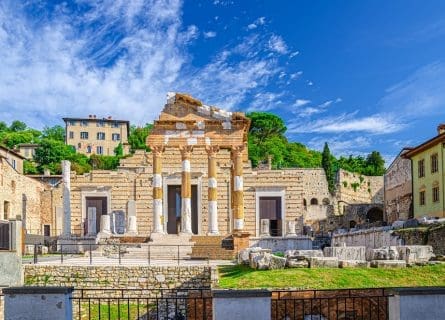
In 222 BC, the Romans founded Mediolanum (Milan) in Lombardy’s rich, fertile landscape. Three years earlier, the city of Brescia had submitted to Roman authority – this would become the center of sparkling wine production in the region, albeit the first bottles did not start to appear until the 20th century. But winegrowing has taken place since the ancient era, and Brescia’s wines were extolled in the writings of Pliny the Elder, Columella, and Virgil.
Indeed, both Mediolanum and Brescia played a key role in Rome’s political history; the Visigoths attacked the latter in the early 5th century, followed by Atilla the Hun and the Ostrogoths. By AD 476, the Western Roman Empire was in ruins, and chaos reigned.
In the 6th century, however, the Lombards captured Brescia, and a period of relative stability returned. As the capital of a semi-independent duchy, the city flourished as a major center of trade and commerce in Lombardy. Yet, in 774, the First Holy Roman Emperor Charlemagne pushed the Lombards out of northern Italy at the behest of the Catholic Church. This once-provincial city became the de facto capital of the Holy Roman Empire under the direction of Louis II the Younger. Meanwhile, the surrounding vineyards of Franciacorta were renowned for producing “frizzante” wines in the Middle Ages, effervescent rather than sparkling in the sense we think of them today. Nonetheless, they inspired the first book ever written on sparkling beverages; Brescian physician Geronimo Conforto wrote the book Libellus de Vino Mordaci in 1570. He used the adjective “mordace” or “biting” to describe the wines of Franciacorta.
However, the origins of the nomenclature remain uncertain. There are two predominant theories regarding the etymology of the word Franciacorta: the first is that it is named for the “france corte” or tax-free zones, which it encompassed. The area was inhabited by religious orders in the eleventh, twelfth, and thirteenth centuries that were not subjected to the taxes of the ruling Brescians. Yet historian Lacopo Malvezzi believes that Charlemagne named the area in the 8th century. In 744, the Frankish king found himself near the town of Rodengo Saiano on the feast day of San Dionigi; however, he had promised to spend that day in Paris. Charlemagne called the area “little France,” hence Franciacorta to alleviate his conscience.
The first traditional-method wines were produced by Guido Berlucchi’s winemaker, Franco Zilani, in 1961. Doing so at the time seemed utterly pointless, however, as the wines of Franciacorta were all still and consumed in the immediate area, which was mainly a vacation area for wealthy Brescians. But, when Berlucchi tasted the fruits of Zilani’s labors, he realized the potential of Franciacorta for high-quality sparkling wine production, and the history of viticulture was changed. Along with a handful of other producers like Bellavista and Ca’ del Bosco, their vision – and wealth – enabled them to build this unique sparkling wine-only appellation based solely on the principle of quality. Franciacorta was subsequently elevated to DOCG (Denominazione di Origine Controllata e Garantita) in 1995.
Geography and terroir
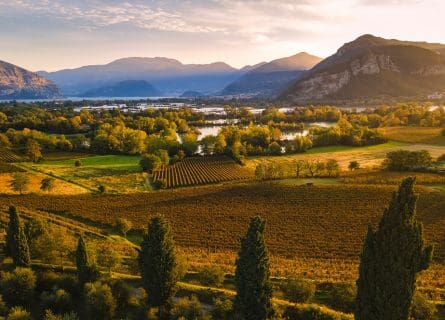
Franciacorta is a relatively small appellation encompassing 3000 hectares under vine, shared among 200 growers. It is situated 70km east of Milan, at the foot of the Italian Alps. Geologically, the zone results from glacial activity, which descended upon the Val Camonica and shaped it. As a result of this activity, many minerals were deposited here, which sit atop the substratum. These minerals are essential in viticulture – critical for wine aromas and soil drainage. It is one of the reasons why Franciacorta is celebrated as a premium terroir for still and sparkling wines in Lombardy.
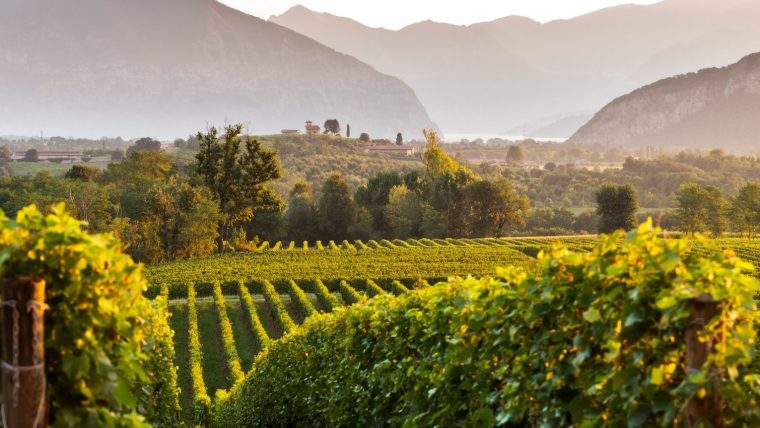
It is also extraordinarily beautiful. The vineyards are planted on an amphitheater-shaped chain of hills near Lake Iseo that protect the valley from southern winds. Climatically, Franciacorta is much milder in the winter than most sub-alpine zones, while summers are relatively hot and dry. Over 64 soil types have been identified within the appellation boundaries, including calcareous, sandy soils, and rock fragments deposited by glacier movements. As a result of this soil diversity, there are plenty of blending options in Franciacorta; growers seek out the coolest sites to maintain acidity and freshness in their wines.
Chardonnay is the most prominent variety in Franciacorta, followed by Pinot Noir and Pinot Bianco. The latter came to the region long before Chardonnay; however, it is declining in importance as winemakers continue to prioritize Champagne’s leading duo. There have also been some experiments with Erbamat, an indigenous white grape that yields high-acid base wines that are increasingly useful in the fight against climate change.
Winemaking and regional classifications
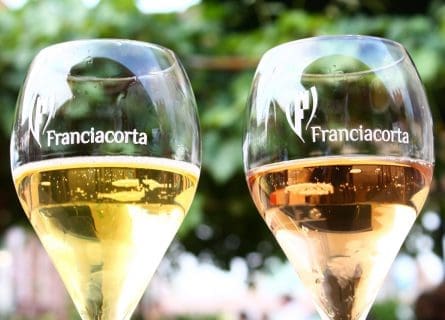
Franciacorta is relatively straightforward to understand, having taken inspiration from the French regarding winemaking and production rules. Moreover, like Champagne, Franciacorta is produced as a non-vintage and vintage style, available at various price points; white and rosé wines are made, and the latter must contain at least 25% Pinot Noir.
But most labels are blends of Chardonnay, Pinot Noir, and possibly Pinot Bianco (maximum 50 percent), marketed as a Brut style. Yet while Champagne insists on a minimum aging period of 15 months on the lees, Franciacorta requires 18 months as standard. There are also many zero-dosage wines on the market, more than you would typically find in Champagne.
However, Franciacorta is made broadly like its Gallic cousin regarding production methods. After the grapes have been harvested and the wines have been fermented, bottles are filled with the wine and a yeast/sugar concoction known as liqueur de tirage. The yeast will then cause a secondary fermentation in the bottle, which eats up the sugar, releasing carbon dioxide into the solution.
The wine is then left in contact with the yeasty sediment, or lees, for the legally defined minimum period. During the aging process, the bottles are turned occasionally, causing the residual yeast to collect in the neck of the bottle. After sufficient aging, the yeast is removed from the bottle with a process known as disgorging and is then re-corked.
Of course, what emerges in your glass can vary dramatically, depending on the period of lees aging, the brand in question, and the specific blend. Indeed, styles range from light and airy to vinous and rich; however, very few poor wines are being made in Franciacorta today. One of the most popular categories is Saten – the local name for Blanc de Blancs sparkling wine. Created by Mattia Vezzola, winemaker at Bellavista, this gorgeous interpretation of local terroir is bottled under less pressure than NV Franciacorta Brut; the smoothness and elegance of such wine have won it massive favor abroad. For many consumers, Saten is Franciacorta.
Facts & Figures
-
Key wine styles
- Traditional-method sparkling wines
-
Appellation structure
- DOCG Franciacorta
-
Hectares under vine
3000
-
Average annual production
20 million bottles per annum
-
Approximate number of wineries
100
The lowdown
Franciacorta is one of Italy’s greatest, if not the greatest, success stories. Are we being hyperbolic? Not at all: Few regions have established themselves to this extent in less than 60 years. Well-known—and more popular than Champagne in Italy—Franciacorta is a triumph of shrewd, intelligent marketing.
Yet the appellation is centered upon high quality rather than promotional gimmicks and celebrity endorsements. Much smaller than its rival in France, Franciacorta has maintained an admirable focus on consistency of output, with few lackluster brands. Moreover, the sustainability movement is in full swing – over 2000 hectares of vineyards are either certified as organic or are undergoing conversion in the zone.
“Some of the most important trends in Franciacorta are sustainability, low dosage, and indigenous varieties,” said Silvano Brescianini, president of Consorzio Franciacorta. “The region has been focusing on sustainability and biodiversity for many years; in 2012 we certified the carbon footprint of the region and more than 50% of our vineyards are organic. We are also undertaking a new study on biodiversity, and we have an ambitious project regarding the zoning. Regarding the trend of grape varieties, we have recently introduced Erbamat, an indigenous grape present in Brescia already 5 centuries ago, and we are continuing to study it.”
It is also a region that can successfully market (unlike Cava) prestige cuvées at Dom Perignon prices. All agree that Cuvée Anna-Maria Clementi is in a league of its own, produced by the legendary house Ca’ Del Bosco. To quote sparkling wine expert Essi Avellan MW: “Anna-Maria Clementi is unmatched in quality by any Italian sparkling wine. Stunningly rich and caressingly velvet-smooth with superb coffee and toast notes over lemon and many other delicious nuances. Today, it is better than ever.” But Franciacorta has growing competition, not least from fierce rival Bellavista.
Meanwhile, Brescia’s tourist infrastructure continues its expansion, with new tasting rooms, restaurants, and luxury hotels opening at a cracking pace. Today, visitors can expect a glorious surprise in its sparkling wines’ quality, variety, and value. But, unlike 20 years ago, these superlative bottles can now be enjoyed on-site, with spectacular views of the vineyards.
Are there any challenges on the horizon? Absolutely – relatively little Franciacorta is exported, which the conzorzio seeks to change. The rest of the world should, of course, seize the opportunity with both hands. Franciacorta is a tremendous alternative to Champagne and the perfect excuse to add a little Italian flair to your wine cellar.
Key Grape Varietals
-
White grape
Chardonnay
Chardonnay is a green-skinned grape varietal native to the Burgundy wine region in France and one of the most popular varieties worldwide. View grape -
White grape -
White grape
Pinot Bianco (Pinot Blanc)
Explore Pinot Bianco: Shaping Excellence in Franciacorta & Alto Adige Wines. Versatile and Unique Grape, Unveil Its Secrets!" View grape -
Red grape
Pinot Noir
Pinot Noir is one of the world’s great red wine grapes. Learn its flavors, food pairings, key regions, Burgundy styles, Champagne role, and why it is so difficult... View grape
Brescia gastronomy
Brescia’s restaurants conjure times past, emphasizing traditional recipes, seasonal ingredients, and no fuss. But despite the advent of molecular gastronomy, many visitors delight in the lively atmosphere of a family-run trattoria – a thriving and satisfying part of daily life in the region. Uccelli scappati is a local highlight: veal cutlets rolled in pancetta and sage before being sautéed in butter and white wine. Meanwhile, pasta lovers will go nuts over Casoncelli di Barbariga, a traditional Brescian pasta dish of parcels filled with breadcrumbs, hard cheese, Parma ham, spinach, garlic, sage, and butter. Enjoy it with a chilled glass of Saten, and your evening will be complete.
Guide to the Gastronomy and Cusine of Lombardy: Read more
Wineries Recommended by Cellar Tours
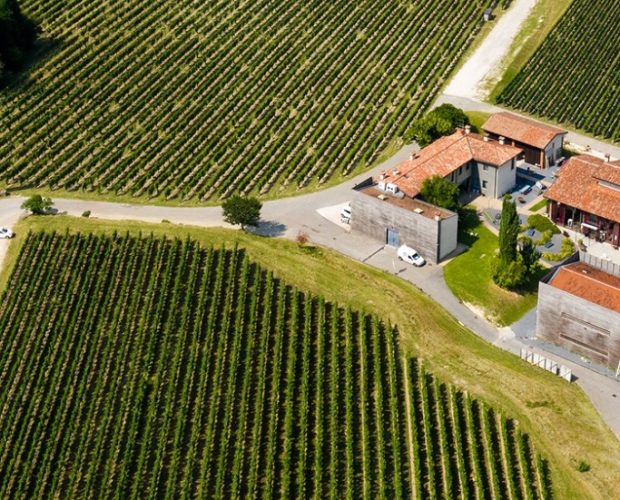
- Bersi Serlini Bersi Serlini, an ancient winery in Franciacorta, blends monk's heritage with modern design for premium sparkling wines in a stunning lakeside setting. View winery
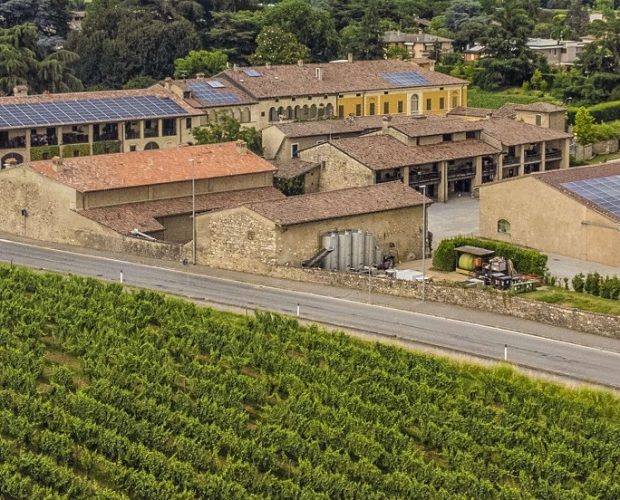
- Il Mosnel Discover Il Mosnel in Franciacorta: a hidden gem offering the finest Italian sparkling wines. Experience a rich history and exquisite "Bollicine" in a beautiful setting. View winery
Explore further
Continue Exploring Italy
Discover private journeys, the complete wine region guide, and expert stories from across Italy.
 46 tours
Country tours
Private Wine Tours in Italy
Private, Chauffeured Wine Journeys Across Italy’s Finest Regions
 4 days
Private tour
Private Wine Tour in Franciacorta
Sparkling wine, Lake Iseo and Michelin dining near Milan.
 Full day (approximately 9–10 hours from Venice)
Private tour
Private Prosecco Wine Tour from Venice
Two private Prosecco Superiore winery visits, a wine-country lunch, and chauffeured touring from Venice.
Wine regions
Best Wine Regions in Italy
Compare Italy’s leading wine regions by signature wines, scenery, best base, travel time and ideal stay
Explore regions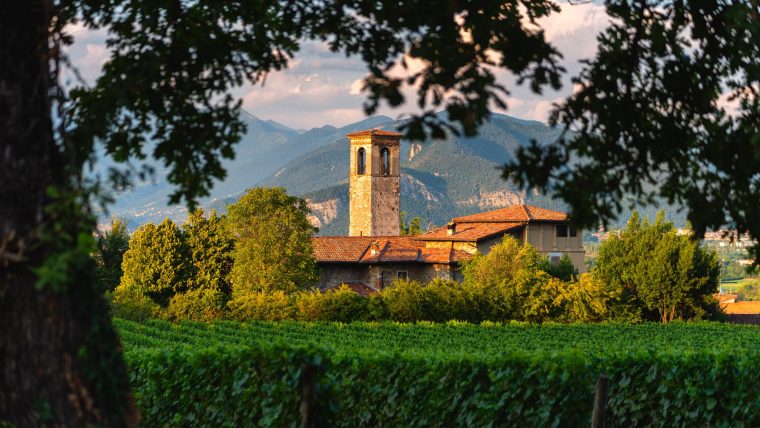
Article
Franciacorta Uncorked: Italy’s Premium Sparkling Wine
Explore the beauty of Franciacorta and discover the unique qualities of Franciacorta sparkling wine from Northern Italy.
Read article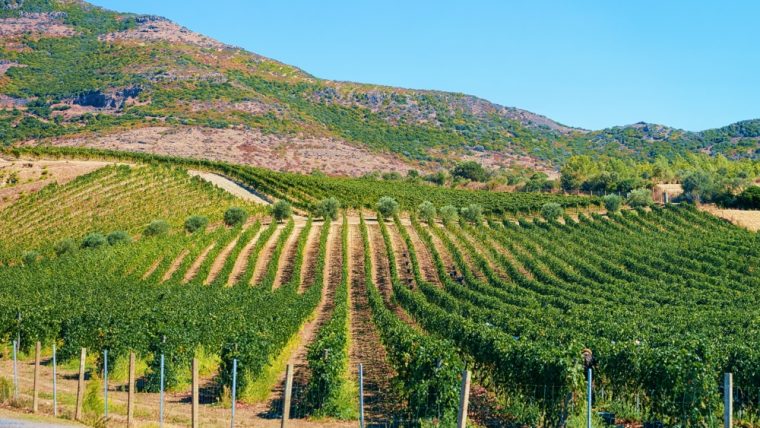
Article
Vermentino Grape Variety: The Jewel of Sardinia
Explore the Renaissance of Sardinian Vermentino: From Forgotten Grape to Crisp Elegance. Discover Now!
Read articleAuthor