 21 tours
Country tours
Private Wine Tours in France
Unveiling France's Finest: Customized VIP Wine Tours and Gourmet Escapes
Explore the unique flavors of Loire Wines at Nantes’ first five-star hotel, Maison Maubreuil, featuring exquisite selections.
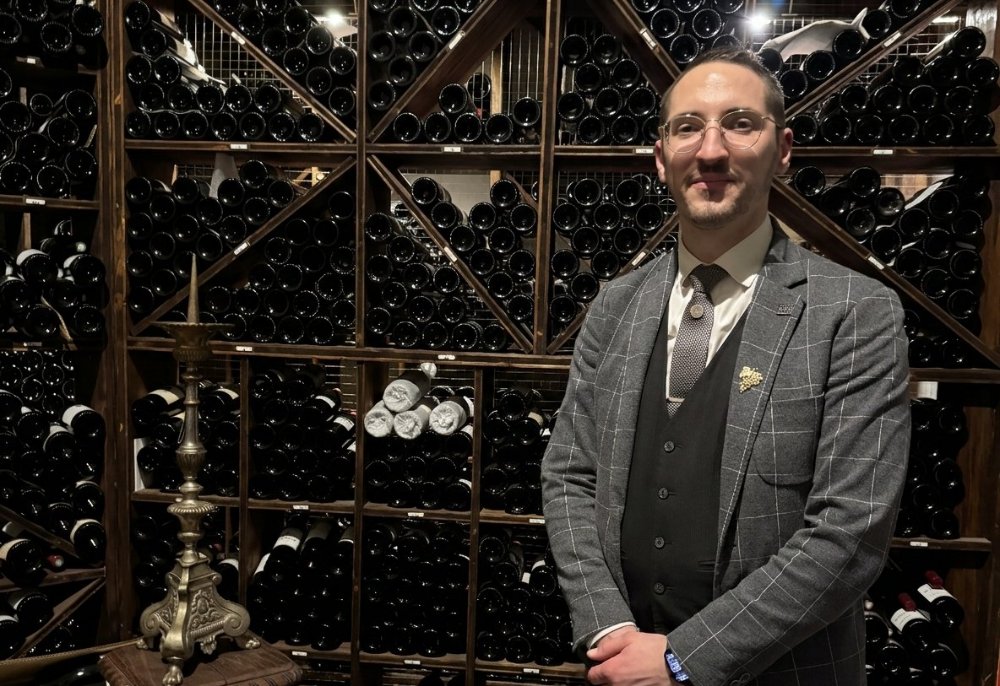
In the vaulted restaurant cellars of the newly opened Maison Maubreuil , the city of Nantes’ first five-star hotel, where I am lodged, my sommelier, Romain, gives me a taste of modern Loire wines. First up, I savor the defining verve and velvety finesse of the lees-aged Famille Lieubeau Cru Muscadet wine. Then on to my table in floats, like a boat with a billowing sail: an outstanding silky Syrah, a structured wine, subtly spicy but one showing energy, freshness, and beautifully ripe black fruits. A Syrah, who’d have thought? The Sereine 2022 wine is made not in the hotter, drier southern reaches of France, but in the cooler, ocean-influenced fields of the Pays Nantais at Domaine Bonnet Huteau, where, until recently, achieving such ripeness for reds would seem unlikely.
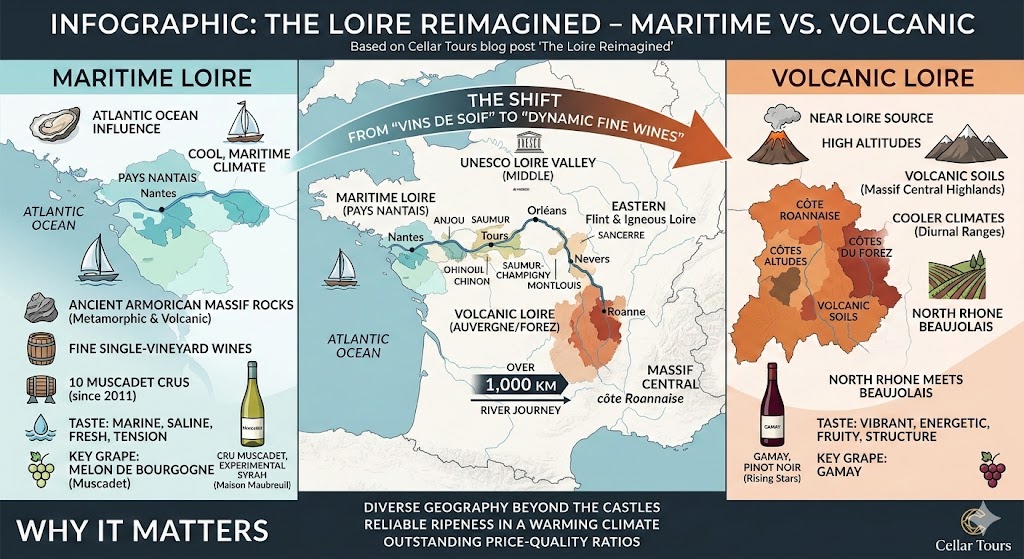
These two wines reflect well the contemporary face of a new generation of Loire fine wines. Indeed, my first return to Nantes, the biggest city located off the Loire River, in almost seven years, is a wake-up call: I soon learn that fine wine is now increasingly made at the two ends of the Loire River, where temperatures are cooler, and where the Atlantic Ocean at one end and higher altitudes at the other influence production —a reminder that the Loire is best read as rivers of terroir, not a single ‘Loire style’.
This fine wine shift is west to the Pays Nantais, and east to Gamay land of ‘Loire Volcanique’, near the source of the Loire in the Côtes du Forez and the Côte Roannaise of the Auvergne, which Chris Hardy, director of Loire specialist distributor Charles Sydney Wines, aptly describes stylistically, as where the “North Rhone meets Beaujolais.”
Importantly, wine production has spread further beyond the confines of the UNESCO-designated ‘Loire Valley’. Approved more than 25 years ago in 2000, it covers a mere 280km stretch of the middle Loire, from Sully-La-Loire east of Orleans to Chalonnes, west of the Anjou city.
In fact, the Loire, the most gargantuan of all of France’s waterways in terms of length, moves north westwards from the Massif Central highlands more than 1,000 km all the way up to the Pays Nantais, where it flows into the Atlantic Ocean, crossing very distinctive areas climates, soils, regions and cultures, beyond the pleasure palaces of the French Kings.
The current fine wine transformation has added further momentum and enthusiasm for the Loire, a wine region already revitalized by the rise in recent years of dry Chenin Blanc wines, the boom in sparkling wines including Crémant de Loire, finer reds in Bourgueil sub-regions and in Saumur and Chinon and the renaissance of Pinot Noir Sancerre, as well as the already renowned Sancerre Sauvignon Blanc.
The overall impact of the climate crisis and changing wine consumer habits means, overall, the Loire, one of Europe’s climatically cooler wine regions, notorious for providing amongst the best still and sparkling wine price-quality ratios in France, is increasingly in vogue – a trend reinforced by the quality of wines emerging from the 2025 vintage. Few European wine regions can offer such a wide variety of production and value.
When revisiting the Loire, it soon becomes apparent that the Renaissance spirit of inquiry continues to inspire local winemakers who, in recent years, have increasingly sought ways to farm specific plots of vines without synthetic chemicals to make fine single vineyard wines, many of which are worthy of the best of French wines. Symbolically, Rabelais’s Sacred Bottle, La Dive Bouteille, is the name of one of the world’s biggest natural wine fairs held in the town of Saumur each year.
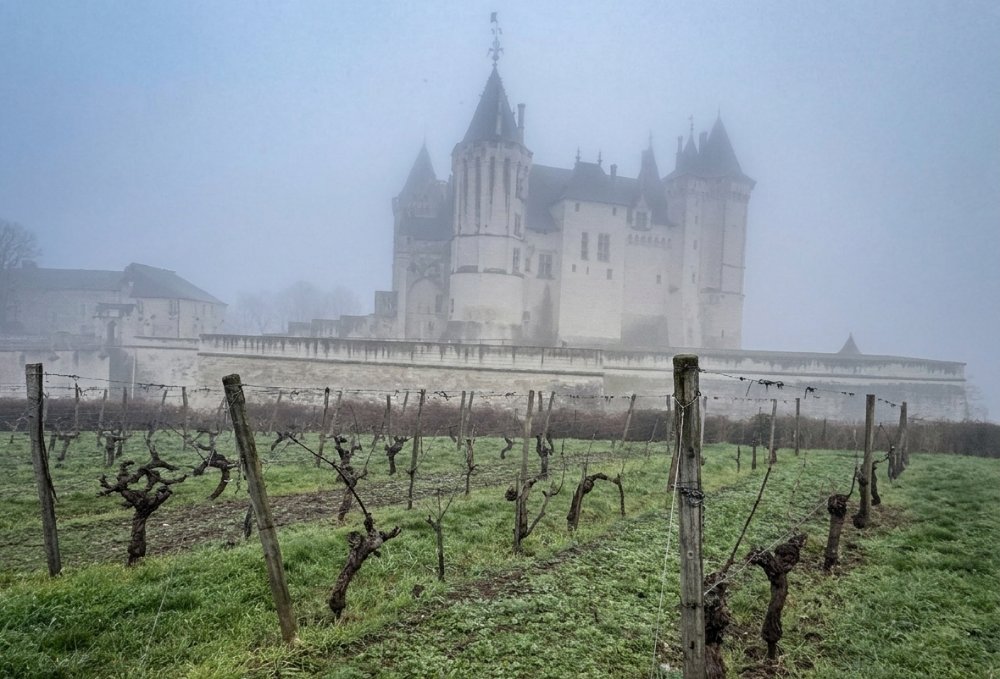
During the Renaissance period, the Loire, where Leonardo da Vinci spent his last days, became a cultural hub for encounters and influences among Italy, France, and Flanders, with architecture, wine, leisure, and thought evolving together. It became famous for its abbeys, gardens, and royal castles, particularly the pleasure palaces, where Kings kept mistresses.
French King Charles VII, who faced the marauding Burgundians, uprooted the Royal court from Paris to the Loire Valley in Touraine in the 15th century during the Hundred Years’ War. Monastic orders had earlier developed viticulture.
Upriver to Paris: The Loire’s Original Distribution Network
The French Royal Court is said to have boosted the prospects of Loire wines, but it was the abolition of the Banvin law—a monopoly on wine sales that had allowed feudal lords to sell their wine before anyone else—in the 15th century that enabled the bourgeoisie to develop the region’s wines. Loire wine shipments along the upriver to Paris were boosted by a French law of 1577, which banned the sale of wines made in the immediate surroundings of the French capital.
Until the emergence of French railways in the 19th century, the Loire River played a key role in the development of wine, as it was used to transport barrels for trade and export. Often upriver, eastbound against the current, towards inland markets such as Paris.
Meanwhile, river tolls along the historical border between Brittany and France, notably at Ingrandes-sur-Loire, helped develop westbound international exports by protecting Nantais wine in the 16th and 17th centuries.
For much of the 20th century and beyond, Loire appellation wines were seen as very pleasant, easy-drinking, thirst-quenching vins de soif, or delicious vins de brasserie and bistro, with soft tannins and relatively high acidity, rather than fine, age-worthy wines. Post-WWII and the earlier devastation of phylloxera, Loire wines, made near the northern limits of viticulture, were much more about selling volumes in Paris and beyond, largely at relatively low prices, but remained largely unknown compared to other big, reputable French wine regions.
“Unlike Champagne, for instance, the Loire has not had any big brands,” says Cedric Monory, director at fine wine producer Domaine de la Chapelle in Chinon – big brands would have helped propel the Loire onto the world stage of wines, making it better known.
Getting to grips with the Loire, with its extensive geographical reach, its multitude of wine appellations, and their topographies and diverse styles from dry to sweet, whites, reds, sparkling wine, and rosé, is perhaps no easy task compared with the more homogeneous identities of Bordeaux, Burgundy, and Champagne.
Indeed, rather than being a single wine region, the Loire comprises a multitude of individual wine regions, each with its own heritage, history, terroir, soils, grapes, and landscape, ranging from flatlands to rolling green hills to volcanic mountainous terrain. What does an Anjou rose have in common with Sancerre Sauvignon Blanc?
Climatically, culturally, historically, and geologically, the Atlantic-influenced Pays Nantais, a sub-region that formed part of Brittany for more than 1,000 years up until 1941, has obviously far more in common with Brittany than it does with the Loire vineyards in the Auvergne mountains on the other side of France. Rather tellingly, at Angers Castle in the capital of the Anjou, one of the hip wine regions of the Loire, the obvious question I ask my guide is: why does Angers have such a vast military castle given the size of the town? In the late medieval period, Angers was France’s last major line of defense against Brittany, an independent nation that France invaded in 1488 and subsequently annexed in 1532. There’s much more to unravel here than that which is hidden behind the artificial forging of a ‘Loire Valley’ identity by marketing types.
Why else has the Loire been misunderstood or underestimated? In comparison to prominent wine regions of France, where hierarchical classification systems have long been in place, the Loire’s only Grand Cru, for instance (authorized in 2011), is Quarts-de Chaume, and that’s limited to sweet wine production.
Yet since then, Loire producers have become increasingly immersed in the Burgundianisation of its vineyards, launching measures to classify or delineate vineyards, villages, and Lieux Dits, including, since 2011, the gradual development of 10 Muscadet Crus.
What unites this singularity of each of the Loire’s appellations –of a region which sold 255 million bottles in 2024, or rather what they have in common, is the growing of vineyards near or along the Loire River and its many tributaries.
These waterways are a common thread linking viticulture. In a changing climate and amidst changing consumer habits, that diversity, as we’ll see in this series of Loire blog pieces, is a boon.
At the renowned, vast annual international wine fair in Angers, capital city of the Anjou region, held in early February, I count 262 certified organic Loire wine producers present – they easily outnumber the 203 non-organic Loire producers. There are a number of biodynamic producers here too, but they have their own fair at Greniers-St-Jean in Angers the day before.
Since the 1990s, a new generation of producers, notably in the Anjou and Pays Nantais, has shifted towards single vineyards, organic and biodynamic practices, with producers less intent on copying traditional Bordeaux, in terms of use of wood, and doing more work in the vineyards and pushing for the recognition of specific plots of vineyards for lower yields.
Relatively lower vineyard prices and widespread availability of vineyards for sale have made it easier for younger players and investors alike to join a burgeoning scene of low-intervention producers, generally focused on quality rather than quantity, with precise, lighter wines that show purity and are sold at lower prices than Champagne, Burgundy, and Bordeaux. Organic production has snowballed, transforming the Loire into a region renowned for environmental and sustainable practices and experimental production, often symbolized in genuinely hip, aesthetically pleasing modern labels – wines found across the natural wine bars of Paris, New York, and Tokyo.
Looking at the Saumur castle as it rises from the banks of the Loire River provides a stark reminder of how the rivers of terroir, including stone, soils, and landscapes, have shaped the region. Just west of here is the beginning of the Paris Basin, the ancient seabed with limestone-derived soils that covers much of central France and continues under the Channel to Southern England.
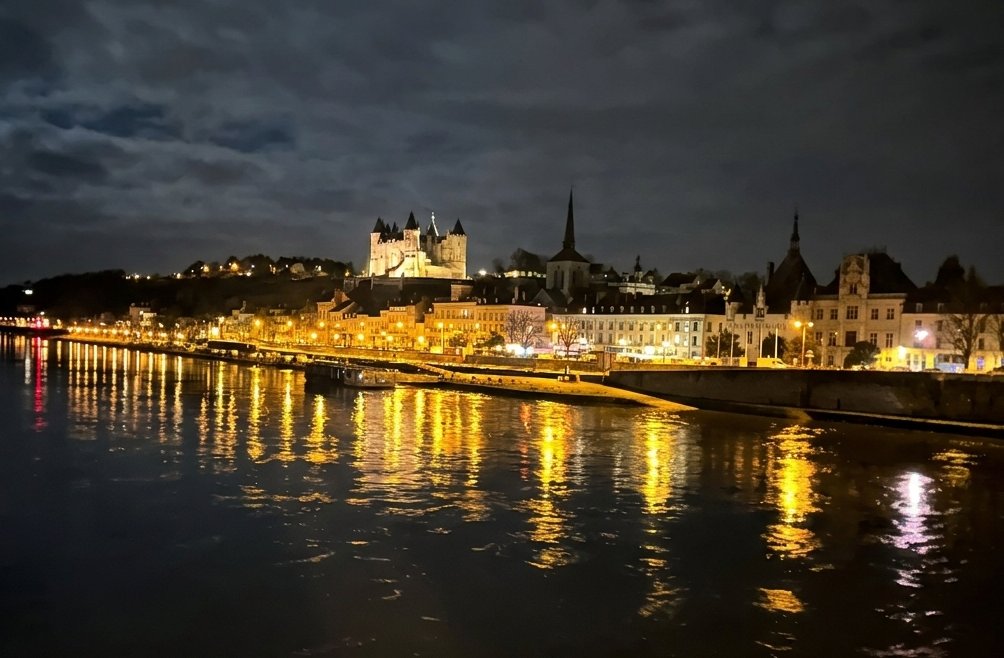
Saumur is the heart of tuffeau, the emblematic soft stone of the Loire châteaux, abbeys, buildings, and houses, and the town of Saumur itself. Tuffeau was first used in cave dwellings because of its softness, which made it easy to excavate, and because it did not burn, unlike wood.
Tuffeau was big business, with the stones and wine shipped from the old river port of Saumur across the Loire, between the 11th and 19th centuries, until demand dried up. Stand next to the banks to see the power of the tide of the Loire; trade first went eastbound against the current, deeper into the Kingdom of France, rather than west to Brittany.
In and around Saumur, an astonishing estimated network of 1,200 km of underground tunnels and troglodyte caves still exists, partly beneath the Saumur Chenin Blanc and Cabernet Franc vineyards.
As Arnaud Lambert, a notable fine wine producer, says:
“The Tuffeau stone is the backbone of wine, providing Chenin and Cabernet Franc with magical tension.”
Dig deeper into Chenin Blanc in the Loire: Anjou, Saumur, and the Rise of Terroir-Driven Whites
Several rivers play off the Loire play a big part in the region’s notion of rivers of terroir – the Maine et Sevre rivers are for example the names given to the best known Muscadet appellation, which sits on the magnificent, now eroded ancient mountain chain of the Armorican Massif, made of a series of metamorphic and volcanic rocks, that play a key role in the profile of contemporary Nantais wines.
The Armorican Massif covers the Pays Nantais and Brittany, and the western part of Anjou and Normandy.
As Jérémie Huchet, a leading Muscadet wine producer, points out
“The fact that Muscadet is not an aromatic wine means the terroir of its ancient rocks shines in the profile of wines; it is more present in the profile of Muscadet wines than in aromatic wines,”
Muscadet wines are known for their marine-scented, Atlantic-influenced, oyster-shell essence; freshness; lower alcohol and value; the tension of wines in cooler vintages; and, increasingly, for finer wines made with extended lees aging.
Learn more about New Pays Nantais and the Rise of Muscadet Crus
Out east in the center of France lie the rolling green slopes of the vineyards of Sancerre and Pouilly Fume and satellite appellations, renowned for their Silex (Flint) and Kimmeridgian limestone, helping the age potential, and freshness of wines, growing in a much warmer continental climate, known more for its diurnal range, and the production of Sauvignon Blanc, and wine with generally higher alcohol levels than further west in the Loire.
Marvellous Muscadet
Versatile Chenin Blanc
Refined Reds of Cabernet Franc
Rising Reds: Pinot Noir & Mountain Gamay
The Loire, known as the garden of France, is increasingly a source of fine wines, with merchants who once focused only on Bordeaux, Burgundy, and Champagne now scouring the region in search of age-worthy bottles made in diverse styles.
In a warming climate, producers are achieving ripeness more reliably while preserving what defines the Loire: moderate alcohol, freshness, and energy—often at prices that remain strikingly reasonable compared with Burgundy and Bordeaux.
The Loire is too vast to grasp in a glance. Its diverse wine styles, soils, and climates are best understood over time, by following the course of the river and its key tributaries. Despite continued vintage variation in volumes and the impact of climate change on yields, alcohol, and acidity levels, which is notably affecting Sancerre Sauvignon Blanc, the Loire is increasingly one of Europe’s most relevant fine-wine regions. It is now extending its reach, with producers able to provide diverse expressions of fine organic and biodynamic white, red, and sparkling wines at lower prices than elsewhere in France.

Explore further
Discover private journeys, regional guides, and expert stories to help you plan an unforgettable trip through France.
21 tours
Unveiling France's Finest: Customized VIP Wine Tours and Gourmet Escapes
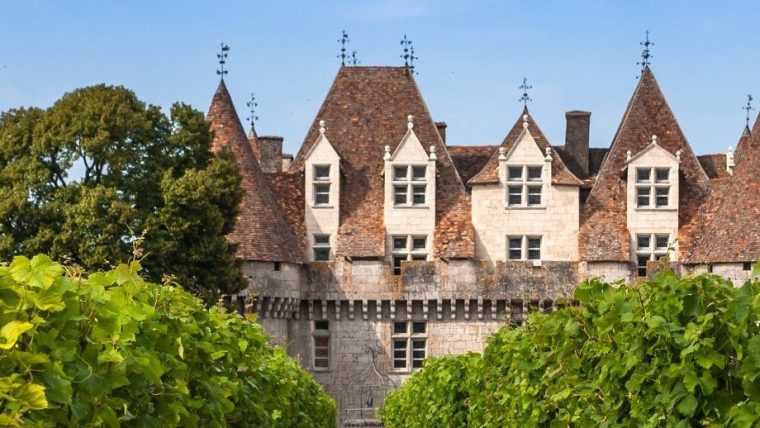 1 day (ideal from Bordeaux / Bergerac / Sarlat)
Monbazillac, Saussignac and honeyed sweet wines in the Dordogne.
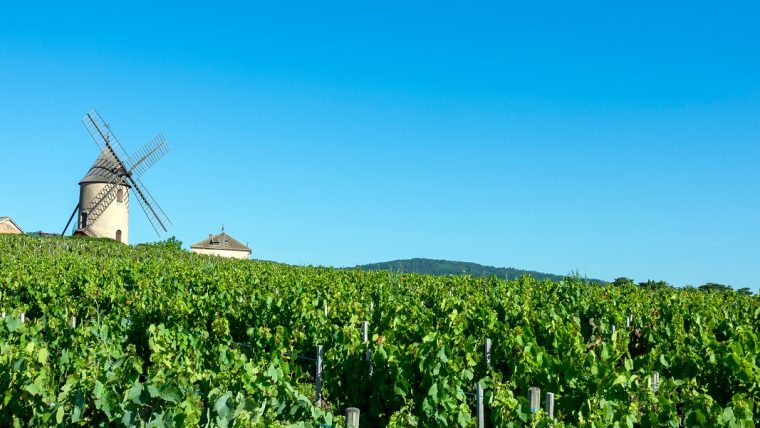 5 days / 4 nights
Cru Beaujolais, hilltop villages and gourmet dining near Lyon.
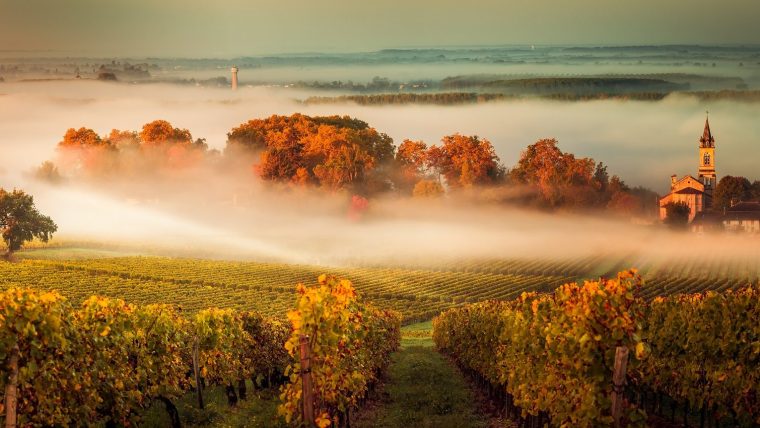
Compare France’s leading wine regions by grapes, wine styles, scenery, best base and ideal stay
Explore regions
Explore Bordeaux's En Primeur and discover the legendary 1982 vintage praised by Robert Parker and its lasting impact.
Read article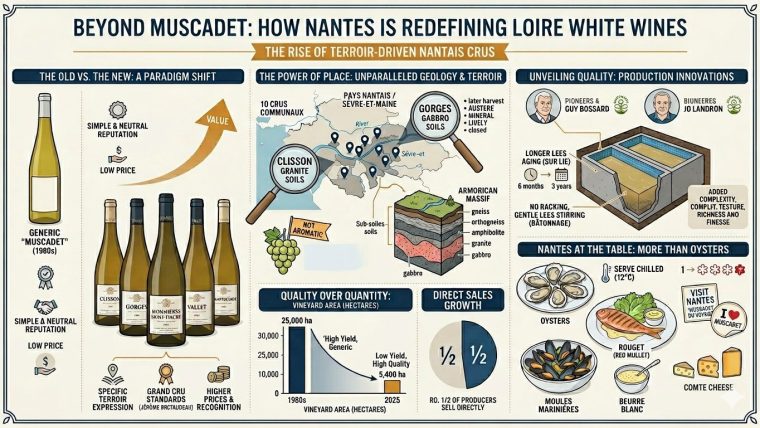
Atlantic Cool, Precision Wines: The New Pays Nantais and the Rise of Muscadet Crus
Read article