 46 tours
Country tours
Private Wine Tours in Italy
Private, Chauffeured Wine Journeys Across Italy’s Finest Regions
Explore the unique flavors of Mount Etna Wine and discover the beauty of Sicily's wine regions and sunny landscapes.
Years ago, I went to Sicily in late September with two objectives: the official one was to visit several wine regions for a piece I was researching. The second, I kept to myself: a relationship had just ended, and I had convinced myself that a mild southern climate might help with my recovery.
In my hometown of Milan, summer was already over. In Sicily, I imagined constant sunshine, a swimsuit under my clothes at all times, cassata for lunch – the kind of trip where weather itself feels like a consolation prize.
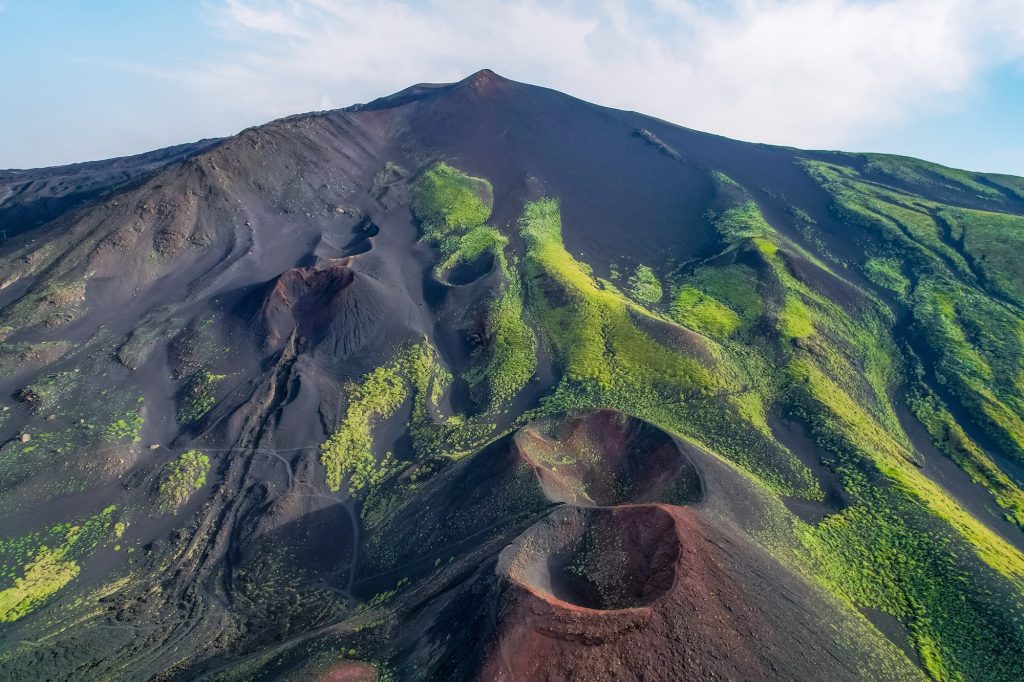
Soon after I landed in Sicily, Alessio Planeta got in touch. Part of one of Sicily’s most renowned wine families, he was harvesting on Mount Etna. He suggested I spend a couple of days with him, Planeta’s winemaker Patricia Toth, and the pickers at Sciaranuova, the family’s estate on the volcano’s northern slope. I accepted immediately, mainly because I hadn’t imagined that it was going to be cold and rainy, not sporadically, but relentlessly (a significant worry for the harvest team). Nor had I realised quite how black the landscape would be. The lava stone absorbs the light, a darkness that makes even someone not particularly sensitive to weather feel upset.
Locals refer to Etna simply as a muntagna – “the mountain” – an affectionate term that also signals hierarchy. On Etna, viticulture coexists with the dominating presence of an active volcano, and the vineyards, formed by successive lava flows, are worked knowing full well that the ground itself is not permanent.
It ruined my attempt at escapism, but it also introduced me to the dissonance between landscape and wine. A place shaped by eruptions, lava flows, and ash produces red wines of restraint — pale in color, taut in structure, more about line and tension than warmth or generosity. It was not the Sicily I had come looking for, but the one I encountered.
Later on, I would hear Etna described as the “Burgundy of Sicily”: not because the wines taste similar, but because both regions are defined by an exacting attention to site, nuance, and the identities that cohere over time.
Imagine you’re skiing on top of the Etna (yes, that’s a thing!): look below, and there lies Catania, beyond it the Ionian Sea, and if it’s a clear day, you might even get a glimpse of the Aeolian Islands on the horizon. There’s snow under your feet, and yet the sea is in the same field of vision. Etna is technically a Mediterranean wine region, but it behaves like a mountain one.
Vineyards are planted at elevations ranging from 400 to over 1,000 metres, are exposed to strong maritime winds, and are noted for extreme day-night temperature shifts (Diurnal Range) that can exceed 25°C during the growing season. Ripening is slow, and harvests are late. I discovered the hard way that the abundant rainfall further differentiated Etna from the rest of Sicily.
Soils are volcanic, but not uniform. Etna’s vineyards sit on successive lava flows of different ages, composed of ash, sand, basalt, pumice, and fragmented rock. As a result, neighbouring parcels can rest on radically different substrates, and each vineyard has a distinct geological layer.
For this reason, Etna cannot be adequately understood if framed as a single terroir. Viticulture here has long been practised in small plots carved out of the mountain, in close coexistence with an active volcano.
Nerello Mascalese is an ancient, indigenous Sicilian red variety, documented on Etna at least since the early modern period. Its historical homeland lies around the former County of Mascali, from which the grape takes its name, and across the volcanic slopes surrounding Catania. While relatively resilient to common vine diseases, Nerello Mascalese demands hard physical labour: the real challenge is not the plant itself, but the volcanic terrain in which it grows.
As growers on Etna often note, “first comes the ginestra, then man.” The ginestra – or broom plant – is a pioneer species, capable of colonising bare lava flows and breaking stone over the course of centuries. Only once this slow process has taken place can vines follow. Many of today’s vineyards sit on lava flows over two thousand years old, covered by a thin layer of sandy soil.
In the glass, Nerello Mascalese produces pale, finely structured wines that privilege tension over power. Frequent comparisons to Pinot Noir and Nebbiolo help frame its elegance and tannic precision, but remain incomplete. How these wines age over the very long term is still being discovered, as Etna’s modern renaissance began only in the late 1990s.
Until the late twentieth century, Etna was primarily associated with bulk wine consumed locally. A central pivot occurred in the late 1990s and early 2000s, when a small group of producers began interpreting the volcano through a fine-wine lens. Crucially, many of them arrived from outside the region, bringing different references and ambitions, but working with existing vineyards, local growers, and inherited knowledge.
This encounter between external and local traditions helps explain Etna’s distinctive winemaking path, which does not closely resemble that of other regions. And over the past two decades, Etna wines have moved from obscurity to regular presence on serious international restaurant lists, valued for restraint, site expression, and aging potential.
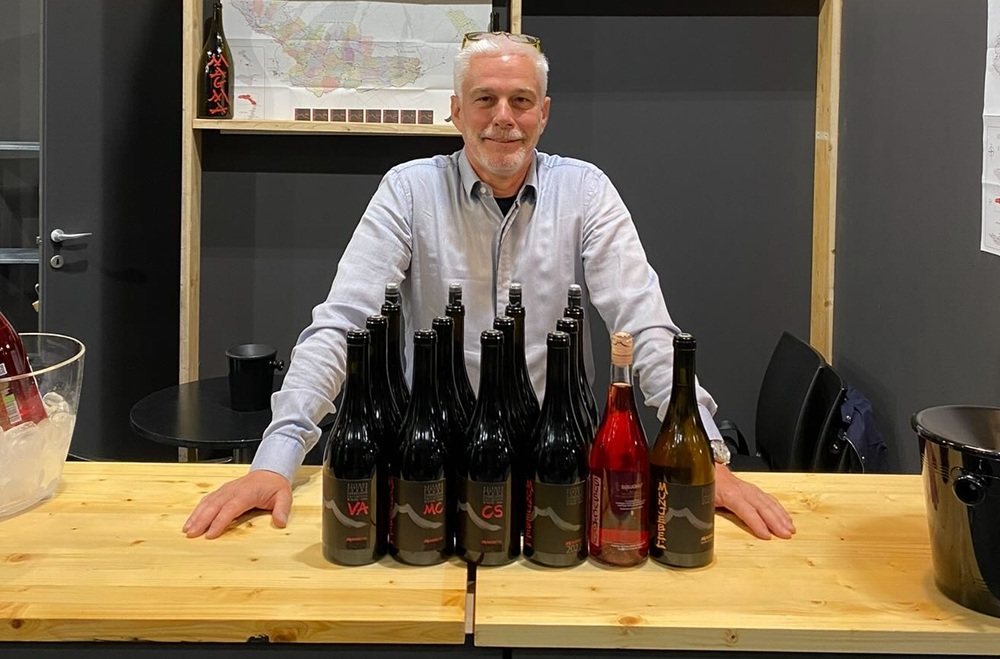
A relatively small group of producers have played a decisive role in redefining Etna over the past two decades.
Comparing a wine to the character of its producer is often a lazy shortcut. On Etna, however, the adjective “volcanic” fits Frank Cornelissen with unusual precision. The Belgian native arrived on the mountain in 2000 by choice, at a moment when many vineyards were abandoned, and most grapes were destined for blending. With no formal training in oenology, Cornelissen approached Nerello Mascalese as a vehicle for place expression. Rejecting monoculture and intervention, Cornelissen has famously argued that even biodynamic viticulture can be too interventionist, as it still prescribes treatments in the vineyard.
Andrea Franchetti, at Passopisciaro, read Etna as a “climatic anomaly” (his words). He describes the volcano as a vertical system, rising through progressively colder layers of air, with night-time currents sliding down over black volcanic dust into the vineyards. These abrupt temperature shifts slow the vine’s metabolism, delay sugar concentration, and alter aromatic development. For Franchetti, Etna matters because it betrays ordinary Sicilian meteorology. Its apparent barrenness produces wines defined by forces that resist simplification.
Former head sommelier at Milan’s culinary institution Aimo e Nadia, Federico Graziani completed formal studies in viticulture and oenology in 2006 and then first encountered Etna through Salvo Foti. What started as research became a commitment when Graziani acquired a century-old vineyard in Passopisciaro that was about to be uprooted. Profumo di Vulcano, his first wine, comes from that site.
Since his first vintage in 2002, Marco de Grazia at Tenuta delle Terre Nere has vinified individual sites separately, insisting that Etna could only be understood by its internal differences. Old vines, including rare pre-phylloxera parcels, became reference points. His work helped introduce the idea that the volcano speaks through distinct places rather than a single voice.
This attention to site would crystallise around a local system of named vineyard areas – the contrade – which deserve closer examination.
| Producer | Interpretation | Style |
|---|---|---|
| Frank Cornelissen | Zero-intervention; treating the wine as a raw expression of volcanic energy. | Radical Naturalist |
| Andrea Franchetti (Passopisciaro) | Treating Etna as a “climatic anomaly”; focused on high-altitude precision. | The Intellectual |
| Marco de Grazia (Terre Nere) | Championed the “Contrada” system; focused on elegant, site-specific Crus. | The Cartographer |
| Federico Graziani | Saving and restoring ancient, century-old “pre-phylloxera” vineyards. | The Preservationist |
| Frank Cornelissen | Zero-intervention; treating the wine as a raw expression of volcanic energy. | Radical Naturalist |
On Etna, the place is discussed through “contrade“: named vineyard areas founded on historical usage. The Etna DOC extends over three sides of the volcano in a crescent moon shape, from Randazzo in the north to Biancavilla in the south. Within this area, 133 contrade are officially recognised, with a concentration on the northern slope, long considered the appellation’s qualitative core.
Etna’s contrade reflect fundamental differences in altitude, soils, and exposure, but they were never designed as a ranking system. A contrada names a place, not a status. Hierarchy does exist on Etna — just not on paper. In practice, it’s shaped by which producers consistently translate their sites into great wines, and by how those sites perform across vintages.
Tenuta delle Terre Nere has been among the producers most committed to this site-driven reading. Since its first vintage in 2002, it has vinified and bottled individual contrade separately, arguing that Etna can only be understood by its internal distinctions. In 2012, the law was updated to officially recognize 133 Contrade, finally activating a provision that had remained dormant in the law books since the original 1968 DOC.
The system continues to evolve and is at times contested. Many producers hope that increasingly precise terrior mappings will allow the region as a whole to grow in clarity and credibility.
On Etna, texture and structure matter more than fruit volume. Nerello Mascalese typically reads in a red-berry register (often wild strawberry or sour cherry), with dried herbs and spice, carried by high natural acidity and fine, grippy tannins. Volcanic signatures are frequently noted as earthy, stony, sometimes saline notes rather than as overt “smoke” or “ash.” In some bottlings – especially with bottle age or from particular sites – secondary tones such as tobacco, liquorice, and forest-floor can appear, but they are not universal.
In youth, these wines can feel reserved or even austere. With time, they open gradually, gaining aromatic complexity without losing precision. This structural profile explains their increasing popularity at the table. Moderate alcohol, high natural acidity, and fine tannins allow Etna reds to pair easily with food, without becoming too dominant.
Etna has become a region closely followed by serious collectors, though selection still matters more than scale. At this stage, a producer’s track record is often more reliable than the contrada name alone, as the site system is still being refined. Historically, the north slope has proven the most consistent source of age-worthy reds.
Single-contrada bottlings represent the collector tier, offering the clearest expression of site and the most significant potential for development. Structurally, Etna reds are well suited to ageing: altitude preserves high natural acidity, tannins are fine but persistent, and alcohol levels remain moderate.
As a general guide, entry-level Etna Rosso wines drink well over five to eight years, while top single-contrada bottlings can evolve for ten to twenty years or more.
Etna wine producers often describe the region as an “island within the island,” but maybe it’s actually more like a Russian doll. Sicily contains Etna, and Etna keeps opening inward, revealing smaller and smaller units of meaning: even a slight shift in altitude or exposure can be enough to change the logic entirely. That condition helps explain why the region remains intellectually alive: Etna has never settled into a fixed idea of what it is supposed to be.
This insularity also worked in Etna’s favour at a specific moment. You will remember from earlier that when a new wave of producers began working seriously on the volcano in the late 1990s and early 2000s, they arrived while many vineyards were being abandoned. There were few inherited rules about what should or should not be done. That freedom allowed different ideas of quality to coexist and evolve, supported by a vibrant base of local grape varieties (this article has focused on Nerello Mascalese, but Nerello Cappuccio has its place, and the whites – centered on Carricante – are remarkable as well).
On that very first trip, I met a grower with the sort of cellar for which the expression “garage wine” might well have been coined, who described his approach – in all seriousness – as “quantum viticulture.” The definition was idiosyncratic, but the wines were good and tied to the place. Etna has enabled this kind of development because intelligent, sensitive people have been able to work without conforming to a preexisting model. In that specific sense, the more useful comparison may be the Loire rather than Burgundy or Barolo: there, too, experimentation could take root because land was accessible and expectations were fluid.
Etna is still defining itself, and that is precisely what makes it worth following now. For wine lovers and collectors, it offers something you rarely get in a fine-wine region: the chance to watch a reputation being built in real time. As recognition of Etna’s quality grows, producers gain the resources and the incentive to look closer, to test what really matters from one small parcel to the next. That feedback loop – attention-generating means, means enabling attention – is how a region moves from promise to authority, and on Etna, the work is well underway.

Explore further
Discover private journeys, regional guides, and expert stories to help you plan an unforgettable trip through Italy.
46 tours
Private, Chauffeured Wine Journeys Across Italy’s Finest Regions
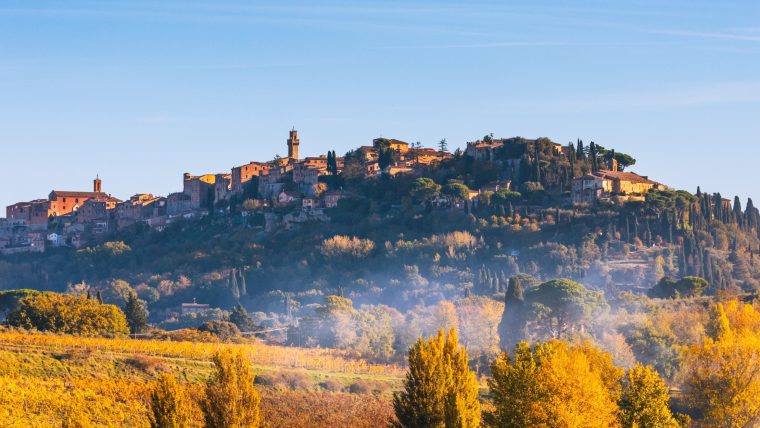 Full day from Florence, returning at about 6 p.m.
Vino Nobile, Montepulciano cellars and Tuscan hill-town elegance.
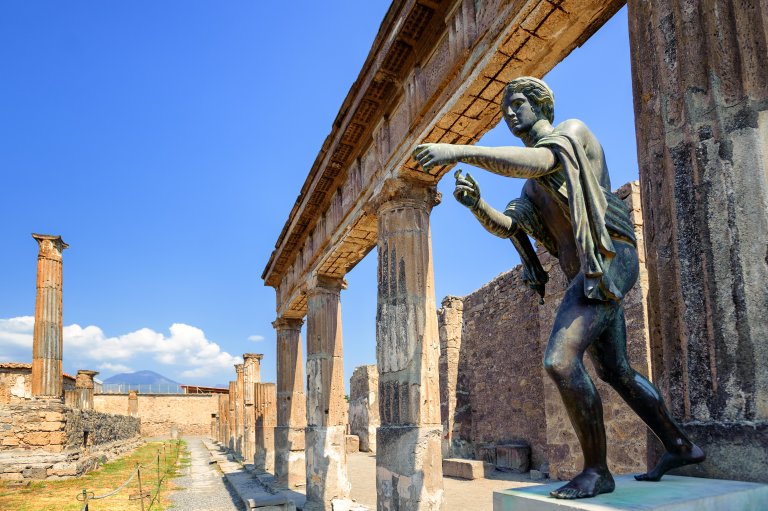 1 day (ideal from Naples)
Pompeii, Vesuvius vineyards and Lacryma Christi wines.
Compare Italy’s leading wine regions by signature wines, scenery, best base, travel time and ideal stay
Explore regions
Explore the unique Friuli Orange Wine, a skin-contact white wine with a rich history and distinct flavors worth discovering.
Read article
Explore the elegance of Alto Adige white wines. Discover their unique aging process and remarkable structures.
Read article