Madrid Travel Guide
Where Culture, Cuisine, and History Collide - A Vibrant City Awaits
Madrid is a young capital city for Europe. The seat of government was only moved to Madrid from Toledo in 1561 under Phillip II, and until that point, it had only been a provincial center. The Moors fortified the city, and then the Christians took it back under Alfonso VI in 1083. From that point on, the city was influenced by the Bourbons, the Hapsburg, and the Italians. When it became the capital of a united Spain, the city grew rapidly, and plenty of churches, palaces, and royal monasteries were built. Today, Madrid is a lovely, sophisticated city with an aristocratic air and a delightful city to visit for any length of time. We feature Madrid in most of our wine and culinary tours.
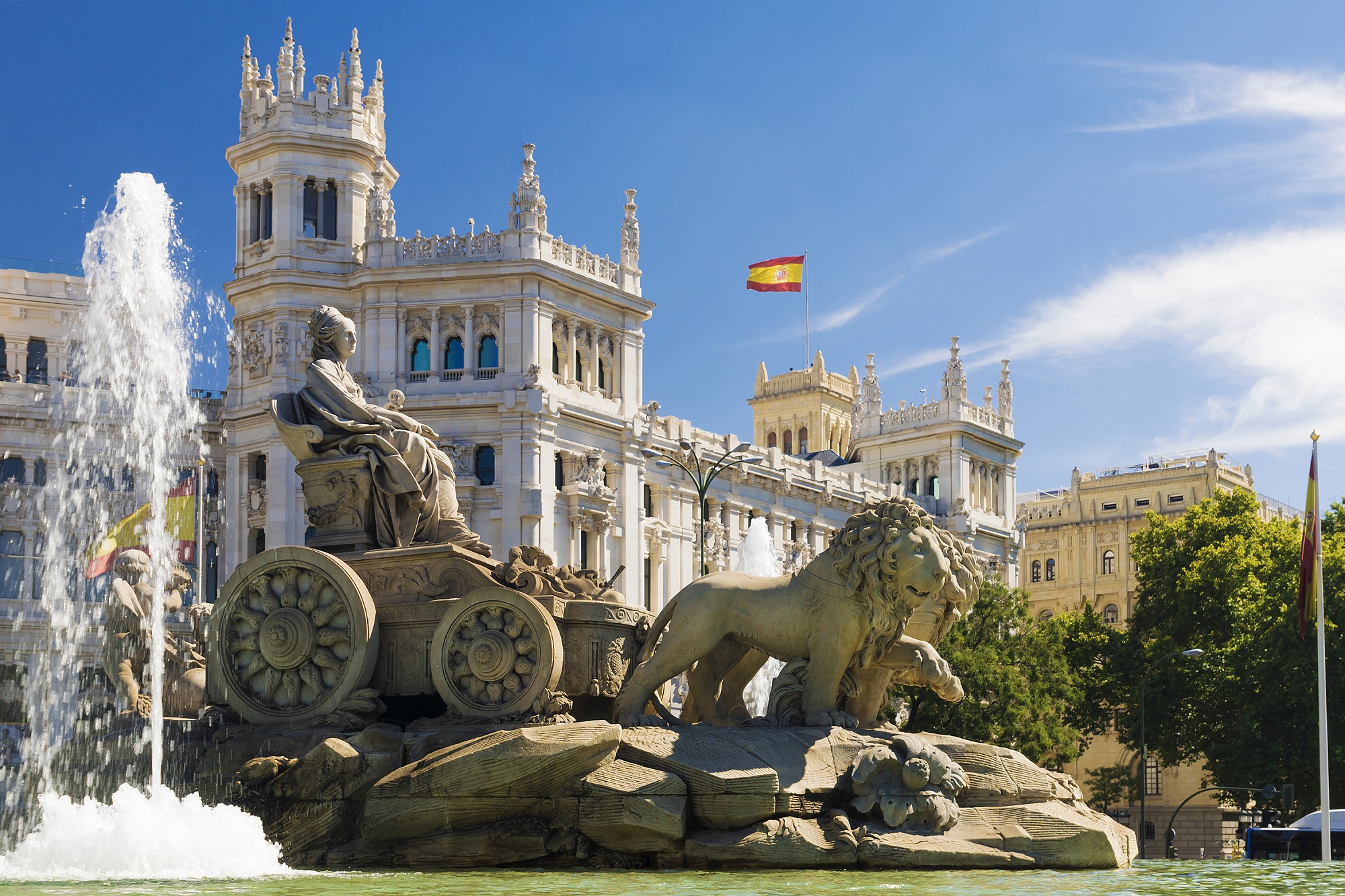
The first impression one has of Madrid is its understated elegance. There are wide tree-lined boulevards, many beautiful parks, ostentatious fountains, and marble statues, but then you find utterly charming, unpretentious cafes on nearly every corner. There are places of splendid beauty, like the Plaza de Oriente, which contains the Royal Palace and the Opera House, and the fabulously relaxing Retiro gardens. The art nouveau-inspired neighborhood of Alonso Martinez, the Tapas Quarter of La Latina, and the cosmopolitan Gran Via boulevard (built in the early 1900s) inspired by New York’s Broadway.
Nightlife is legendary in Madrid, and the city is home to a multitude of wine bars and Tapas Bars, charming vaulted restaurants, elegant top-end dining, and bar after bar after bar. The discos stay open until dawn. Around 6 AM, partygoers in the historic downtown area congregate around the “Chocolaterias” to have cups of pure hot chocolate and “Churros” before going home.
Shopping is excellent in Madrid, with various neighborhoods and styles of “Compras” to choose from. The Puerta del Sol is the shopping nucleus of the city, with tourist-trap shops selling kitsch castanets, key chain bulls, and Flamenco dolls, but you can find some wonderful authentic shops amidst the tat. You’ll find random shops selling cigars, old books, wines, and artisan cheeses, and some shops only selling gentlemen’s hats. Young, trendy shoppers should head to the Chueca-Tribunal area for hip, alternative shops. Fuencarral Street, in particular, is a beacon for “Fashionistas.” For chic shopping, head to Serrano and Velasquez streets and the “Golden Mile” street of Jose Ortega y Gasset. Here, you will find swish Italian shops, top Spanish boutiques, fabulous wine shops (Lavinia is a wine lover’s paradise), and posh delis.
The following list of highlights includes our favorite spots in Madrid for those who love fine wines, diverse cuisine, art, and architecture.
-
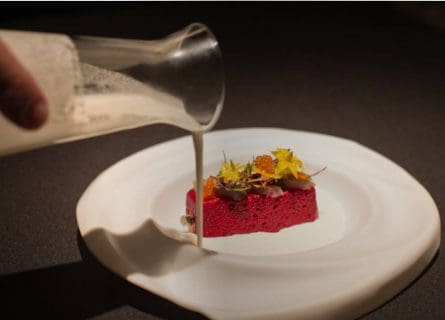
Contemporary cuisine of Restaurante Corral moreria (see below) Gastronomy & Wine
The culinary traditions native to Madrid are designed for scorching summers and bitterly cold winters. Cocido is a typical winter dish and is a slow-cooked stew made with garbanzos, chorizo sausages, black pudding, potatoes, and carrots. By no means an elegant fare; on a cold winter’s night in Madrid, it goes down a treat. Typically from the south of Spain, Gazpacho can be found in nearly every Madrid restaurant in the summer. It’s a cold tomato and pepper soup, heavy on garlic and Olive Oil, and the perfect remedy for a stiflingly hot afternoon.
The cuisine you find in Madrid’s Tapas Bars represents nationwide Spanish cuisine, including Basque, Catalan, Andalusian, Galician, Mallorcan, and Castillian, to begin with. Typical Tapas include Pimientos Rellenos de Bacalao (Roast red peppers stuffed with cod and bechamel sauce), Gambas a la Plancha (Grilled, unpeeled prawns), Jamon Serrano or Jamon de Bellota (the latter being the superior of the two and the best Spanish Ham you can ever hope to taste in your life, made with acorn-fed pigs), Patatas Bravas (common all over Spain, they are potatoes fried in olive oil and doused with a spicy sauce made of peppers, Paprika, and chili) and Albondigas (meatballs made with veal and onions, served with a piquant sauce).
Surprisingly, wine is made right within Madrid’s city limits. The main wine villages are Navalcarnero, which hosts such wineries as Bodegas Francisco Casas and Bodegas Ricardo Benito, and Villarejo de Salvanes, whose Vinos Jeromin winery makes the “Puerta del Sol” wine (made of 100% Cabernet Sauvignon, even more surprising). On the wine lists of your average Madrid restaurant, you’ll find top red wines from Ribera Del Duero, La Rioja, ordinary table wines from La Mancha and Valdepenas, and classy whites from Galicia (Rias Baixas) and Rueda.
Nearby Wine regions
-
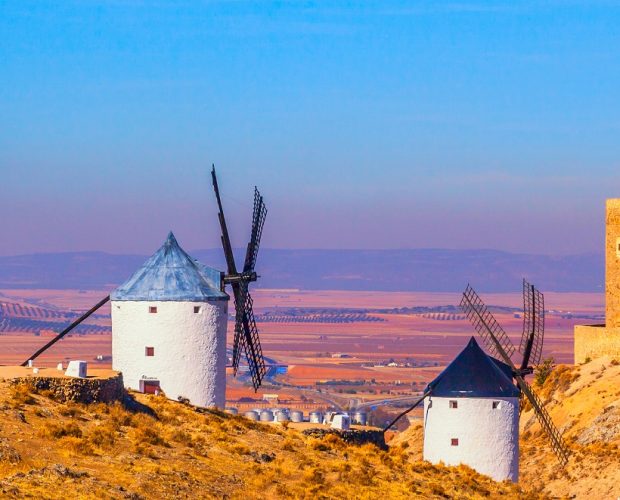 Explore the vast vineyards of DO La Mancha, its principal grapes, evolving wine styles, leading wineries, and historic towns. Open region guide
 -
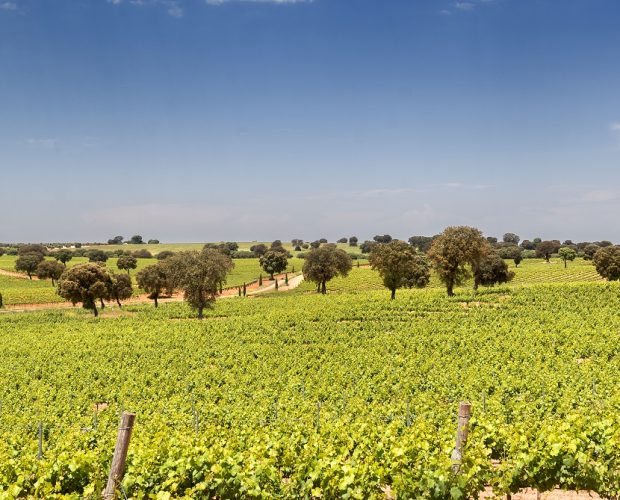 Discover Méntrida’s old-vine Garnacha, granitic soils, leading wineries, and wine-country landscapes west of Toledo. Open region guide
 -
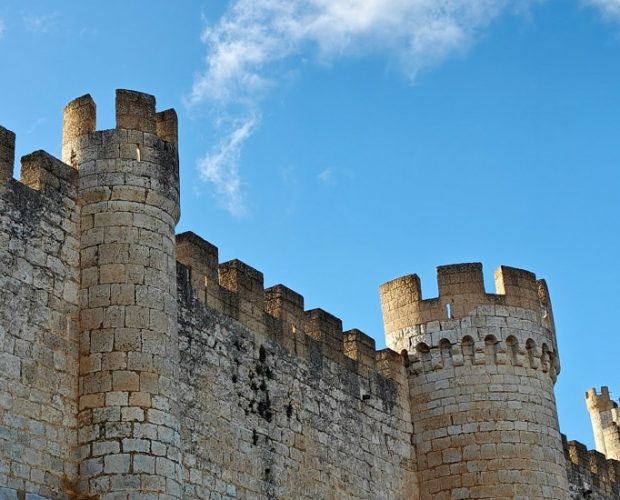 Explore Ribera del Duero’s map, Tempranillo wines, leading wineries and practical advice for planning winery visits and a private wine tour. Open region guide
Highlights
-
Restaurante Corral de la Morería
Walking into Restaurante Corral de la Morería in Madrid is like stepping into a flamenco dancer’s dream. The dimly lit space is draped in deep red velvet curtains, and the stage in the center of the room sets the tone for an unforgettable evening of entertainment and cuisine. But the food steals the show here, with contemporary Spanish dishes that are as visually stunning as they are delicious. The menu pays homage to traditional Spanish flavors while embracing modern culinary techniques, resulting in dishes that are as exciting as they are comforting. With an extensive wine list and impeccable service, Restaurante Corral de la Morería is a must-visit destination for anyone looking for a truly unforgettable dining experience in Madrid.
-
Reserva y Cata
Tucked away in the heart of Madrid’s bustling city center, Reserva y Cata Wine Shop is a true gem for wine enthusiasts. With its warm and welcoming atmosphere, this charming shop is an oasis of calm in the midst of the city’s vibrant energy. The shelves are lined with an impressive selection of wines, from rare and vintage bottles to affordable everyday options, sourced from some of the best wineries in Spain and beyond. But what sets Reserva y Cata apart is its knowledgeable and passionate owner Ezequiel, who is always eager to share his expertise and guide visitors on a journey of discovery through the world of wine. So whether you’re a seasoned oenophile or a curious newcomer, a visit to Reserva y Cata is sure to be an enriching and enjoyable experience.
-
The Prado Museum
Built-in the late 1700s under Charles III (Carlos Tercero), The wonderful Prado Museum houses one of the world’s most significant art collections, including Velazquez, Goya, Bosch, Tiziano, Rubens, Brueghel, Fra Angelico, El Greco, Zurbaran, Botticelli and Caravaggio. It is ridiculously good value to enter (15 euros), and you can spend the day without even seeing one-tenth of the tremendous collection. Famous paintings include “Las Meninas” and “The Triumph of Bacchus” by Velazquez, “The Clothed and Nude Maja,” “The Third of May, 1808” and “The Wine Harvest” by Goya, and “The Garden of Delights” and “The Adoration of the Magi” by Hieronymous Bosch.
-
The Reina Sofia Museum
Most famous for its Picasso and Salvador Dali collection, the Reina Sofia also has the added urban myth of being haunted. The building which houses Madrid’s (and one of Spain’s) best collections of 20th-century art, was built in the late 1700s as well and used to be a hospital. It’s said that those who visit the museums in the evenings, see mysterious shadows dancing around the central cloister and hear voices down the halls. The museum has a superb collection of modern artists such as Pablo Picasso (whose most famous painting ever, “Guernica” can be seen here), Salvador Dali, Joan Miro, Eduardo Chillida, and Juan Gris.
-
The Puerta del Sol
17th-century square, which is the tourist hub of Madrid. Called “the Gateway of the Sun,” this square is said to be located in the exact center of Spain. The square is Madrid’s most popular meeting place. “El oso,” the bronze bear statue, climbing up Madrid’s symbol- the strawberry tree is a prime meeting point. There are plenty of delightful monuments in La Puerta del Sol, including the building that used to be Madrid’s post office back in the 1760s, the clock tower, the large Tio Pepe Sherry sign, and a statue of Charles III right in the middle. This is where the New Year’s Eve festivities are centered around.
-
La Cava Baja- 17th century "Tapas Alley" and "Tapa Hopping"
La Cava Baja is one of the most charming, historic streets in Madrid, and it also happens to be gastronomic heaven. Tapas (small portions of traditional or creative dishes) are served standing up or sitting down at the side-by-side, tiny, cozy, tiled restaurants on the Cava Baja. Some of the Tapas bars have sublime wine lists, the best one probably being “Tempranillo,” which has a 15-foot ceiling, stacked to the top with wine bottles and a list featuring hundreds of vintage Spanish wines at ridiculous prices. The way to have Tapas in the Cava Baja is either by booking a table in the back of one of the brick-vaulted dining rooms or by “Tapa Hopping” (going to various locales having dishes and glasses of wine in each). Excellent Tapas Bars include Casa Lucio, Tempranillo, Casa Victor, La Cava de Yllan, and La Chata.
-
The Royal Palace
The palace was built on the site of the old “Alcazar” of the Hapsburg Rulers, which was destroyed by a fire in 1734. The royal residence took 26 years to be rebuilt, enough time for two Bourbon monarchs to come and go! It’s a splendid building covering almost 400,000 square feet, surrounded by manicured gardens. The rooms contain frescoes painted by Masters, walls covered with red velvet and lined with silver, tapestries from the Royal Factory of Tapestries, bronze “rococo” sculptures, in addition to dazzling collections of Chinese ceramics and Roman busts. The Royal Palace is located in the most beautiful square in Madrid, the Plaza de Oriente. Facing the palace, across the plaza, is the Royal Opera House.
-
Malasaña Quarter
This charming Madrid neighborhood is not frequented by the majority of the tourists who visit Madrid, and what a pity. The streets are lined with 3 stories, colorful buildings with wrought iron art nouveau balconies, covered in flowers. There are quaint cafes, small welcoming restaurants, original shops and pretty squares like the Plaza Dos de Mayo (The 2nd of May square, which was where an uprising against the French took place in 1808). A fantastic café, Pepe Botella (named after Napoleon’s brother, who had the reputation of being quite the boozer) is located right on the square and is full of old photographs, strange bottles, etc.
Further Reading
Parellada Grape Variety: Catalunya’s Shining Star
August 8, 2022
Unveil the allure of Parellada grape: a Spanish gem crafting elegant sparkling & white wines. Explore its unique qualities & flavor profile.
Read article
Palomino Grape Guide: The White Grape Behind Sherry
July 12, 2022
Learn about Palomino, the grape behind most Sherry, including its flavor, vineyard role, Jerez terroir, and Fino, Manzanilla, and Oloroso styles.
Read article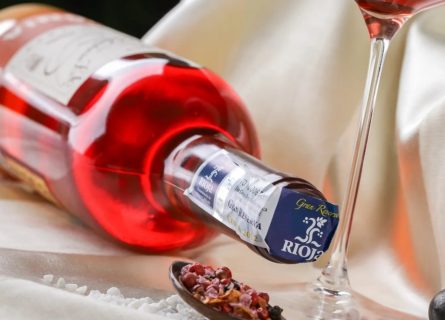
Exploring Spanish Rosé Wine
October 17, 2024
Discover the hidden gem of Spanish rosé wine! Explore the top regions, producers, and food pairings in this article.
Read article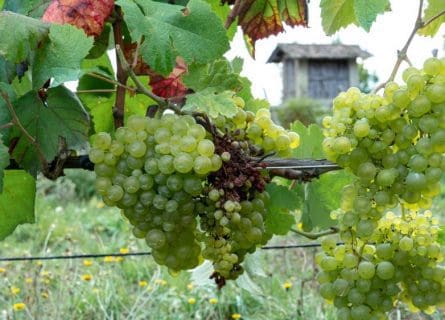
Treixadura Grape Variety: An Obscure Treasure
July 29, 2022
Treixadura is most closely associated in Rías Baixas with Condado do Tea, bringing freshness, balanced acidity and floral-fruit character to white blends.
Read article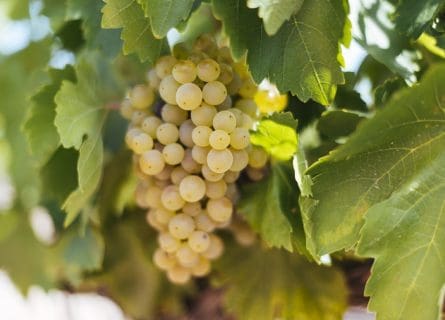
Malvasía De Rioja Grape Variety: Small but not Forgotten
July 20, 2022
Explore the allure of Malvasía de Rioja grape. Uncover its origins, tasting notes, and its contribution to the exquisite wines of Rioja.
Read article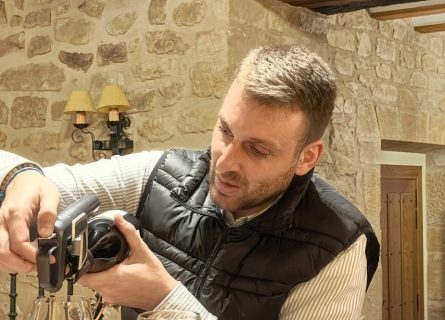
Exclusive Rioja Wine Tasting Masterclass in Laguardia
March 10, 2024
Experience exclusive Rioja wine masterclasses with Mikel Ruiz de Viñaspre in Laguardia. Dive into cult wines and Rioja's trends with an expert.
Read article