Rías Baixas Wine Region Guide
Atlantic Galicia, Albariño and the vineyards of Rías Baixas
Introduction
Rías Baixas is Galicia’s great Atlantic white-wine region, with Albariño at its heart and five distinct subzones stretching toward the Portuguese border. Val do Salnés is the classic Albariño stronghold, while O Rosal and Condado do Tea broaden the picture with local grapes, distinctive blends, and their own regional character.
Let’s collectively banish any notion that Spain is a uniform wine country bathed in endless sunshine. Nothing could be further from the truth: the landscapes of Rías Baixas in Galicia are defined by lush verdant scenery and a great deal of rain. Indeed, the Galicians have little interest in bullfighting and flamenco; the traditional regional instrument is the bagpipe, known as the gaita. In this spiritual and dreamy destination, winegrowers produce one of Spain’s finest white wines: Albariño.
Once upon a time, this wonderful grape was restricted to the taverns of Galicia, enjoyed by locals and the lucky tourists who set foot in this magical region. However, a massive focus on expanding production and international marketing has made Albariño a globally recognized wine icon. Today, only a fool would omit Rías Baixas and its wines from their list.
Discover more about Spanish Wine
History
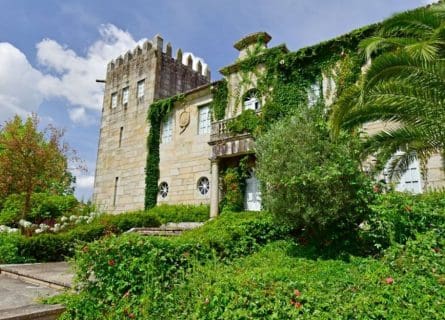
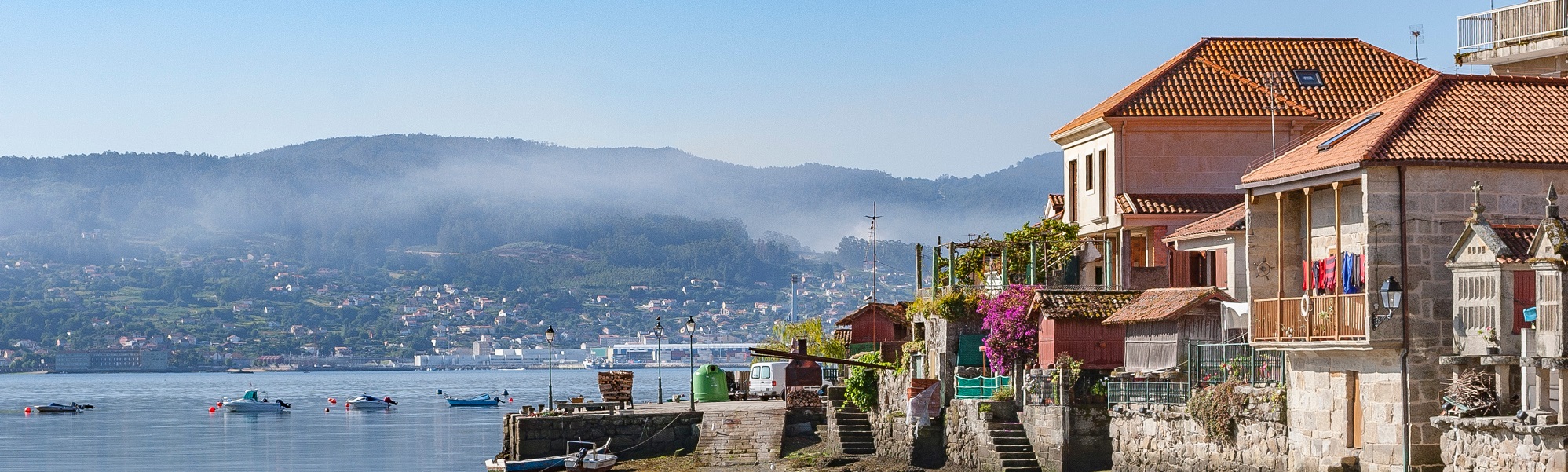
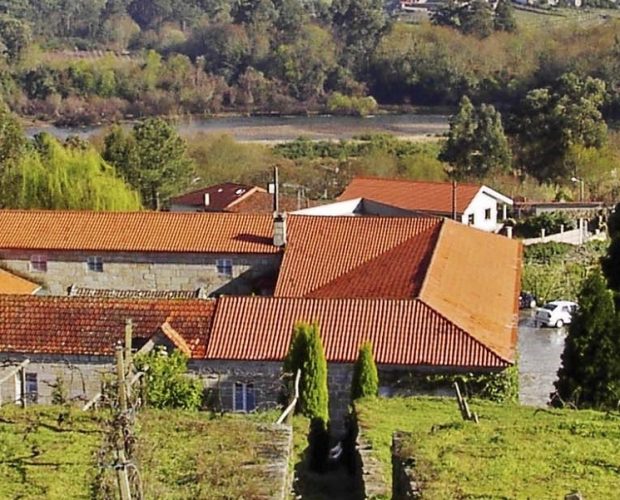
Galicia’s scenery is as evocative as the region’s rich and tumultuous history. In the interior, rolling emerald green hills covered in mist give way to medieval castles and ‘Pazos’ (beautiful, historic manor houses, many converted into small, charming hotels). The extensive coastline, meanwhile, is stunning, with romantic coves and sandy white beaches spotted with quaint fishing villages.
During the Middle Ages, Benedictine and Cistercian monasteries extended viticulture into areas such as the Val do Salnés, O Rosal, and Ribeira do Ulla, improved farming techniques, and helped preserve local grape varieties that might otherwise have disappeared.
A romantic theory once held that monks brought Albariño to Galicia from France. It is a good story, but modern research points instead to the grape having deep roots in northwestern Iberia. The monasteries undoubtedly helped cultivate and spread Albariño and other local varieties. Later, vineyards increasingly passed into private hands, while many of Galicia’s historic pazos became closely associated with wine production.
It was not until the mid-20th century that the variety began to spread more widely across the region, encouraged by growing recognition of the wines’ quality.
The decisive change came in 1980 when the Denominación Específica Albariño was officially recognized. Regulations followed in 1984, before the appellation was reorganized and formally recognized as the Rías Baixas DO in 1988. At that stage, it covered three subzones: Val do Salnés, Condado do Tea, and O Rosal.
The map subsequently expanded. Soutomaior joined the DO in 1996, followed by Ribeira do Ulla in 2000, giving Rías Baixas the five subzones recognized today.
The transformation since the 1980s has been dramatic. A wine once largely enjoyed in Galicia has become one of Spain’s most recognizable white styles, while the region’s growers have continued to work with a far broader collection of indigenous grapes. Thankfully, greater fame has not erased the character of the place: this remains a landscape of small plots, Atlantic weather, old pazos, and vineyards that rarely look like anybody’s idea of stereotypical Spain.
Geography and terroir
The southern part of Galicia’s west coast is stunningly beautiful. It comprises four large rías, broad coastal inlets sandwiched between pine-covered hills. The vineyards are found south of Santiago de Compostela, running for about 89 kilometers to within touching distance of northern Portugal.
Unsurprisingly, the prevailing climate is Atlantic, with heavy rainfall and high humidity. Temperatures are mild, only dropping in December and January. There is an average of about 2,220 hours of sunlight per year.
Ideal Conditions for High-Quality Wine Production
Indeed, the oceanic conditions help preserve the fresh acidity that defines the region’s wines. The soils, meanwhile, are dominated by granite, with alluvial, colluvial and clay-rich deposits appearing across parts of the appellation. Yet many growers favor granite, associating these soils with the distinct minerality and saline hit that consumers find so appealing.
The wine production area is subdivided into five areas: Val do Salnés, Condado do Tea, O Rosal, Soutomaior, and Ribeira do Ulla. Val do Salnés, scattered around the picturesque village of Cambados, is largely planted to Albariño; Rosal is the southernmost zone located just south of the lovely town of Baiona (which has a beautiful Parador hotel).
Albariño and Treixadura must together account for at least 70% of a wine labelled Rías Baixas Condado do Tea. Condado do Tea is a mountainous subzone along the right bank of the Miño River. Meanwhile, Soutomaior (south of Pontevedra) is famous for its gorgeous castle. At the same time, Ribeira do Ulla is the newest addition to the Rías Baixas DO, located east of the Val do Salnés.
Planning a Wine Trip to Rías Baixas
Rías Baixas is not a region to rush. Santiago de Compostela is a practical base for exploring the Val do Salnés, while Baiona works well if O Rosal and the lower Miño are the priority. Two winery visits in a day is plenty: leave time for a proper lunch and a bottle of local wine rather than turning the vineyards into a race against the clock. Organize winery appointments in advance, and a private chauffeur is particularly useful if you plan to explore more than one subzone. Cellar Tours can arrange private winery visits, lunch, and chauffeured transfers through the region.
Planning resources
Winemaking and regional classifications
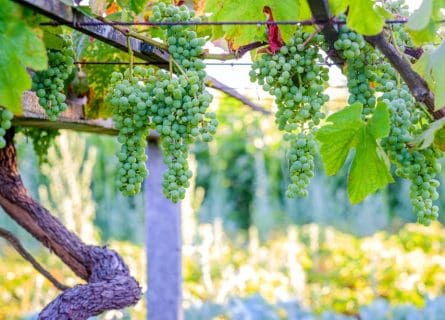
The Rías Baixas DO (appellation) is one of Spain’s most dynamic and successful regulatory councils. In addition to building up a formidable export presence worldwide, the Consejo awards its members a great deal of freedom as long as they comply with high-quality requirements.
As a result, winemaking philosophies vary considerably in the region. Producers also experiment with fermentation and maturation in oak, as well as extended aging on the fine lees.
Focus on Crisp and Aromatic White Wines
Nevertheless, producing a crisp and aromatic style is the primary objective of the critical mass. This inevitably calls for a slow, cool vinification in stainless steel, yielding a fruit-driven and fresh wine. Most wines produced in the zone are white, often 100% Albariño. However, the authorities also permit other local white grapes, including Loureira, Treixadura, Caíño Blanco, Torrontés and Godello, alongside a small range of reds made from varieties such as Caíño Tinto, Espadeiro, Sousón and Mencía.
The small volume of Mencía produced in Rías Baixas can be excellent: wonderfully fragrant and juicy reds with elegant tannins. In addition, a minuscule amount of bubbly is crafted by a few growers – a niche that should be expanded!
Facts & Figures
-
Key wine styles
- Aromatic dry whites / lees- and barrel-aged whites
- small-production reds
- sparkling wines
-
Appellation structure
- Rías Baixas DO
-
Hectares under vine
5,057 hectares (2026)
-
2025 wine production
32.7 million litres
-
Approximate number of Registered wineries
178 registered wineries (2026)
The lowdown
Thanks to the dynamism of its key stakeholders, Rías Baixas has dramatically expanded its international market for predominantly white wines.
At the turn of the century, few people outside of Galicia had heard of Albariño, much less Godello or Mencía.
Today, the region’s signature grape has stolen some of Sauvignon’s thunder and established an audience far beyond Galicia.
London-based restaurateur José Pizarro says:
“We have always pushed the stylistic link between Albariño and Sauvignon Blanc. Spanish whites are a natural progression for people tired of that variety – we find that consumers love them nine times out of ten.”
So it would not be hyperbole to suggest that the Kiwis should be worried; a small but growing firmament of wineries in the New World have embraced Albariño, particularly in Marlborough and California. Nevertheless, the style of wine they produce can be quite different from the Galician benchmark: often richer and riper, with less acidity and more texture. Thus, the Spanish can rest assured of their near-hegemonic position. There is little chance of an Albariño coup in the South Pacific!
Still, it doesn’t bode well to slip into complacency. The Galicians understand that there are plenty of rivals, not least the attractively priced wines of Rueda in Castilla y León. To that end, some producers are welcoming barrels into their cellars, using a well-judged degree of oak maturation to add texture and depth to their wines.
Skin contact can also bring a new dimension to Galician whites, in addition to lees aging. Purists might argue that such ’embellishments’ are unnecessary – sacrilegious even. Yet influential sommeliers clearly like a point of difference, and they are the gatekeepers to status and recognition in the on-trade.
The Influence of Rías Baixas’ Superstar Wineries
The DO is also fortunate to host several superstar wineries that have done much to keep the region on its toes. Martín Códax (known for Albariño bottlings such as Martín Códax, Lías and Organistrum) is one of the most famous producers; Adegas Galegas and Adegas Morgadío are also part of the A-list in Rías Baixas.
Pazo de Barrantes, meanwhile, produces a very stylish, upmarket Albariño and remains in the Cebrián-Sagarriga family, the same family behind the world-famous Rioja estate Marqués de Murrieta. Their job is to ensure that fame doesn’t breed laziness or apathy. So far, they appear to have succeeded.
Key Grape Varietals
-
White grape
Albariño
The dominant grape of Rías Baixas, particularly in Val do Salnés. Its naturally high acidity and pronounced aromatics underpin the region's fresh, Atlantic white wines. View grape -
White grape
Caíño Blanco
Caíño Blanco is a scarce Galician white grape with high acidity, floral aromas and apple notes, used in blends and occasional varietal wines. View grape -
White grape
Godello
Godello is a Galician white grape known for freshness, perfume and texture, producing both crisp young wines and richer, age-worthy styles. View grape -
White grape
Loureira (Loureiro)
Loureira is an aromatic, high-acid white grape central to O Rosal blends, where it traditionally works alongside Albariño and other local varieties. View grape -
White grape
Treixadura
Treixadura is most closely associated in Rías Baixas with Condado do Tea, bringing freshness, balanced acidity and floral-fruit character to white blends. View grape -
White grape -
Red grape Caíño Tinto
Caíño Tinto is a traditional Rías Baixas red grape valued for its dark colour and aromatic intensity, particularly in the appellation's small-production red blends. -
Red grape
Mencía
Mencía is an aromatic red grape from northwestern Spain, known for fresh acidity, red fruit, floral notes and supple tannins. View grape -
Red grape Espadeiro
Espadeiro is a traditional Rías Baixas red grape with dark cherry colour, fresh berry aromas, lively acidity and good body.
Rías Baixas gastronomy

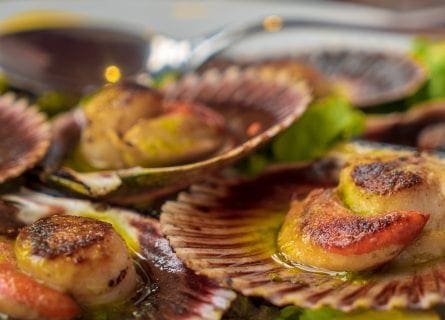
It must be said that Galicia lacks the cachet of the Basque Country (at least in gastronomic terms). Yet the region can hold its own regarding fresh ingredients and exquisite tapas. Your best bet is to head to the nearest bar in Santiago de Compostela, grab a stool, and enjoy. We’d probably start by ordering a chilled glass of white – Albariño, of course – and perhaps some empanadas, jamón, cured sausage, anchovies, and gambas (prawns).
Local cheeses, such as the always delicious tetilla, work fantastically well with Galicia’s fresh and saline whites. But the real highlight is the seafood – expect a smorgasbord of every type of Atlantic fish available.
Cellar Tours Selection of Recommended Wineries
- Adegas Galegas Based in Condado do Tea, Adegas Galegas works with Albariño and other traditional varieties from Condado do Tea and O Rosal. View winery
- Martín Códax Founded in 1985 by 50 growers in Cambados, Martín Códax has become one of Val do Salnés' best-known Albariño producers View winery
- Bodegas Terras Gauda An important O Rosal producer, particularly associated with blends of Albariño, Caíño Blanco and Loureira that show the distinctive character of this southern subzone. Visit website
- Bodegas del Palacio Fefiñanes A historic Cambados estate closely associated with Albariño; its flagship Albariño de Fefiñanes dates from 1928. Visit website
- Bodegas Zárate A family estate in Meaño with deep roots in Val do Salnés, known for Albariño from individual vineyard sites and old vines. Visit website
Explore further
Continue Exploring Spain
Discover private journeys, the complete wine region guide, and expert stories from across Spain.
 18 tours
Country tours
Private Wine Tours in Spain
Luxury Food & Wine Journeys Across Spain’s Finest Regions
 10 days
Private tour
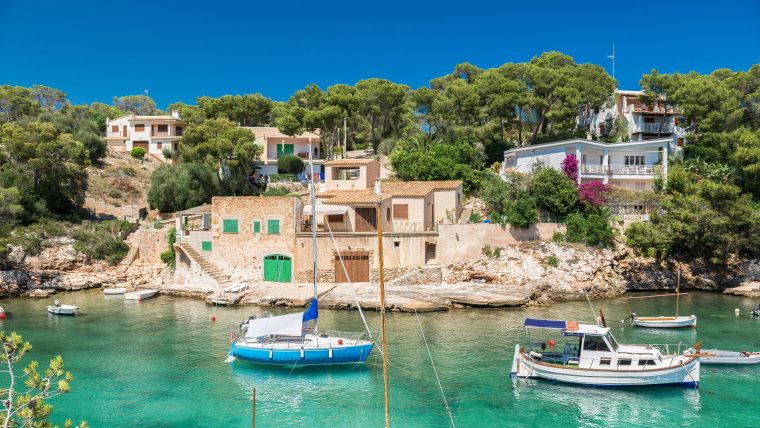
Private Food & Wine Tour in Mallorca
Island wines, coastal villages and Mediterranean luxury.
 3 days
Private tour
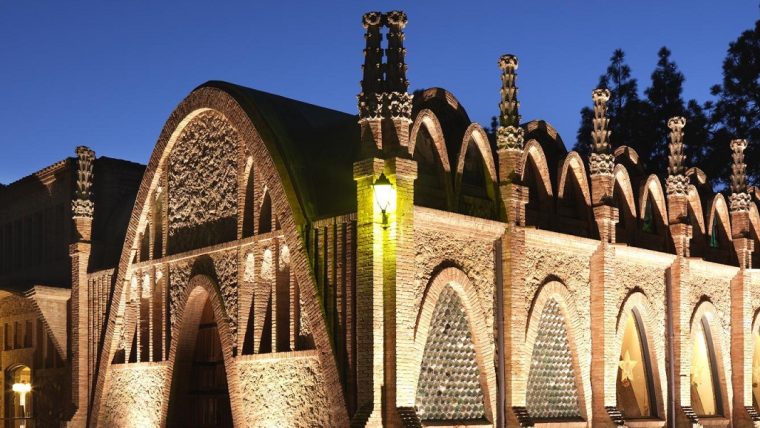
Private Wine Tour in Penedès
Private Cava and Corpinnat visits, vineyard lodging and Catalan dining over three days.
Wine regions
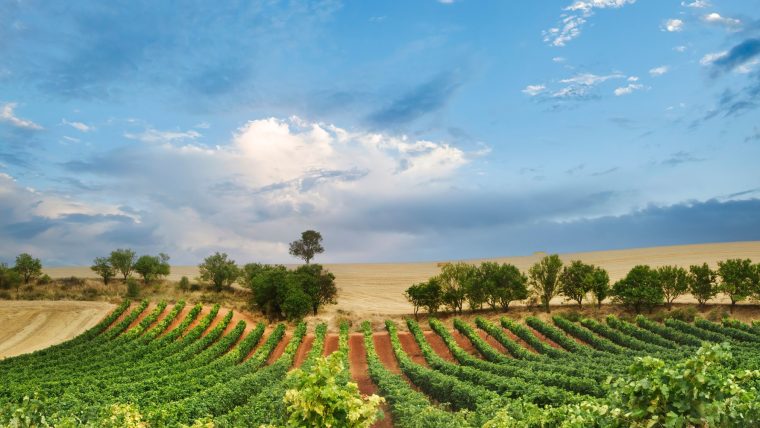
Best Wine Regions in Spain
Compare Spain’s leading wine regions by signature grapes, scenery, best base, travel time, and ideal stay.
Explore regions
Article
Garnacha Grape Variety: Spain’s Most Fashionable Grape
Garnacha is one of Spain’s most important red grapes, producing generous, fruit-driven wines with ripe red berry flavors, moderate tannins and a natural affinity…
Read article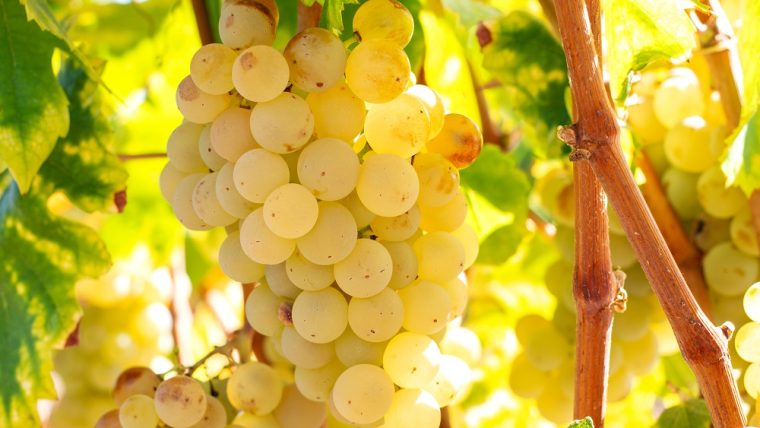
Article
Xarel-lo Grape Variety: A Change of Pace
Unveiling Xarel-lo: A Key Grape in Catalonia's Cava Sparkling Wine. Discover the Intriguing Role of Xarel-lo in Spain's Sparkling Delight.
Read articleAuthor