
Embark on a sensory journey through Basque Wine Country, exploring its rich terroir and exquisite vintages. Plan your trip today! Open region guide
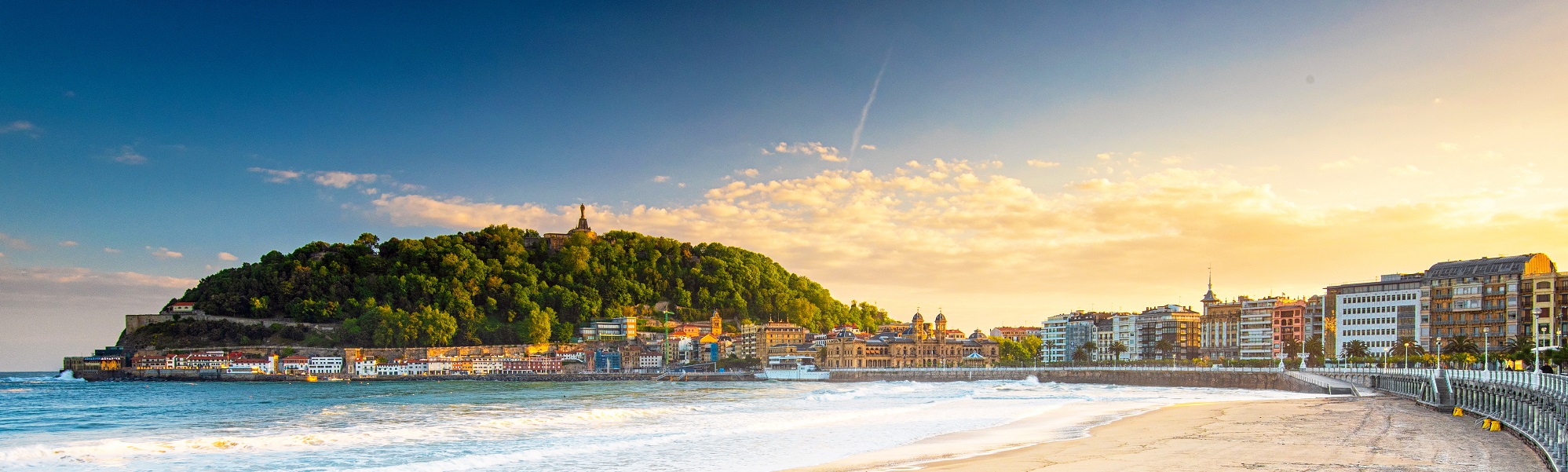
It is spectacularly located on the famous, shell-shaped Playa de la Concha Bay. San Sebastian (known as “Donostia” in the Basque language) is Spain’s most elegant and fashionable seaside resort. It attracts families for its pristine beaches and honeymooners for its countless romantic viewpoints. Above all, food lovers arrive in droves for its dazzling array of Michelin-starred eateries (there are more stars per capita in San Sebastian than in Paris) and creative tapas and pintxos bars. San Sebastian is a “must-see” destination for culinary tours of Northern Spain, not to mention a fascinating venue for world-renowned art, jazz, and film festivals (all of which attract celebrities; you can easily rub shoulders with Hollywood Elite at the town’s elegant hotels and restaurants during these festivals).
San Sebastian has long been adored by Spain’s aristocracy and monarchy, particularly in the 19th century, when beautiful Belle Époque palaces and hotels like the Maria Cristina were established. And yet, what we know today as a chic holiday resort began life as a small, nondescript fishing village of little note. Although historians have uncovered evidence of pre-roman settlement, its official history begins with the pre-roman tribe, the Varduli, who established the settlement shortly before the Roman invasion and occupation of Spain. The Romans controlled what was then known as Iberia from the 2nd century BC to the 5th Century AD. However, their Western civilization collapsed in the mid-5th century due to attacks from the Visigoths and other tribes from northern Europe.
After the collapse of the Roman Empire, the region languished in obscurity for centuries; little is known about San Sebastian’s fate until the 12th century. Although the Moors from North Africa invaded Spain in 711 and quickly subdued the population in Andalusia (southern Spain), provinces like the Basque country in northern Spain resisted conquest, and several territories remained independent from the Moorish territory of ‘Al-Andalus.’ We know that the kingdom of Navarra granted the town self-governing status in the late 12th century. King Sancho VI, the Navarre ruler, viewed San Sebastian with great interest, as the Playa de la Concha bay’s grand sweep was their only sea access.
Unfortunately, the territory was taken from the Kingdom of Navarra in 1200 after King Alfonso VIII of Castile annexed the region. However, Gascon-speaking immigrants from the nearby town of Bayonne settled in San Sebastian, and a thriving trade was built up with other European seaports. A thaw in relations between Castile and Navarra was also initiated in 1265, as a wedding pact involving both regions allowed Navarra access to the lucrative sea trade of San Sebastian. However, a tragedy would befall the town in 1489 when a devastating fire destroyed most of San Sebastian’s buildings and housing. From then on, the town’s residents constructed their buildings from stone rather than timber!
San Sebastian would see more conflict and political turmoil in the coming centuries. After the final fall of the Navarra Kingdom to the Castilians, San Sebastian became a province of the ancient Basque Region of Gipuzkoa. This period of history during the 16th century would see Spain enter many wars with France, Holland, and England under the rule of King Philip II. This European conflict took its toll on San Sebastian, and its prosperity and population declined. As a result, many fishermen took to pirating to survive and perhaps grow wealthy!
However, in the 17th century, some peace and stability returned to San Sebastian, and in 1656, the city was honored to host Maria Theresa of Spain and Louis XIV during their marriage in St-Jean-de-Luz on the Basque coast. Its population recovered, and the city’s fishing and trading industries again prospered. The good times continued into the 18th century despite a French attack on the city in 1721. In 1728, a company was founded to benefit from the influx of trade with South America. The wealth generated from this trading endeavor allowed many city improvements and new buildings to be created, including a new Church of Santa Maria.
The city’s fortunes declined in the 19th century as the inter-state conflict would engulf San Sebastian again. During the Peninsular War between Napoleon’s France and the allied powers of the UK, Spain, and Portugal, many famous battles were fought to take control of the Spanish Peninsular. Finally, in 1808, the French forces captured the city, which was subsequently retaken by Anglo-Portuguese troops three days later. After fighting to regain the territory, the arriving soldiers went on the rampage, pillaging and setting fire to the city. After this terrible event, the city was naturally rebuilt, and many improvements were made to San Sebastian’s elegant public buildings.
In the mid-19th century, domestic conflict escalated across Spain, with the various Carlist Wars engulfing the nation. The Carlists were a group who sought to restore an overthrown Monarchy in Spain. San Sebastian, after siding with the Republican liberals, was attacked by the Carlists, initially in 1875, who repeatedly shelled the town, killing the resident poet Bilintx in 1876. However, despite the wars of the 19th century, it was during this period that the initial signs of a thriving tourism industry began to develop in San Sebastian. The first casino was built in 1887, and the Spanish royal family started to visit the city regularly. By the close of the century, many elegant hotels and Art Nouveau buildings had been constructed, giving San Sebastian a glamour and renown equal to its French seaside cousin, Biarritz.
The 20th century would herald many changes, struggles, and upheavals for Spain, with San Sebastian often in the direct firing line. During the Spanish Civil War, fiercely pro-Republican San-Sebastian was captured by the Nationalists, who executed more than 380 citizens. Many fled to neighboring countries, draining the city’s workforce and lifeblood. After the Nationalists won the War, San-Sebastian was in a sorry state indeed, under-populated and poverty-stricken. It was not until after the end of the Second World War that the city’s economy started to recover in the 1950s.
After the death of Franco, Spain converted with surprising ease to democracy and has emerged as one of the most important cultural, economic, and political forces in Europe today. San Sebastian benefited enormously from becoming part of an autonomous region again, notwithstanding the political infighting between different parties in the 1970s and 80s within the Basque political arena. In the 1990s, major urban rejuvenation projects were undertaken, including the enlargement of the beachfront promenade, new university facilities, and public infrastructure improvements.
Despite the many hardships the city has endured over the last century, San Sebastian’s timeless appeal and glamour remain. For decades, it has held the proud title of Spain’s most famous resort destination, enticing visitors with its surfeit of culture, festivals, unspoiled beaches, and unrivaled gastronomic tradition. Part of its appeal lies in the Basques, who have maintained their language and culture over the decade and feel separate from their neighbors down south. Indeed, as locals will proudly tell you, you should not refer to this glorious city as San Sebastian but instead as Donostia, the jewel of the Spanish Basque coast!
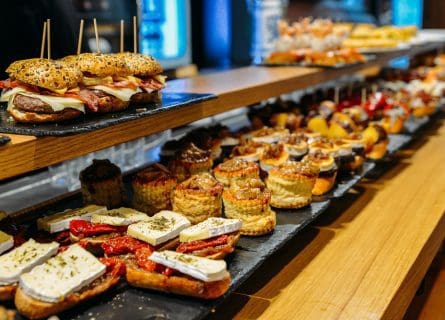
San Sebastian is renowned throughout Spain for its excellent Basque cuisine. And although the Catalans may disagree, there is no denying the city’s formidable food culture and the Basque region in general. Moreover, the cuisine has always played an essential part in local life: many Basque men in San Sebastian belong to clubs where they gather weekly to cook, eat, drink, and talk.
All this adds up to a bewildering array of options for the gourmet visitor, both informal and 3 Michelin stars. Restaurants like Akelarre, Arzak, and Mugaritz continue to draw discerning food lovers with their superb interpretations of modern Basque cuisine. Of course, like every Spanish city, San Sebastian has an enormous variety of places to eat and drink, and great value eateries abound. Your first port of call should undoubtedly be the city’s old town, the Parte Vieja. Wedged between the bay and the Urumea River, this delightful old town’s alleyways are packed with informal restaurants and tapas bars. The nighttime atmosphere is unbeatable, with crowds of revelers passing from bar to bar, sharing the Basque pintxos with countless glasses of wine.
Local Basque cuisine is always based on high-quality, local ingredients in season rather than elaborate sauces or spice combinations. Seafood is one of the main ingredients in traditional dishes using unusual ingredients, including sea bream and hake cheeks. Hake (Merluza) is cooked in a green sauce, thickening the juices from the fish once it has been warmed. Grilled seabream is usually cooked with plenty of garlic. What of the wine? The Basque country produces Txakoli, a crisp white wine perfect as an aperitif. The Basque region of Alava has exceptional red Rioja wines, but in the city’s finest restaurant, you can sample wines from all over Spain and the world!
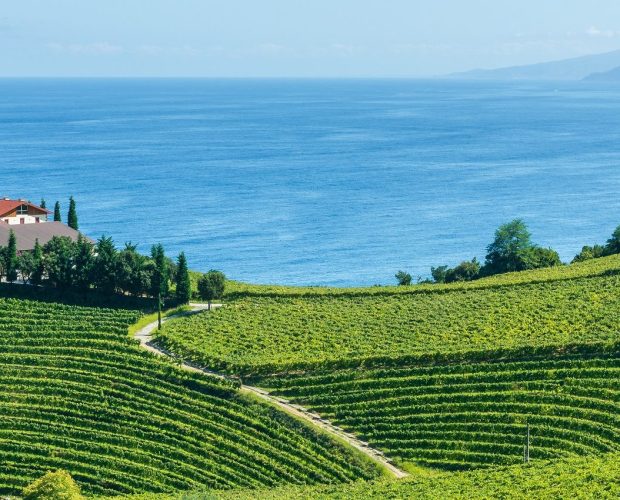
Local Txacoli wines are young, fresh, fruity, “green” wines with 11% alcohol levels and a strong personality made in Basque Country. These wines are made approximately 30 miles from San Sebastian and comprise 80-90% White Hondarrabi Zuri grapes). Txacoli is one of Spain’s smallest and most exciting Appellations of Origin. Txacoli de Guetaria is the denomination closest to San Sebastian, with 174 hectares of land.
Guide to Basque Cuisine: Read more
Located high above the Bay of Biscay, our favorite Donastia haute cuisine restaurant Akelarre is a temple of modern Basque cuisine, helmed by the legendary chef Pedro Subijana. The stunning panoramic views of the sea and mountains provide the perfect backdrop for Subijana’s innovative and impeccably executed dishes, which blend traditional Basque ingredients and techniques with avant-garde flair. A must for any visiting foodie.
This beautiful square was home to a bullring, and now you can see the orange and blue shutters and the numbered balconies which used to surround the ring. Beside the plaza is the beautiful Santa Maria del Coro Baroque church.
This traditional ritual dance involving swords is performed in various venues but mostly during festivals. The dance involves about 10 to 24 people, who split into two groups. One group dances with long swords making bridges and other architectural forms, while the other dances with shorter blades moving their arms, reminiscent of Asian martial arts forms.
The Palacio del Mar was designed by Juan Carlos Guerra, with a unique Basque architectural design, and was opened in 1828 as headquarters to the Guipuzcoa Oceanographic Society. Today it is an aquarium with an impressive fish collection and a Basque maritime exhibit.
Palacio Miramar was built for Queen Maria Cristina as a summer residence to establish this area as an aristocratic resort city. It was built by the Basque architect Jose Goicoa and designed by a British architect, Selden Wornum. The gardens are open to the public.
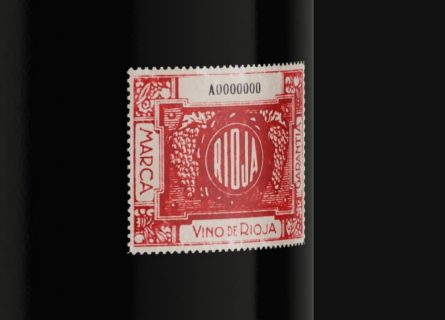
February 8, 2024
Unravel Rioja's wine types! Explore Crianzas, Reservas, Gran Reservas & more. Discover classifications, key grapes, and find your perfect bottle. Start your Rioja journey here!
Read article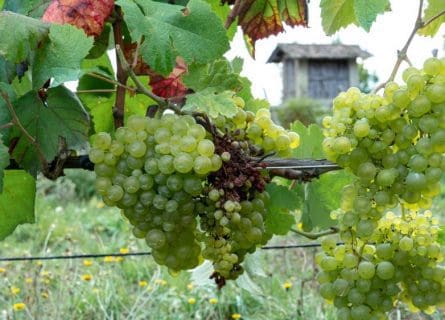
July 29, 2022
Discover Treixadura grape: Origins, Flavor Profile, and Exceptional Wines—a must-read for wine enthusiasts seeking new taste sensations.
Read article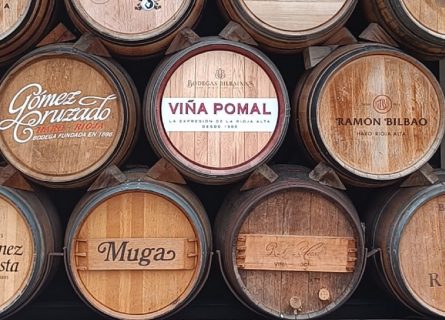
July 1, 2024
Explore Spain's rich wine regions and indigenous grapes. A journey through diverse styles and deep heritage.
Read article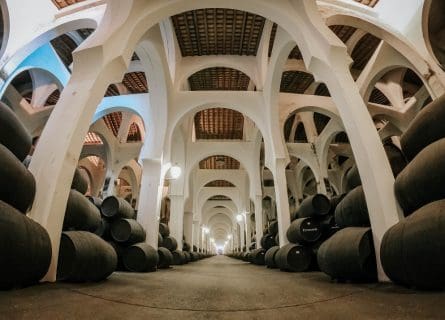
July 12, 2022
Learn about Palomino, the grape behind most Sherry, including its flavor, vineyard role, Jerez terroir, and Fino, Manzanilla, and Oloroso styles.
Read article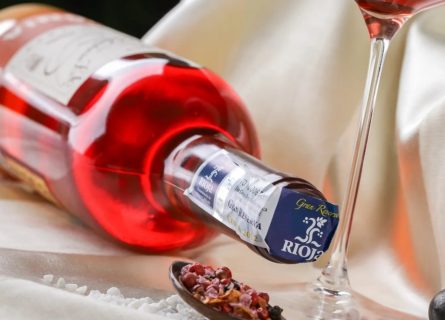
October 17, 2024
Discover the hidden gem of Spanish rosé wine! Explore the top regions, producers, and food pairings in this article.
Read article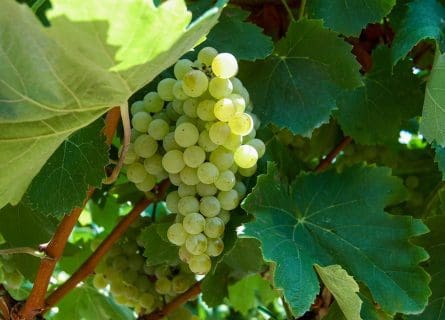
July 16, 2022
Discover Viura: Rioja's Prominent White Grape & Catalonia's Macabeo. Explore its versatility in exquisite wines. A must-read for wine enthusiasts.
Read article