
Embark on a journey through Andalucía's rich wine culture and vineyards. Explore flavors, traditions, and hidden gems. Plan your trip! Open region guide
Seville is, without a doubt, one of the most beautiful cities in the world. It is almost like a living museum, particularly in the evocative old Jewish quarter, Santa Cruz. There is a unique quality of light in Seville, and the sensual perfume of the ubiquitous jasmine blossoms lends itself to the romance of the place. Unbelievably narrow streets lined with whitewashed palaces and balconies bursting over with fuchsia-colored bougainvillea, leading you from one tiny square to the next, inevitably full of orange trees, graceful courtyards which passers-by can sneak a peek at, and charming Tapas Bars covered in typical tiles and lined with wine barrels.
Conquered by the Moors in the 8th century, Seville has always been a royal residence. Even before the Moors arrived, the Romans and Carthaginians fought over Seville. And the Phoenicians and Greeks before them. Italica, just outside Seville, is the site of preserved Roman ruins dating back to the 3rd century BC. Roman Seville became Christian in the 4th century, and the Visigoths who ruled afterward built impressive Christian monuments, including the Cathedral. History in Southern Spain was tumultuous for the next few hundred years, including religious crusades, the “Reconquest,” the religious expulsions and cruel conversions, and the monumental discovery of “the new world.”
From the Spanish conquest of the Americas, riches flowed back to Spain directly into the country through Seville’s Guadalquivir River. Exuberant palaces and mansions were erected, and Seville was (and still is) the home of one of the leading Spanish aristocratic families, the Medinacelis. In the 1500s, Seville became wealthy, and the Port became one of the world’s busiest. However, the Spanish Armada’s defeat and the escalation of religious fanaticism did little good for Seville. The city suffered a decline until the 17th century’s “Golden Age” explosion of Baroque painting and architecture. This creative “boom” legacy includes Murillo, Zurbarán, Alonso Cano, Velasquéz, and Juan de Mesa.
The next few hundred years brought political insecurity, the loss of the colonies, and the horrific Spanish Civil War. In the late 20th century, things looked a lot better for Seville. The town hosted the Expo in 1992 and saw the introduction of the fast-speed train from Madrid to Seville (called the “Ave,” meaning “bird”).
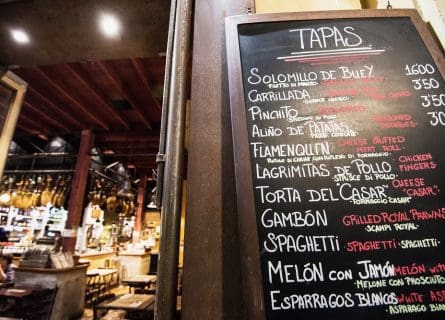
Seville is one of the best cities in Spain to experience the famed Tapas Bars. Eating is an art form in Seville, and “Tapa Hopping” is what the locals do, starting at one bar and slowly making their way down to four or five different bars, sipping wine and chatting along the way until they get full at which point, they drink more wine! This ritual is called “Tapeo.” The historic quarter is conducive to this fun “culinary traveling.” The Santa Cruz barrio, for example, is lined with bar after bar, each specializing in various Tapas and Vinos.
Tapas, to taste and savor while in Seville, include: “Pringá” (very typical, it’s a little toasty topped with different meats such as pork, bacon, and chorizo); “Montaditos” (these are pieces of rustic country bread that can be completed with blood pudding, spicy sausages, Roquefort and walnuts, anchovies, Pork marinated in Jerez wine); Papas Aliñás (cold potato salad doused in gorgeous Olive Oil and tossed with prawns, onions, garlic, tomatoes and a splash of vinegar); and Garbanzos con Espinacas (chickpeas lightly sautéed with fresh spinach, olive oil, and garlic.) the most traditional wines to be served with Tapas are the wines from Jerez de la Frontera and Sanlucar de Barrameda, which include: Manzanilla, Fino, Oloroso, and Amontillado.
For cheese-based tapas and desserts, the ultra-rich Pedro Ximenez is often served. Those who aren’t fans of Sherry can enjoy red wines from La Rioja and Ribera Del Duero and white wines from Rueda or Rias Baixas.
Guide to Andalusian Gastronomy: Read more
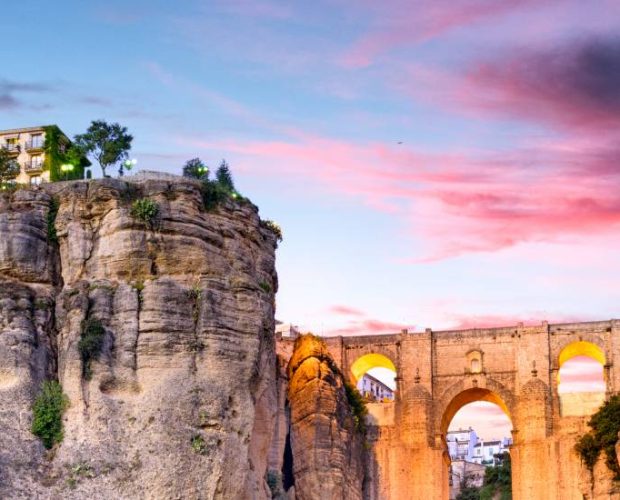
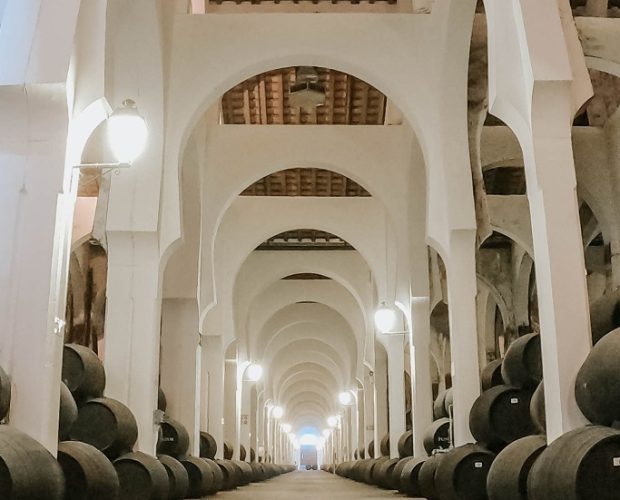
Seville fell to the Moors in 712, and the military chiefs built their fortress on where the Reales Alcazares is today. Called the “Royal Fortress,” this beautiful property houses the 9th-century Moorish Palaces built for the Emir, Abdulrahman II. These superb palaces are stunning for first-time visitors. Intricately carved arches, hand-painted tiles with Arabic calligraphy, and spectacular gardens can all be enjoyed here. This is an absolute “must-see” in Seville.
The First Marquis of Tarifa built one of Seville’s most beautiful palaces in the late 1400s to resemble Pontius Pilate’s residence in Jerusalem. The Duke of Medinaceli owns the palace, and is the most beautiful private residence in Seville, which is luckily open to the public. You will see beautiful Roman busts, an exciting fusion of Renaissance and Mudejar architectural styles, and a collection of family paintings, including ones of Barbara de Braganza, who once lived there.
The “Indies Archives” is a library/museum located in a gorgeous 16th-century building with more than four million documents relating to the discovery of “the New World.” One of the most exciting bits of the vast collection is the personal diary excerpt of Cristobal Colón (Christopher Columbus).
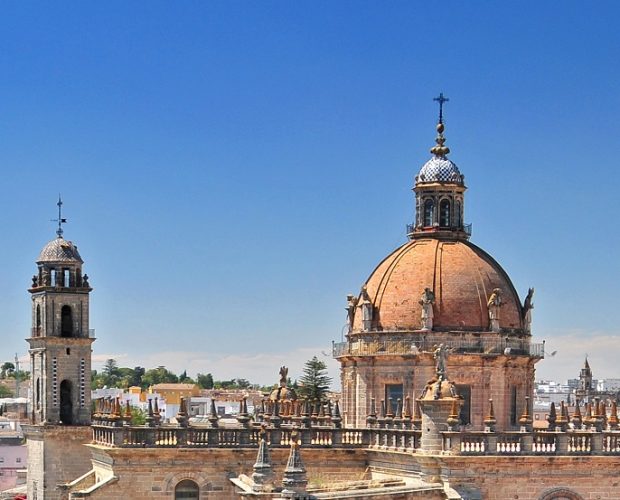
This graceful building has an almost anarchic past. Seville’s massive cathedral site was the original site of Seville’s 12th-century Mosque (of which only the Giralda tower is left). A Visigoth church was rebuilt over the Mosque. Work began in 1401 and lasted until 1506! The beautiful result is a mix of Gothic, Plateresque, and baroque styles and is today the third-largest Christian church in the world (after St Peter’s in Rome and St Paul’s in London). You can climb up the Giralda tower to take in the sweeping views below but be prepared for a long wait in line.
April 1, 2024
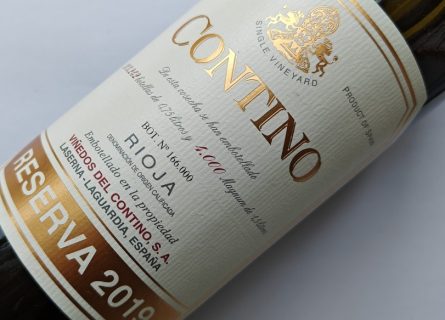
Demystify Spanish wine labels and understand the key terminology. Learn about the diverse wine regions, classifications, and varietals of Spain.
Read article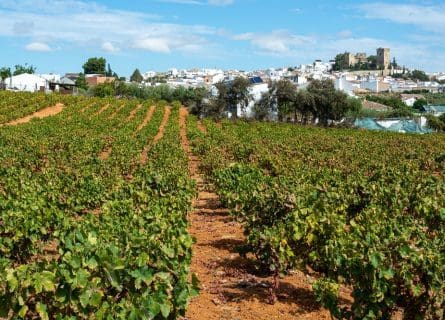
July 9, 2022
Indulge in the Sweetness of Pedro Ximénez: A Resplendent Grape for Andalusia's Montilla-Moriles. Experience the Richness of Sweet Sherries & Fortified Wines.
Read article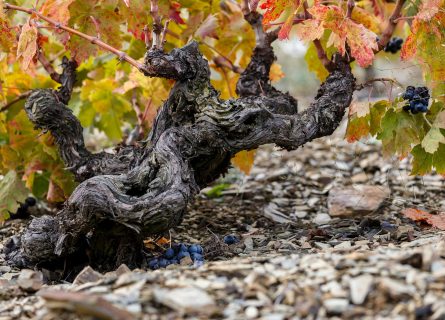
November 25, 2024
Explore Priorat's new wine classification system, Els Noms de la Terra, and its innovative approach to terroir-driven winemaking.
Read article
April 28, 2024
Learn what Cava is, how it is made, how it differs from Champagne and Prosecco, and where to taste it in Penedès.
Read article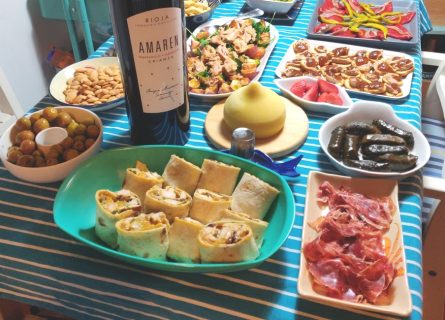
August 28, 2024
Explore the diverse flavors of Spanish wines. Learn to master the art of pairing wines like Albariño, Rioja, and Cava with your favorite dishes.
Read article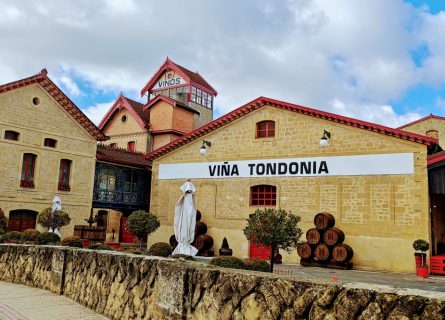
March 10, 2024
Haro's Barrio offers iconic wineries, exclusive tastings & festive wine celebrations. Must-visit for wine lovers!
Read article