Hvar Wine Region Guide
Adriatic glamour, ancient vineyards, and wines shaped by sun, stone, and sea.
Introduction
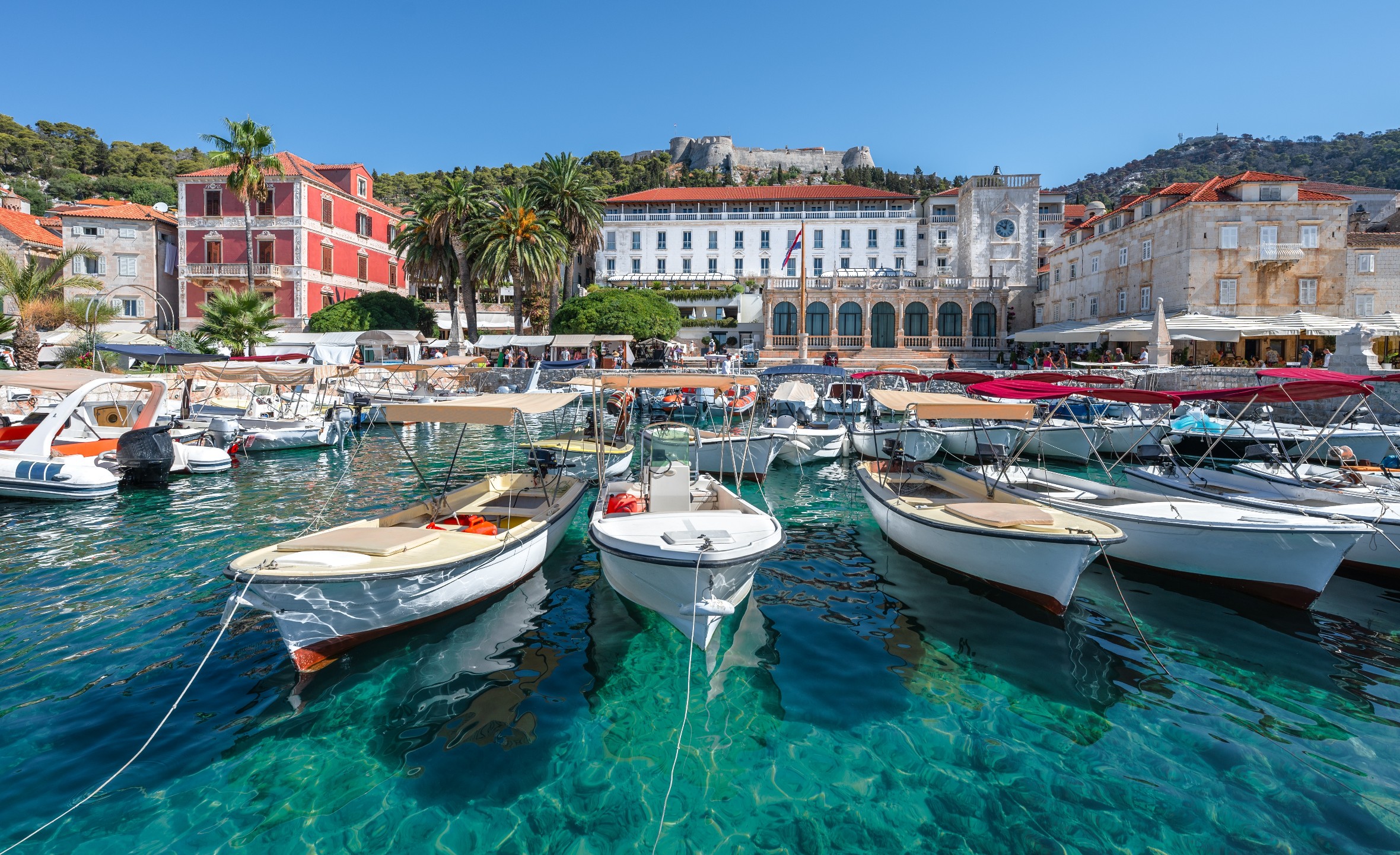
Beautiful, glamorous, and achingly chic, Hvar in the Adriatic is nonetheless rarely associated with premium wine. Visitors have their priorities, and these often include beach clubs and sipping cocktails in polished stone squares, alongside exceptional food, warm hospitality, and a turquoise sea. Heaven on earth does exist – and it’s found on the island of Hvar.
Yet a small but growing number of tourists are discovering the fascinating story of Hvar’s viticulture. It requires, heaven forbid, a journey beyond the coastline: into a rugged interior of dry-stone terraces and a patchwork of vines, typically cultivated by the same family for generations. Introduced by the ancient Greeks in 384 BC, Hvar boasts one of the oldest winemaking traditions in Dalmatia – a survivor of phylloxera, economic depression, isolation, and numerous wars.
As this story continues to fascinate in 2026, winegrowers coax vivid flavors out of a range of local grape varieties, including the intense black fruit of Plavac Mali and the refreshing Bogdanuša. Driving this renewed energy and ambition, a new wave has swept through the island over the past decade, inspired partly by the example set by Mike Grgich, who returned to his native country from California following the enormous success of Grgich Hills Estate. At their worst, Hvar wines can be indifferent and mediocre. At their best, especially when paired with local delicacies such as charcoal-grilled meats and freshly caught fish, they are utterly ambrosial.
Geography and terroir
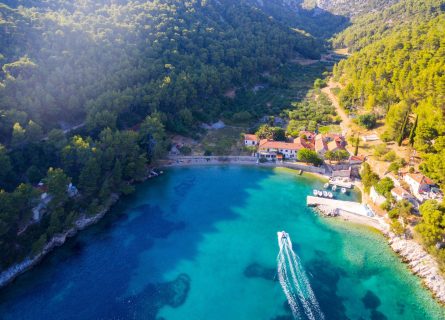
Just west of the Dalmatian coast, with its turquoise waters and hundreds of islands, lies the legendary destination of Hvar. Thanks to its wonderful climate and prime position in the Adriatic, the island has become something of an obsession for the jet set, with its harbor brimming with luxury yachts in the summer months.
Situated about 30 kilometers from Split and stretching 68 kilometers along the Dalmatian coast, Hvar is part of the Srednja I Juzna (Central and Southern Dalmatia) wine region, which also includes Otok Brac and the equally beautiful Otok Korcula. Its long, narrow landmass is heavily planted to lavender, and a small but important number of vineyards produce some truly exceptional wines.
Indeed, the ancient Greeks named the island Pharos (lighthouse), an apt description of Hvar’s narrow, elongated interior, with a spine of limestone hills that shelter a fertile plain, delightful coves, and terraced vineyards scattered across the island.
Today, approximately 280 hectares of vines are cultivated on Hvar, a pale shadow of its former glory. In the 1800s, Hvar boasted more than 5,500 hectares; however, a combination of phylloxera and economic hardship led to many vineyards being abandoned, as islanders emigrated in search of a better life.
Nevertheless, few would deny that Hvar is an exceptional place to make wine. Climatically, it is among the most privileged viticultural zones in Croatia, often described as “one of the sunniest islands in Europe”. The island’s winegrowers make full use of a long and very dry growing season, with mild winters and constant maritime breezes that help moderate the intense heat of July and August.
Meanwhile, white calcareous soils (concentrated on the southern side of the island) are low in fertility, encouraging low yields and concentrated flavors, although these thin, rocky terroirs offer limited water retention due to their porosity. As a result, hydric stress can be an issue in very hot years; older vineyards often rely on water cisterns because surface water is very limited. Given the steep inclines that define many of the best vineyards, mechanization is simply not an option on the propitious slopes that plunge toward the Adriatic – a real boon for quality.
However, the heart of local viticulture is the UNESCO-protected Stari Grad plain, first planted by Greek settlers in the 4th century BC. Here, relatively fertile alluvial soils – mixed with pockets of sand – yield aromatic dry whites from indigenous grapes such as Bogdanuša, Darnekuša Bijela (don’t even try to pronounce it), and Pošip. This stands in marked contrast to the vineyards of the coastal village Sveta Nedilja, where steep, south-facing climats carved into bare rock produce powerful, structured reds from Plavac Mali and other varieties.
The small subzone of Vrh, situated below the peak of Sveta Nikola, has also generated much excitement of late. Cultivated on a plateau of rich red soil at elevations of around 550 meters above sea level, small parcels of vines yield wines of bracing freshness and acidity – a relatively rare phenomenon in Hvar. Jo Ahearne MW was one of the first outsiders to recognize the potential of this remarkable terroir, producing a small volume of wonderfully aromatic wines. She is very much emblematic of the modern face of Hvar’s small wine industry: artisanal in approach and meticulous in her vineyard and cellar work.
There really is no other wine destination in Croatia that can touch it.
Winemaking and regional classifications

Plavac Mali, the most-planted red grape of the Dalmatian coast, reaches an apogee in the white limestone vineyards of Hvar. Handle this mercurial grape with respect, and it will produce wines of formidable structure and concentration – dense, tannic, and often imbued with a Mediterranean garrigue character that is very much a local hallmark.
Yet there is no subtlety or “Burgundian” quality to Plavac Mali; do not expect a facsimile of the more elegant, restrained reds of the Croatian interior. But while a modest volume of fresh, stainless-steel-fermented dry white is made on the island today, nothing can match Plavac Mali for authenticity or terroir expression.
Forty years ago, we would have been hard-pressed to recommend the grape to our readers. For much of the 20th century, Plavac Mali was used to produce rustic, unbalanced wines that reflected both poor viticulture and clumsy winemaking. Fortunately, the past three decades have witnessed a quality revolution across the island, with lower yields, selective harvesting, and capital investment transforming the grape’s potential.
Of course, into this mix we must include the human element: Hvar is blessed with some particularly talented winemakers, including Nikola Plenković, son of the legendary Zlatan Plenković. The late Zlatan founded the island’s leading winery, Zlatan Otok, in the 1990s following the fall of communism. Its organic, dry-farmed vineyards, grown on steep slopes that rise to nearly 1000 meters above sea level, produce a Plavac Mali that combines power and finesse in a manner that is all too rare even today.
The handling of the variety is sensitive and nuanced. Only the finest, hand-harvested fruit is used, with an extensive maceration period (8-14 days) in stainless-steel tanks to extract color, tannin, and depth of phenolics from the skins. The fermenting wine is then transferred to large wooden vats, where vinification continues for an additional 8-10 days at controlled temperatures of under 79° F. Only indigenous yeasts are employed, and maturation is carried out over 18 months in a mixture of large, used Slavonian casks (4,000 and 8,000 liters), in addition to some French barrique. The wine is also typically bottled without filtration, mirroring the approach favored by some Burgundy producers to preserve aromatic complexity and nuance.
The result is a true original – a red of depth and authority, where concentrated black fruit, tobacco, and garrigue scents are supported by firm (yet accessible) tannins. Plavac Mali cannot be to everyone’s taste – some may find its strength and power, albeit tamed by the hand of Nikola, overwhelming. Nevertheless, there is nothing anodyne, cookie-cutter, or globalized about Hvar-grown Plavac Mali. It stands head and shoulders above all other Croatian wines.
Facts & Figures
-
Key wine styles
- Plavac Mali
- A small volume of aromatic dry white and rosé
-
Appellation structure
- PDO (Protected Designation of Origin)
-
Hectares under vine
- Approximately 280
-
Average annual production
650,000 hectoliters per annum (Figure for total Croatian production)
-
Approximate number of producers
- Approximately 17 wineries
Key Grape Varietals
-
Red grape -
Red grape Plavac Mali
Dalmatia’s bold red: dark fruit, firm tannins, warmth, and seaside spice. -
White grape Bogdanuša
Hvar’s signature white grape, producing fresh, delicate wines with citrus, herbal notes, gentle aromatics, and a crisp Mediterranean character. -
White grape Maraština / Rukatac
A Mediterranean white with ripe stone fruit, herbs, soft texture, and a sunny feel. -
White grape Prč / Parč
A rare white Hvar grape producing crisp, mineral wines with citrus, herbs, subtle salinity, and fresh island character. -
White grape Pošip
A fuller Dalmatian white: peachy, rich, fresh, and excellent with seafood.
Hvar gastronomy
Regular visitors know we’re not exaggerating: Hvar over-delivers on the culinary front, surrounded by the Adriatic and benefiting from a rich abundance of exceptional produce and wild herbs. In the evening, the scent of fresh fish grilled over open flames, dressed in olive oil, garlic, and rosemary, fills the air, drifting from atmospheric restaurants across the island, particularly in Hvar Town.
Meanwhile, the island’s signature dish, gregada – a concoction of fresh fish, tomatoes, herbs, potatoes, and onions – is as delicious as it is simple to prepare. As elsewhere, modern influences have begun to manifest themselves in island cooking, particularly in the more tourist-centric restaurants of Hvar Town. Yet the prevailing instinct remains conservative in the best sense of the word.
Indeed, when dealing with some of the finest produce in Croatia – including freshly pressed olive oil, wild herbs, figs, citrus, and mountain-grazed lamb – it does not pay to embellish or over-conceptualize in the kitchen. Let the ingredients speak for themselves, locals insist, and you will be dazzled. And, as it turns out, they’re absolutely right. Dobar tek!
Author