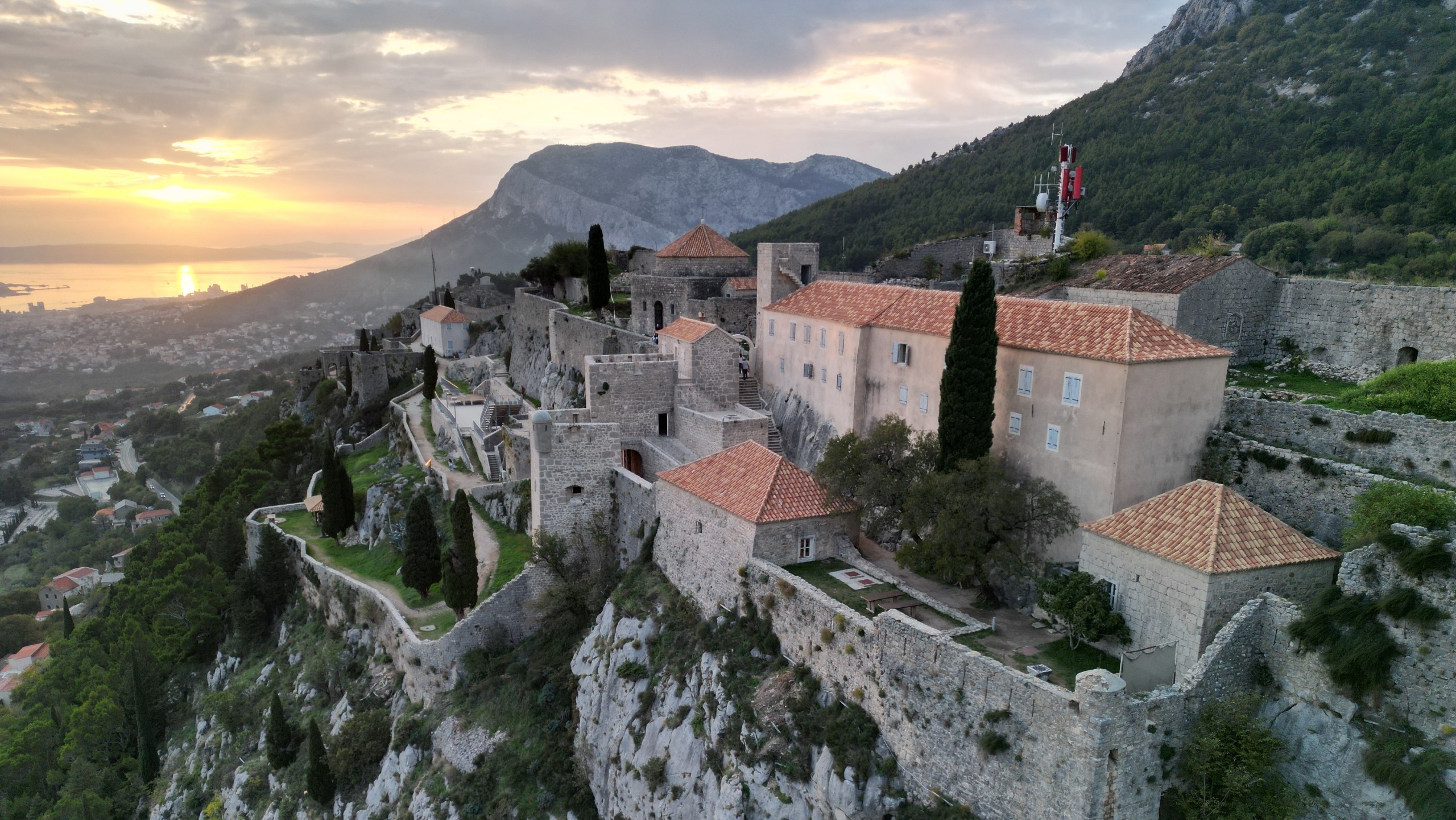
Dalmatinska Zagora Wine Region Guide
Dalmatia’s rugged hinterland: a wine frontier rooted in ancient vines and renewed ambition.
Introduction
There are two stories essential to Croatian wine: the familiar sun-kissed vineyards of coastal Istria and Dalmatia, known to tourists and present in Split and Rovinj wine bars, and the lesser-known Croatian interior. In Dalmatinska Zagora, a rugged hinterland stretching from Dalmatia towards Bosnia and Herzegovina, few visitors explore. Yet, this overlooked interior is experiencing a quality resurgence that defines the modern Croatian wine narrative.
But don’t misunderstand us: viticulture has been practiced in this part of Croatia for over two millennia, predating the Roman conquest of the region. However, unlike Istria and the Dalmatian exterior, change has been slower to arrive in Dalmatinska Zagora, partly because investment had been concentrated in the tourist-heavy regions. Nevertheless, a new generation of growers has done much to revitalize old vineyards, working with indigenous grapes, above all the versatile Plavac Mali, in a favorable continental-Mediterranean climate. Much like the Croatian Uplands to the north, this is an area of small, family-run wineries and modest estates, while many of the best wines never leave a 30-kilometer radius. Which makes the effort of discovering these vibrant, structured, and deliciously aromatic wines all the more worthwhile.
Geography and terroir
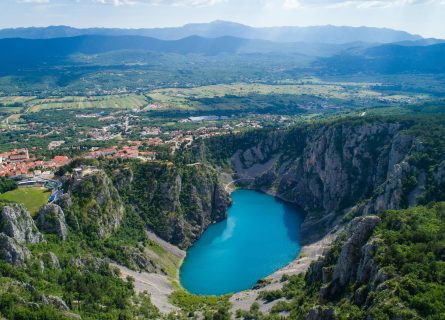
Dalmatinska Zagora (“beyond the hills”) lies east of the Dalmatian coast, between the Adriatic and Dinaric Alps. In the Primorska Hrvatska interior, indigenous grapes thrive under intense sunlight—like cocoa-scented Plavac Mali and reliable Posip. Extending inland from Split to Bosnia and Herzegovina, Dalmatinska Zagora is no celebrity region, too distant from the coast. Visitors, slowly increasing, are rarely unmoved by rolling hills, karst fields, sunbaked plateaus, and vineyards.
In the 20th century, a mixture of geographical isolation and underinvestment kept Dalmatinska Zagora from realizing its true potential as a producer of exceptional red and white wines. Today, however, it is increasingly emerging as one of Croatia’s most intriguing and underrated wine zones.
Topographically and geologically, the region is defined by its hauntingly beautiful karst landscape, formed by the dissolution of soluble rocks – particularly limestone – and characterized by fractured rock, cave systems, and sinkholes. Across the region, vines send their roots deep into the limestone bedrock, drawing on scarce water reserves and trace minerals characteristic of these well-drained soils. As a result, yields are naturally low, though variations in exposure and soil composition will impact vine productivity; the fertile poljes (fields) near Imotski produce a very different style of wine from the meager, stony terroirs of the Dinaric foothills.
Another key factor in Dalmatinska Zagora is altitude. Site elevation can reach 1,500 meters above sea level in the foothills, with significant diurnal temperature variation and low humidity. However, at more moderate elevations, conditions encourage the production of full-bodied, alcoholic wines, most notably Plavac Mali. Today, there are approximately 2,000 hectares under vine, planted to a broad mix of imported and native grapes, including Babic, Bordeaux varieties, Chardonnay, and indigenous gems like Rkaciteli.
Historically, robust, concentrated reds have formed the backbone of local viticulture; however, aromatic dry whites are increasingly important, as they are more commercially attractive and easier to sell abroad.
Yet maintaining good acid levels in the Mediterranean climate of Dalmatinska Zagora is no easy task. Overall, the region experiences very warm and hot summers, with abundant sunshine and limited rainfall during the growing season.
Fortunately, diurnal temperature variation helps to moderate summer heat in the interior, although maritime influences are largely absent this far inland. Producing wines with balanced alcohol levels requires grower vigilance, good site selection, optimum harvest timing, and a dose of luck.
Nevertheless, a new wave of producers is helping to put Dalmatinska Zagora on the international map, armed with EU capital and a passion for revitalizing some of the region’s more obscure and forgotten varieties. Does it offer the glamour of Dalmatia or the polished, elegant charm of Istria? Absolutely not. But then again, there are fewer tourists and far more opportunities for authentic, off-the-beaten-path discovery.
Winemaking and regional classifications
Although the rugged vineyards of Dalmatinska Zagora increasingly produce exportable dry whites, the region’s historic identity remains anchored in powerful, characterful reds. Indeed, both climate and terroir – karst limestone, searing summer heat, and dramatic diurnal shifts – are highly conducive to the production of full-bodied styles, not least its viticultural emblem, Plavac Mali.
The cliché is a deeply colored, richly textured red wine, lacking in subtlety but offering an appealing combination of ripe fruit and concentration. Its classic profile of dark fruits, dried herbs, and sunbaked earth is a natural partner to the region’s robust cuisine –particularly slow-cooked lamb prepared under peka.
Yet Plavac Mali is not a monolith. As producers refine their methods, lowering yields and embracing a more attentive, nuanced approach to viticulture and winemaking, a more precise, balanced interpretation of the grape has emerged in recent times. In the right hands, this venerable red variety will reveal grace as well as power – in the wrong hands, it is clumsy and aggressively alcoholic.
Meanwhile, regional expressions of Babić are going from strength to strength. Traditionally a rustic – and often oxidative – red of little finesse, old bush vines combined with a more sensitive approach to vinification and maturation have transformed its reputation in the 21st century. In the right hands, Babić produces a red wine of savory complexity – the key, as ever, is to find a reliable source.
One such expert is Alen Bibich, winemaker at Vinarija Bibich. Based near Skradin and the beautiful Krka national park, Bibich has built a reputation for modern, terroir-driven expressions of this enigmatic grape. Viticulture is fiercely non-interventionist: organic or biodynamic methods are used, with minimal chemical and mechanical inputs. Their philosophy is to avoid over-ripeness and excessive oak, resulting in lighter, more immediate styles.
Bibich is meticulous about grape sources: berries are hand-harvested from low-yielding vines and carefully sorted prior to fermentation. The purpose of vinification is to extract primary fruit character without excess tannin: fermentation is conducted spontaneously with indigenous yeasts, at a moderate level of extraction, allowing Babic’s unique character to take center stage.
Maturation is handled on similar lines. Alen Bibich has no interest in promoting the flavor and scent of new barrique – the wines are aged in used wood to preserve “varietal purity and terroir character.” The estate also prefers to bottle unfined and unfiltered, again to preserve the fruit’s purity. This is a particular obsession of winemakers in Burgundy, who have long argued – or at least some of them have – that filtration is detrimental to character.
What emerges from the glass is exceptional and beguiling: there is both finesse and structure here, with accessible tannins and a suave mid-palate. In less experienced hands, Babic can be forbiddingly tannic and harsh, yet Bibich’s rendition is the complete antithesis of that, revealing layers of black cherry, dried fig, and rosemary, underpinned by a very attractive saline minerality.
Unfortunately, Bibich is not representative of the critical mass – there is still plenty of mediocre wine made in Dalmatinska Zagora. Yet the best examples, low in volume and high in quality, are beginning to claim their rightful place in the pantheon of top Croatian wines.
Facts & Figures
-
Key wine styles
- Structured Plavac Mali reds
- Modern international varietals
- Fresh aromatic dry whites
-
Appellation structure
- PDO (Protected Designation of Origin)
-
Hectares under vine
- Approximately 2000
-
Average annual production
650,000 hectoliters per annum (Figure for total Croatian production)
-
Number of producers
- Approximately 50 wineries
Key Grape Varietals
-
Red grape -
Red grape Blatina
Blatina is a native Herzegovinian red grape producing soft, medium-bodied wines with gentle tannins, red fruit, spice, and a fresh, savory finish. -
Red grape
Cabernet Franc
Cabernet Franc is particularly important on Bordeaux’s Right Bank, bringing perfume, freshness and structure to Merlot-led blends. View grape -
Red grape
Cabernet Sauvignon
Learn what Cabernet Sauvignon tastes like, where it grows best, why it matters in Bordeaux, and how to pair and serve this age-worthy red grape. View grape -
Red grape Glavinuša
Glavinuša is a rare Croatian red grape, often blended with Plavac Mali, adding color, richness, and sweetness to traditional Dalmatian wines. -
Red grape
Grenache Noir
Discover grenache, a mediterranean grape that is dark-skinned red wine grape variety and an unlikely hero of a grape View grape -
Red grape Lasina
A softer Dalmatian red with red berries, herbs, gentle tannins, and a relaxed feel. -
Red grape
Merlot
Merlot is the most cultivated grape in Bordeaux and closely related to Cabernet Franc View grape -
Red grape Ninčuša
Ninčuša is a rare Dalmatian red grape grown in Dalmatinska Zagora, usually blended for color, softness, and local character rather than bottled alone. -
Red grape Plavac Mali
Dalmatia’s bold red: dark fruit, firm tannins, warmth, and seaside spice. -
Red grape
Syrah
Discover Syrah, from Northern Rhône classics to Shiraz, with flavor profile, regions, aging potential, and food pairings. View grape -
Red grape Trnjak
A rare red with dark fruit, herbs, spice, and a slightly wild edge. -
Red grape Vranac
A deep, bold Balkan red with black fruit, spice, and plenty of grip.
Dalmatinska Zagora gastronomy
There are (relatively) few surprises in the rustic yet deeply satisfying gastronomic traditions of Dalmatinska Zagora. This rugged hinterland, so different from coastal Croatia, inevitably leans heavily into meat: lamb, goat, and pork take center stage, often cooked using the traditional peka – an iron, bell-shaped lid buried beneath white-hot embers. Smoked sausages, air-dried hams, and rich stews all pair wonderfully well with the region’s powerful red wines – both forthright in their intense flavors and unashamed in their lack of subtlety.
Of course, we’re oversimplifying. The region increasingly produces some very fine dry whites: the ideal partners to grilled freshwater fish and slow-braised veal infused with the scents of thyme, rosemary, bay leaf, and garlic. For the most part, presentations in local restaurants are simple, perhaps even austere; however, the quality of the ingredients is consistently first-rate. This is not a fertile hunting ground (aside from some exceptions) for Michelin stars or molecular wizardry. Instead, lose yourself in the proud traditions and authentic flavors of this ancient land.
Author