Croatian Uplands Wine Region Guide
Croatia’s Hidden Cool-Climate Heartland: Fresh, Precise Wines from the Slopes Beyond Zagreb
Introduction
If you’re accustomed to the azure-blue coastal scenery of Dalmatia, prepare for a shock. The Croatian uplands (northwestern Croatia) are both viticulturally and topographically a different world. This is the Croatian interior, stretching in all directions from the nation’s handsome capital, Zagreb. Boasting five key Protected Designations of Origin (PDOs) and some very talented winemakers, this is both an emerging region and one of the country’s premier cool-climate zones. Today, Bregovita Hrvatska produces a growing volume of dry white wines – and exceptional sparkling wines – that emphasize freshness and aromatic precision rather than weight or power. Indeed, the region’s wines are strikingly contemporary in style, yet they are difficult to find outside Zagreb and the surrounding areas. Relative anonymity remains its Achilles heel – and paradoxical strength.
This is slowly changing, however, as buyers and sommeliers look beyond the coast’s tourist-centric vineyards for hidden gems and astounding bargains. A treasure trove of indigenous varieties – including Kraljevina and the ever-reliable Graševina – only enhances the appeal. In the center of Croatia’s continental heartland, a close-knit community of growers and artisan producers – for there are few industrial-scale wineries here – continue to farm steep slopes that have been worked for centuries. This is a wine culture with few counterparts in the Balkans today: modern, confident, yet largely hidden from international eyes. It deserves a closer look.
Geography and terroir
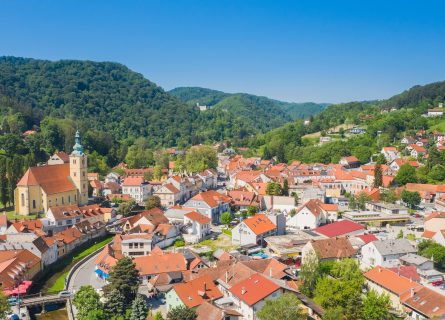
Even by the standards of the geographically diverse and stunningly beautiful Balkans, the Croatian Uplands are a remarkable destination. Situated on the northwestern frontier of this relatively young nation, the region forms a transitional corridor between the eastern foothills of the Alps and the Pannonian Basin. Approximately 3,000 hectares are cultivated in the region, largely divided between small, family-run estates and modest cooperatives. It is the country’s smallest principal wine region, though in terms of quality, it has few peers. Scale, so important to the world’s leading producers of industrial-grade wine, plays little role in the Croatian Uplands today. Craftsmanship and site expression, overall, take precedence over volume.
However, this is as much due to geographical constraint as it is a concomitant of longstanding tradition. Extending across the upland terrain that surrounds Zagreb, the landscape is defined by undulating hills that reveal amphitheater-like slopes and scattered plantings – conditions that are not conducive to large-scale viticulture. Moreover, with vineyard elevation rarely exceeding 400 meters above sea level, it is climate – especially cold air that descends from the Alps – that primarily encourages a slow, even pace of ripening in the region, rather than altitude alone (although this remains a contributing factor).
In this continental environment, rainfall averages 900mm per anum, evenly distributed throughout the year and vital during the summer months. The net result is one of Croatia’s most promising destinations for cool-climate viticulture, ideally suited to the production of fresh and zippy dry whites – and elegant sparkling wine.
Indeed, there is a freshness and unmistakable ‘cut’ of acidity in the best local examples, seldom encountered elsewhere in Croatia. It is for this reason that growers continue to cultivate such a broad range of both native and imported grape varieties in the Croatian Uplands, including Furmint, Pinot Gris, Sauvignon Blanc, and the difficult-to-pronounce škrlet. Yet red varieties, particularly the notoriously mercurial Pinot Noir, can also excel here. In fact, some of the most Burgundian expressions are made in the cool-climate interior, characterized by crisp fruit and ethereal delicacy.
The wider region is divided into five key subzones:
Moslavina, Plešivica, Pokuplje, Prigorje-Bilogora, and Zagorje-Medimurje.
Some of the best wines, it is widely accepted, are made in Plešivica, in vineyards to the southwest of Zagreb. The reason? A combination of calcareous soils, favorable exposure, and moderate temperatures yields finely-etched whites with distinct minerality and depth of flavor. The best traditional method blends are no less fine: laden with autolytic complexity and vivid fruitiness. White varieties also thrive in the clay and marl terroirs of Zagorje-Medimurje, particularly Furmint and Muscat. At the same time, local Pinot Noir can achieve remarkable finesse comparable to that of the Côte d’Or.
Meanwhile, there is much to recommend in the Škrlet and Kraljevina grown in the vineyards of Moslavina and Prigorje-Bilogora, where continental conditions and moderate elevation produce thoroughly modern white wines: aromatically expressive and super fresh. It is something of an irony that so many commercially friendly styles are made in a largely obscure region – by global standards, at least.
In 2026, producers in the Croatian Uplands have every reason to feel proud of their achievements. Buoyed by an unwavering commitment to quality and by simultaneously embracing sustainable/organic farming and meticulous site selection, the region has become a compelling emblem of Croatian viticulture in the 21st century. It delivers original flavors, indigenous varieties, and delectable alpine freshness. Its commercial potential abroad, hitherto unrealized, is one of the most exciting opportunities in European wine today.
Winemaking and regional classifications
Although viticulture in the Croatian Uplands predates Roman occupation, it was not until the advent of Croatian independence that a modern and quality-oriented wine region emerged. Its key focus, however, has long been the production of crisp, aromatic white wines – Graševina (Welschriesling) continues to dominate plantings, accounting for the majority of vineyard area. Historically, critics have been somewhat sniffy about the grape, and Welschriesling can indeed yield very bland, mediocre wine when grown on unsuitable sites.
Yet when cultivated on marl-rich soils at higher altitudes, it can produce dry whites of good structure and vivid green apple and pear fruit, supported by linear acidity and mineral complexity. The secret, as always, is controlled yields, superior terroir, and sensitive vinification, all of which will reveal the grape’s hidden charms.
Meanwhile, international varieties such as Pinot Gris, Sauvignon Blanc, and Riesling continue to produce exceptional wines in the Croatian interior, benefiting from the cool evenings and elongated ripening season. The two-star grapes of Burgundy are perhaps the region’s greatest triumph, particularly in Plešivica, where both terroir and elevation/exposure are highly favorable to Chardonnay and Pinot Noir. Likewise, the best traditional method sparkling wines are astonishingly fine for such a southerly latitude, combining vibrant acidity and Champagne-like finesse.
Among the Croatian Uplands subregions, Plešivica remains its star player, while Korak Winery has emerged as one of Croatia’s finest producers. Founded as a family estate with modest ambitions, it has been fundamentally reshaped by the influence of its progressive, supremely talented winemaker, Josip Korak. Today, the estate produces a broad range of wines, including an outstanding Pinot Noir, widely regarded as one of the most elegant styles made in Croatia.
According to the estate,
“Our winemaker was determined to make Plešivica the birthplace of Croatian Pinot Noir. To realize his vision, we selected old vines from the southwestern slopes of the Cibuscak appellation, located at 330m above sea level. This gives Plešivica its unique climate: cool, and temperate, ideal for the fragile Pinot Noir grape.”
But it is the winemaking that ultimately allows Korak to transform this geographical potential into reality. Adopting a very Burgundian philosophy in the cellar – maximum restraint and minimum intervention – the fermentation is conducted with indigenous yeasts in large neutral wooden vessels. A fairly long maceration period (five weeks) ensures the extraction of good color and phenolic structure, and aromatic complexity. Maturation then takes place in oak – again, in neutral barrels to allow gradual oxygen ingress without flavor impact – for 12 months, followed by additional bottle aging before release.
The result, to quote the winery,
“offers intense dark fruit aromas, mineral, herbal and nutty notes, smoky and coffee scents, as well as a trail of noble wood and forest soil.”
Equally compelling is the Korak Chardonnay, celebrated for its subtle reduction and a very understated, mineral-scented spine, a testament to both the nuanced winemaking and superior terroir.
Today, Korak’s hand-crafted wines, much like the region itself, remain something of a connoisseur’s secret, primarily appreciated by residents and a small number of wine geeks. Yet this is by no means a fait accompli. As international awareness continues to grow, there is every opportunity for the Croatian Uplands to become an export powerhouse and global name in cool-climate viticulture.
Facts & Figures
-
Key wine styles
- Aromatic, medium-bodied whites
- Elegant cool-climate reds, including Pinot Noir
- Selected international varieties
- Small but growing sparkling wine production
-
Appellation structure
- PDO (Protected Designation of Origin)
-
Hectares under vine
- approximately 3,000
-
Average annual production
650,000 hectoliters per annum (Figure for total Croatian production)
-
Approximate number of producers
- Around 100 wineries
Key Grape Varietals
-
Red grape
Cabernet Sauvignon
Learn what Cabernet Sauvignon tastes like, where it grows best, why it matters in Bordeaux, and how to pair and serve this age-worthy red grape. View grape -
Red grape -
Red grape Lovrijenac
Croatian name for St. Laurent, a Central European red grape with cherry, plum, gentle spice, and fresh acidity. Light to medium-bodied. -
Red grape
Merlot
Merlot is the most cultivated grape in Bordeaux and closely related to Cabernet Franc View grape -
Red grape
Pinot Noir
Pinot Noir is one of the world’s great red wine grapes. Learn its flavors, food pairings, key regions, Burgundy styles, Champagne role, and why it is so difficult... View grape -
Red grape Zweigelt
Austrian red grape, also grown in Croatia, making soft, fruity reds with cherry, raspberry, gentle spice, and smooth tannins. Easy-drinking and food-friendly. -
White grape
Chardonnay
Chardonnay is a green-skinned grape varietal native to the Burgundy wine region in France and one of the most popular varieties worldwide. View grape -
White grape Graševina
Croatia’s most widely planted white grape, especially in Slavonia. Fresh and dry, with apple, citrus, gentle flowers, and easy food pairing. -
White grape
Gewürztraminer
Learn what Gewürztraminer tastes like, where it grows best, how dry or sweet it can be, and which foods pair beautifully with it. View grape -
White grape Kraljevina
Traditional Croatian white grape from Prigorje and Plešivica, making light, fresh wines with citrus, apple, floral notes, and gentle acidity. -
White grape Müller-Thurgau
Light white grape grown in Croatia’s cooler inland regions, making fresh, simple wines with apple, citrus, flowers, and gentle acidity. -
White grape
Pinot Gris
Pinot Gris is a white-wine grape variety originally from Burgundy. It is thought to be a mutant clone of Pinot Noir. View grape -
White grape Pušipel
Local Croatian name for Furmint in Međimurje, making fresh, lively whites with apple, citrus, flowers, and bright acidity. -
White grape
Riesling
Discover Riesling's charm, a white grape from Germany's Rhine region, cherished in Alsace, France. Unveil its secrets and delights View grape -
White grape Sauvignon Blanc
-
White grape Škrlet
Rare Croatian white grape from Moslavina, making light, fresh wines with citrus, apple, herbs, and crisp acidity. Best young and chilled.
Croatian Uplands gastronomy
Both the landscapes and the gastronomic traditions of the interior bear little resemblance to those of the Adriatic-facing coast. Instead, you will discover a food culture built around seasonality and the rich produce that freshwater rivers, lakes, valleys, and forested hills can provide. Pike, carp, and trout feature heavily in the area’s best restaurants and taverns – often poached, smoked, or roasted – to preserve their delicate flavors.
In the surrounding hills and forests, meanwhile, wild boar and game dominate the table, especially after the winter hunting season. Freshly foraged mushrooms and chestnuts, the latter used in both sweet and savory dishes, speak of a rural tradition that has scarcely altered over the past few centuries.
Indeed, chefs of the Croatian Uplands are seldom interested in molecular gastronomy or overly fanciful culinary technique. Presentation is modest, ingredients are fresh, meat and fish are locally sourced, and the results speak for themselves. Štrukli (pastries filled with ricotta and cream, and baked or steamed), roast suckling pig, fresh cheese from hillside dairies, and orchard fruits, including plums and pears, offer a depth of flavor that intensive farming cannot replicate. If you want bland, industrial food, look elsewhere. This is a place of heart and soul, where culinary identity has yet to be globalized.
Author