Slavonia Wine Region Guide
Croatia’s authentic eastern wine country, shaped by plains, hospitality, and craft.
Introduction
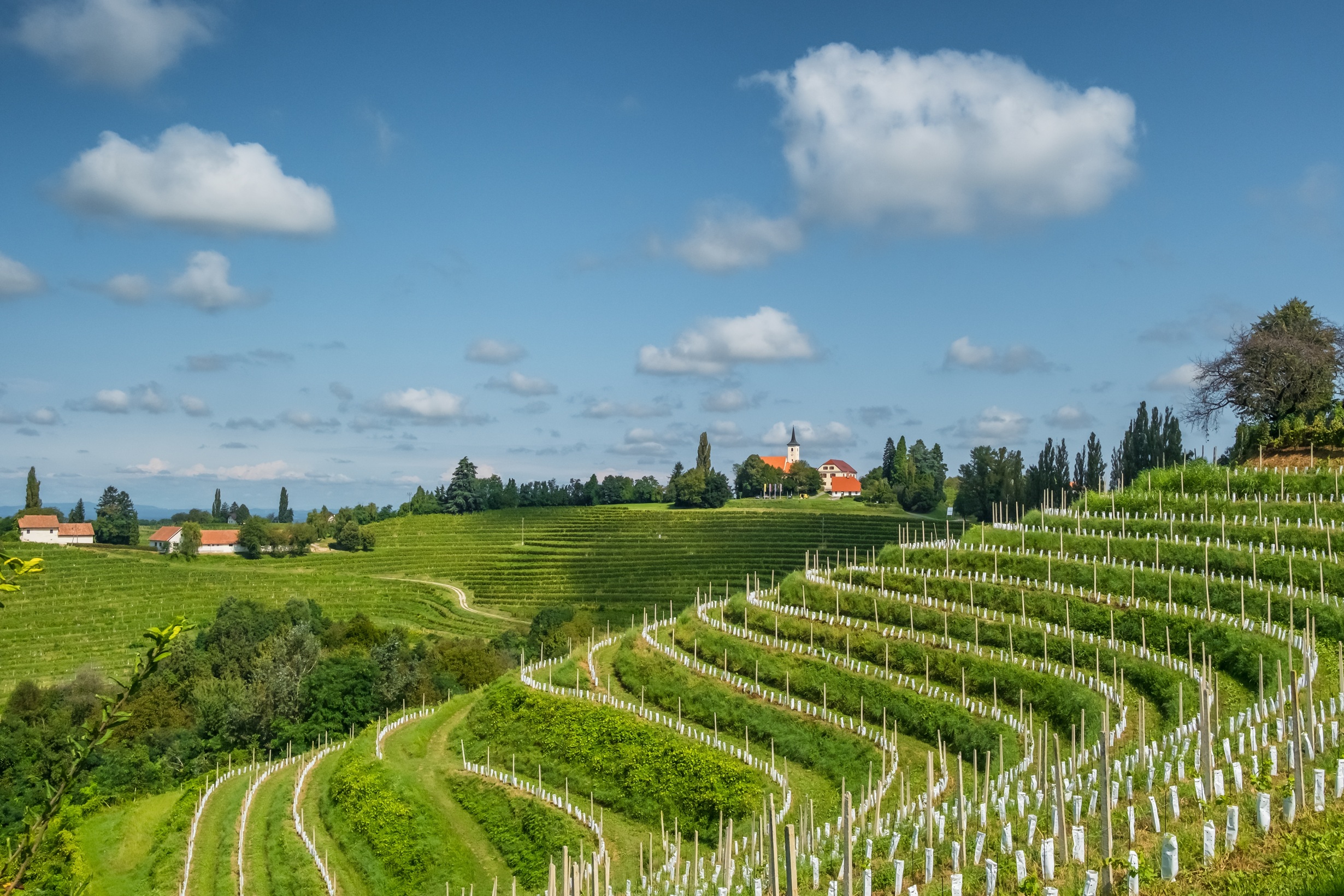
Croatia’s great eastern plain, near the Hungarian border, stands apart from the tourist-heavy coast. Slavonia is an extensive, unspoiled, and warm wine region, shaped by the Pannonian Plain. Its golden fields and vine-covered hills mark its status as a major wine producer since Roman times. Famous for Slavonian barrels and its leading expression of Graševina, Slavonia’s versatility shines—from mineral-driven dry whites to botrytized versions. Newer plantings, including Chardonnay and Traminac, are delivering exciting wines, showing Slavonia’s careful adaptation to global trends.
Yet, despite the ‘encroachment’ of international varieties, Slavonia remains disarmingly authentic. You’ll be visiting a working vineyard, where family estates and cooperatives thrive on a potent mix of tradition and innovation. There is fastidious craftsmanship here, as well as warmth and hospitality.
Geography and terroir
Although Slavonia lacks the fame – and glamour – of the Dalmatian Coast, it is nonetheless Croatia’s largest and most productive winegrowing area. Bordered by Hungary to the north and Serbia to the east, Slavonia and the Danube region produce exceptional wines, some lackluster dross, and everything in between. In marked contrast to the sun-drenched vineyards of Istria and Dalmatia, this is a continental landscape – a mosaic of fertile lowlands and alluvial river terraces shaped by the Danube and its tributaries. For centuries, viticulture has been essential to the economic and cultural life of Croatia’s interior, and it has been revitalized in the 21st century by investment and a surge of new ideas. Today, there are approximately 5,800 hectares under vine, largely cultivated by small growers who produce some 30 million liters of wine every year.
Climatically, Slavonia and the Danube enjoy a markedly continental climate: cold winters (in sharp contrast to Dalmatia) and hot, dry summers. Yet the presence of cool evening breezes, combined with broad diurnal temperature variation, helps to prevent overripeness in the wines. At their best, Slavonia dry whites marry rich fruit and admirable freshness – particularly the region’s signature grape, Graševina. Meanwhile, deep loess, clay, and marl soils offer a perfect balance of water retention and permeability, while elevated climats (vineyard sites) sit on limestone subsoils and gravel beds, adding welcome finesse and minerality. These exceptional terroirs, particularly the clay-limestone soils, give Slavonia a broad stylistic range, including some opulent dessert wine bottlings and exceptional Pinot Noir.
Nevertheless, this is white wine country – Graševina accounts for over 70 percent of the total acreage planted, alongside the spicy Gewürztraminer and other global styles. However, red grape varieties – especially Blaufrankisch – also thrive in the warmer mesoclimates of Slavonia, yielding perfumed and structured reds of great character. The best examples are serious competitors to the trophy winners from Burgenland in Austria; top wines are often matured in the famous Slavonian oak, long prized for its fine grain and subtlety of flavor, a symbol of Croatia’s enduring craftsmanship. But new barriques, if misused, can diminish the nobility and terroir character of Blaufrankisch.
The region has traditionally been divided into several key subregions, each with a unique identity and terroir. Welschriesling finds its natural home in Kutjevo, situated in the Požega Valley, where a natural amphitheater and limestone soils yield dry whites of great depth and flavor. To the north lies Feričanci, where both white and red grapes perform admirably on loess and clay terroirs. Dakovo and Erdut, the latter situated close to the Danube, have an abundance of sandy loam and gravel – ideal conditions to deliver supple, aromatic styles that are generally light in structure. Ilok, situated on the far eastern boundary of the region, is renowned for its ancient vineyards and exceptional limestone and loess terroirs. Today, it continues to be celebrated for its long-lived and elegant wines of both colors.
Sustainability, craftsmanship, and site-selection are the driving forces of quality and innovation in Slavonia today. The wines are not always sophisticated, but they are usually honest, expressive, and unmistakably tied to their landscape.
Winemaking and regional classifications
In the 21st century, Slavonia continues to produce a range of wines in all three colors, yet its vinous identity remains built around a single grape: Graševina. Often dismissed (with some justification) as one-dimensional quaffing material, Graševina has the potential to be so much more.
As ever, site and winemaking are key, with ambitious growers now releasing a wide palette of styles, including light, zippy bottlings meant for early drinking and barrel-aged whites that can resemble Spain’s Godello. At its worst, Graševina is dilute and anodyne. Yet this is by no means a fait accompli.
Vlado Krauthaker’s Mitrovac cuvée – a single-vineyard Graševina grown on loess terroir – represents a high-water mark for the region. Since the 1990s, Krauthaker has created a progressive estate in the undulating terrain of Kutjevo, using technical skill and deep vineyard knowledge to reframe Graševina as a nuanced, terroir-driven white.
His approach to winemaking is both intelligent and meticulous. Hand-harvested berries are quickly transported to the winery, where they are gently crushed and given a brief 24-hour maceration to extract some complexity and phenolics from the skins. After pressing and cold settling, vinification is undertaken in stainless-steel tanks at controlled temperatures to preserve fruit character and freshness – a classic and widely used technique. The young wines are then matured in tanks for about ten months before fining, filtration, and bottling. The result is a wine of silky texture, pronounced citrus and stone-fruit aromatics, and an attractive salinity on the finish.
Indeed, what makes top-notch Graševina so compelling is the balance between fruit and minerality. There is plenty of varietal character (apple, peach, and fennel) but also a silky core juxtaposed against a mineral underlay. However, coaxing character out of this maligned grape does not come easy – low yields, late picking, and sophisticated winemaking employing some lees contact are all essential. Some producers take it one step further: barrel aging in local Slavonian oak can yield a spicy, concentrated interpretation of the grape, with pronounced notes of quince, apricot, and honey on the mid- palate. Moreover, richer expressions pair effortlessly with the region’s food, particularly rustic casseroles and freshwater fish stews.
Today, there is no shortage of ordinary, everyday bottles of this widely planted variety. Yet good Graševina is a revelation. This formerly humble grape, cultivated for centuries, has finally earned our respect.
Facts & Figures
-
Key wine styles
- Aromatic, medium-bodied whites
- International varieties
- Small-volume sweet wines
-
Appellation structure
- PDO (Protected Designation of Origin)
-
Hectares under vine
5800 (Slavonia and the Croatian Danube Region)
-
Average annual production
650,000 hectoliters per annum (Figure for total Croatian production)
-
Approximate number of producers
- Approximately 350 wineries (Slavonia and the Croatian Danube Region)
Key Grape Varietals
-
Red grape -
Red grape
Cabernet Sauvignon
Learn what Cabernet Sauvignon tastes like, where it grows best, why it matters in Bordeaux, and how to pair and serve this age-worthy red grape. View grape -
Red grape
Merlot
Merlot is the most cultivated grape in Bordeaux and closely related to Cabernet Franc View grape -
Red grape
Pinot Noir
Pinot Noir is one of the world’s great red wine grapes. Learn its flavors, food pairings, key regions, Burgundy styles, Champagne role, and why it is so difficult... View grape -
Red grape
Syrah
Discover Syrah, from Northern Rhône classics to Shiraz, with flavor profile, regions, aging potential, and food pairings. View grape -
White grape
Chardonnay
Chardonnay is a green-skinned grape varietal native to the Burgundy wine region in France and one of the most popular varieties worldwide. View grape -
White grape Graševina (Welschriesling)
Croatia’s most widely planted white grape, especially in Slavonia. Fresh and dry, with apple, citrus, gentle flowers, and easy food pairing. -
White grape
Pinot Gris
Pinot Gris is a white-wine grape variety originally from Burgundy. It is thought to be a mutant clone of Pinot Noir. View grape -
White grape
Riesling
Discover Riesling's charm, a white grape from Germany's Rhine region, cherished in Alsace, France. Unveil its secrets and delights View grape -
White grape
Sauvignon Blanc
The sauvignon blanc grape varietal, originally from the Bordeaux region of France, is now one of the world's most loved white varieties. View grape -
White grape Traminac (Gewürztraminer)
Highly aromatic white grape with rose, lychee, spice, and ripe fruit. Often rich, fragrant, and slightly exotic.
Slavonia gastronomy
First things first: Slavonia does not have the gastronomic reputation of either Istria or Dalmatia. Indeed, the region is Croatia’s breadbasket – rich in grain and dairy produce- and a destination that serves unapologetically heart cuisine, marked by bold flavors and a rustic charm.
Yet regular visitors to Hungary will feel at home: paprika – sweet, smoky, and omnipresent – lends color and flavor to a multitude of dishes such as Čobanac (a spicy casserole), and Fiš Paprikaš, a delicious medley of freshwater fish and paprika braised in white wine. Slow-cooked meats and homemade noodles are a feature of any good restaurant, enjoyed with chilled Welschriesling or a pungent glass of Blaufrankisch.
The Austro-Hungarian influence is pervasive in this fascinating border region, where pretension plays second fiddle to authenticity and seasonality. In Slavonia, chefs prepare meals with the quiet assurance that world-class ingredients never need embellishment.
Author