Tell us more about the soils and climate of Rio Negro?
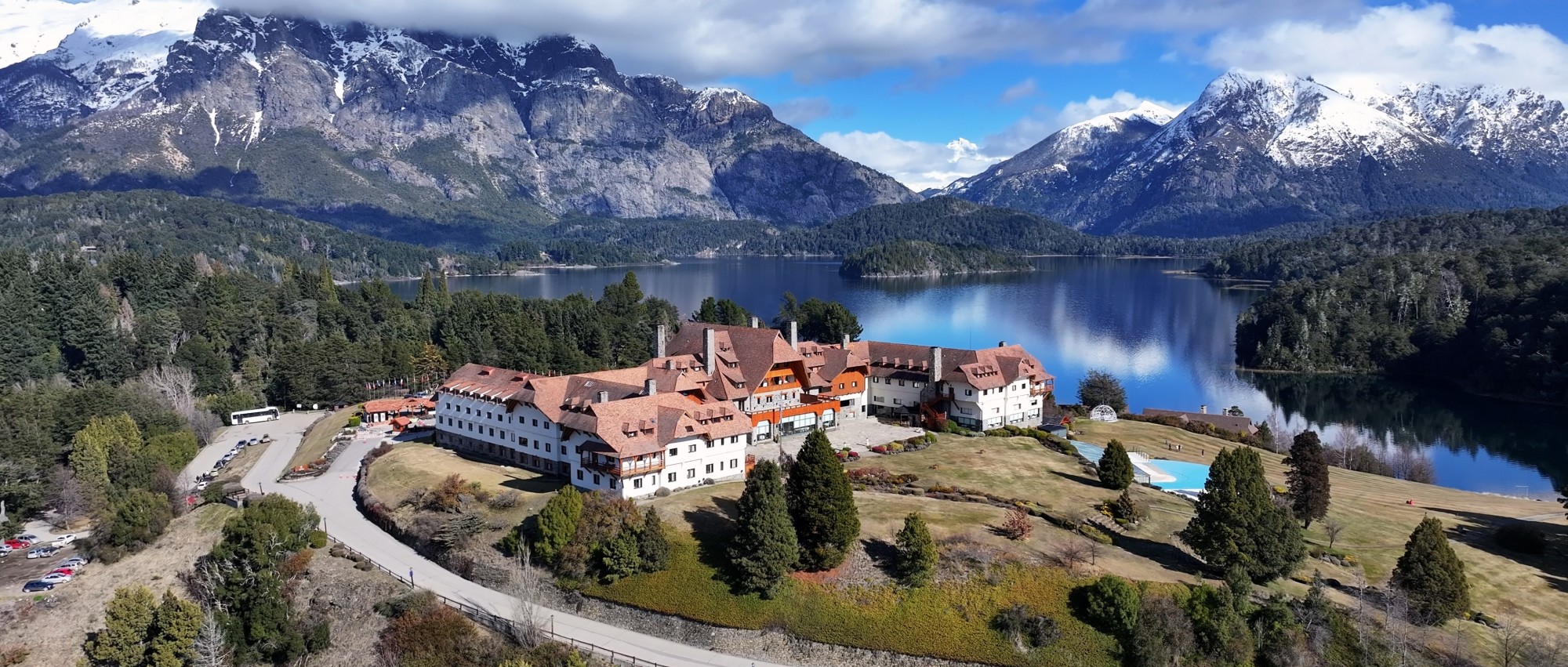
Because of its location 39° south at an altitude of between 600 and 850 feet above sea level, Alto Valle has a desert climate ranging from cool to temperate. Moreover, during the ripening period, the daily thermal range is between 18 and 20°C on average, also a result of the southerly latitude, which is a key factor in achieving a natural balance of acids and phenolic compounds in the grapes. The cool nights help to bring balance during the harvest months – another bonus.
The vineyards of Alto Valle de Río Negro, meanwhile, are planted in varied soils that are poor in organic material. Alluvial in origin, these soils were formed five million years ago by the glaciers that once occupied a large part of Patagonia. These large bodies of ice formed columns across the territory that gave rise to rivers such as the Limay, Neuquén, and Negro, as well as numerous underground channels. Today, the valley is a patchwork of different soil types with different amounts of stone, sand, clay, lime, and calcium. The most important soil types are lime-loam, sand-loam, and clay-loam.
Most of Bodega Humberto Canale’s vineyards are located in the lime-loam soils of the partial ridge region. This soil is made up of lime, clay, sand, and 5% calcium, with a neutral pH (7.5) and scarce amounts of organic material. Thanks to the dry, sunny climate and good water management, these soils have produced high-quality Pinot Noir, Merlot, Malbec, Cabernet Franc, Cabernet Sauvignon, Sémillon, and Riesling.
What is the most challenging aspect of growing grapes here?
I think the most difficult thing is getting through the spring frosts. All the rest of the variables are perfect for viticulture: pure salt water, poor soils where the vine grows very well naturally, and the Patagonian winds that help the vine be healthy.
Many critics regard Pinot Noir as Rio Negro’s signature variety and its greatest triumph – do you agree?
Our most beloved varietal has never been better represented. Humberto Canale Old Vineyard Pinot Noir is an ode to the elegance and class of the most sophisticated red wine in the world. A jewel made of wine, intense on the nose, with a lot of red fruit but soft on the palate, with a slight touch of spices and an acidity that makes it very fresh and pleasant. More than to pair with it, it is a wine to be enjoyed without any distraction.
Has climate change impacted the region?
We notice regional changes, especially in varieties such as Cabernet Sauvignon. A few years ago, it was very difficult to produce due to early frosts, but today, it enters the harvest cycle perfectly well. Undoubtedly, climate change is a very important issue for us.
Rio Negro Wine Region Guide
Introduction
Situated in the heartland of Patagonia, Rio Negro was the first wine region to be farmed on a large scale. Developed by Argentine and European settlers in the late 19th century, these expansive valleys in southern Argentina once housed over 300 producers and 18,000 hectares of vines – a steady flow of unremarkable wine satisfied a huge domestic market in the mid-1900s.
Economic woes, however, led to a period of real decline in the second half of the century, with significant migration to Argentina’s larger cities depleting the region of workers and infrastructure.
Yet the great potential of these low-yielding vineyards was not forgotten. Arriving in Patagonia some 20 years ago, a small group of European investors decided to push Rio Negro in a new direction. Specializing in cool-climate varietals (most notably Pinot Noir), Hans Vinding-Diers and Piero Incisa della Rocchetta have given Rio Negro a taste of international acclaim. Intensely flavored and beautifully balanced, Rio Negro’s best wines are now part of South America’s A-list.
Geography and terroir

The vineyards of Rio Negro are among the most important in Patagonia. For over a century, they have been planted with a mixture of European grape varieties, kept alive by irrigation water from the Andes. Indeed, agriculture is only possible here thanks to the pioneering efforts of British settlers in the 19th century, who were responsible for building irrigation channels in the arid landscape of the Patagonian desert.
As a result, apple and pear orchards began to proliferate across the region, transported to the coast via a custom-built railway line. Scores of vineyards, ripened in the intense sunlight that characterizes South American viticulture, soon joined them.
Today, 1455 hectares are remaining in Rio Negro, cultivated in a series of valleys sandwiched between the Colorado and Negro rivers. The latter flows for some 530km to the Atlantic Ocean in the east, creating a lush oasis that stands in marked contrast to the surrounding landscape. The average rainfall is under 200mm per year, while warm summers and cold winters produce fully ripened and yet balanced wines with good levels of sugar and acidity.
Regional Climate Variability
Moreover, the heaviest rainfall tends to fall in spring/summer, benefiting arable farmers greatly. This is particularly true of the Rio Negro Lower Valley, where the influence of the Atlantic is more keenly felt. However, the climate is broadly continental in the western zone: drier summers and chillier winters.
Other viticultural considerations include powerful winds that reach full intensity between October and December; growers must rely on protective ‘curtains’ to shield their crops during the spring. At the same time, strong winds help prevent fungal diseases from forming in the vineyard, encouraging farmers to adopt organic and even biodynamic methods. Organic viticulture can be risky and costly in regions prone to mildew attacks.
Meanwhile, due to Patagonia’s high latitude (distance from the equator), summer temperatures seldom reach the highs of Mendoza and Salta in the northwest. A very comfortable 75 Fahrenheit is the average measurement in January, for example, plummeting to below 30°F in winter. This encourages a slow and even pace of ripening, aided by an exceptionally long summer season. It is one of the key pull factors that attracted Piero Incisa della Rocchetta to the area in 2004.
According to an interview he gave in 2014:
“What drew me to Patagonia was a Pinot Noir from Rio Negro that I tasted blind in 2001. What keeps me there is the unique microclimate and terroir of the Rio Negro, which I believe are conducive to making wines of consequence.”
It aptly describes the cool-climate styles that have given Patagonia celebrity status, buoyed by an insatiable demand for New World Pinot Noir and Chardonnay.
Elevation and Soil Composition
However, elevation does not play a major role in Patagonian winemaking, where vineyards rise to an unimpressive 250 meters above sea level. Fortunately, the desert conditions of southern Argentina are conducive to high levels of diurnal temperature variation, notwithstanding a lack of altitude.
Warm summer days and cool nights result in slowed sugar development and preserved acidity. The soils, too, are highly conducive to quality wine production: alluvial terroirs with stony topsoils and limestone in the substratum. Well-drained and rich in minerals, they suit a broad spectrum of red and white grape varieties, including Cabernet Franc, Pinot Noir, Riesling, Petit Verdot, and Sauvignon Blanc.
Traditionally, three subregions have divided Rio Negro: the Alto Valle, the Valle Medio, and the Valle Inferior, close to the Atlantic. On the border with neighboring Neuquen, the Upper Valley hosts the critical mass of vineyards. It is a 160-kilometer-long oasis in western Patagonia, renowned for its temperate climate and loamy soils, which are poor in organic matter. The potential for fine wine production is unparalleled.
Winemaking and regional classifications

Rio Negro’s reputation is growing around the world – it has become a rival to Mendoza and the neighboring vineyards of Chile. Until recently, a great deal of international hype has coalesced around local expressions of Burgundy’s two signature varieties, often exported to the most glamorous restaurants in New York, Hong Kong, and Singapore.
Yet while most sommeliers (and wine geeks) are fixated on Chardonnay and Pinot Noir, Rio Negro is planted to a diverse palette of red and white grapes. Many of these deserve closer examination, as they are among the finest wines being made in South America today.
Bodega Noemía is one shining example. Founded by Countess Noemi Marone Cinzano and Danish winemaker Hans Vinding-Diers in 2001, the estate produces a sublime blend of Malbec and Merlot called J Alberto. Based on four hectares of organic vineyards planted in 1955, the parcel does not receive any synthetic treatments – it is a wine that expresses Patagonia’s soils and landscape.
According to Vinding-Diers:
“Since the very beginning at Bodega Noemía, the philosophy was to bring the vineyard to the bottle in the most sincere way.”
But what does this involve? The answer is authentic winemaking: Noemia believes that exceptional wine is made in the vineyard, not the cellar. Thus, the greater the raw materials, the less manipulation and artificial inputs are necessary – or advisable. Terroir and variety impose quality and character. The winemaker’s role is judicious oversight.
In this case, hand-harvested berries are partially destemmed. Producers argue that whole cluster fermentations will add complexity and structure to the wine. In Bordeaux, crushing and destemming are almost universally practiced. However, Vinding-Diers takes his inspiration from Burgundy. Depending on the vintage, his approach uses about 40% whole bunches mixed in with destemmed fruit.
The vinification will then occur in stainless steel tanks – Noemia also uses wooden containers and concrete vats for specific wines. Entirely reliant on wild yeast, it is undertaken without the benefit of temperature control, tartaric adjustment, or sulfur. A very gentle punch down and délestage (racking) is followed by malolactic in stainless steel.
Maturation is the final stage, aging the various lots in a combination of concrete eggs – highly fashionable in Europe – stainless steel tanks, and used barrels. This process will “marry” the different components, soften the wine, and avoid flavor pickup associated with new barrique.
Structural Excellence and Aging Potential
The central feature of the wines of Rio Negro is their structure – very different from the voluptuous essences of central Argentina. The reds are supple and harmonious in the mouth, supported by fresh acidity and firm (but ripe) tannins. The whites, meanwhile, are light-to-medium-bodied and intensely aromatic. They are elegant, expressive, and designed to be enjoyed with food. In most cases, the alcohol will be under 13 percent.
This is the reason why Patagonia is revered in global wine circles. There are very few, if any, bad bottles produced in Rio Negro, particularly in the vineyards of the Upper Valley. The best examples of Malbec, Cabernet Sauvignon, Merlot, and Pinot Noir achieve an extraordinary complexity with age, often improving in bottle for at least ten years. Oak-aged Chardonnay and clean as a whistle Riesling provide a counterpoint.
So, too, does the growing volume of outstanding Sauvignon Blanc, Chenin Blanc, and Torrontes. They outclass their South American peers in every conceivable aspect – bouquet, structure, depth, and finish. What was once a parochial vineyard is now an international superstar. Rio Negro’s moment has arrived.
Facts & Figures
-
Key wine styles
- Full-bodied red and white wines
-
Appellation structure
- Six GIs (Indicaciones Geográficas), including General Conesa and Rio Negro
-
Hectares under Vine
1,455
-
Average annual production
150,000 hectoliters per annum (in Patagonia)
-
Approximate number of producers
24
Exclusive Expert Insights
Key Grape Varietals
-
White grape
Chardonnay
Chardonnay is a green-skinned grape varietal native to the Burgundy wine region in France and one of the most popular varieties worldwide. View grape -
White grape
Sauvignon Blanc
The sauvignon blanc grape varietal, originally from the Bordeaux region of France, is now one of the world's most loved white varieties. View grape -
White grape
Riesling
Discover Riesling's charm, a white grape from Germany's Rhine region, cherished in Alsace, France. Unveil its secrets and delights View grape -
White grape
Semillon
Explore the allure of the Semillon grape & its legendary connection to Sauternes. Unveil the history & flavors of this captivating varietal. Cheers! View grape -
White grape Torrontes
Torrontés is a distinctive white grape variety from Argentina, known for its strong aromatic qualities featuring jasmine, lychee, and orange. It includes three sub-varieties: Torrontés Riojano, Torrontés Sanjuanino,... -
Red grape
Bonarda (Croatina)
Croatina: Italy's hidden gem in red wine. Explore its unique characteristics and the challenge of crafting single-varietal expressions. View grape -
Red grape
Cabernet Sauvignon
Learn what Cabernet Sauvignon tastes like, where it grows best, why it matters in Bordeaux, and how to pair and serve this age-worthy red grape. View grape -
Red grape
Cabernet Franc
Cabernet Franc is particularly important on Bordeaux’s Right Bank, bringing perfume, freshness and structure to Merlot-led blends. View grape -
Red grape
Malbec
Delve into Malbec, a dark, small grape native to France, cherished for its thick skin and exceptional flavors. 🍇🍷 View grape -
Red grape
Pinot Noir
Pinot Noir is one of the world’s great red wine grapes. Learn its flavors, food pairings, key regions, Burgundy styles, Champagne role, and why it is so difficult... View grape -
Red grape
Syrah
Discover Syrah, from Northern Rhône classics to Shiraz, with flavor profile, regions, aging potential, and food pairings. View grape
Rio Negro gastronomy
Patagonia is synonymous with great food: locally sourced and always fresh. Dishes such as milk-fed lamb, Atlantic shrimp (a specialty of Madryn and the Peninsula Valdes), and melt-in-the-mouth pork are just some tasty highlights. You’ll find a surfeit of burgers, pizzas, and other globalised fare in the more casual venues. But our advice is to stick to regional ingredients and Patagonian flavors.
Further Reading
Top 10 Iconic Argentine Wines to Know
August 20, 2018
Explore 10 iconic Argentine wines, from high-altitude Malbec and Patagonia Pinot Noir to Adrianna Vineyard Chardonnay, selected by wine writer James Lawrence.
Read articleAuthor