 19 tours
Country tours
Private Wine Tours in Spain
Luxury Food & Wine Journeys Across Spain’s Finest Regions
Understand Spain’s great hams, from Jamón Ibérico de Bellota to Serrano, with regions, labels, serving tips, and wine pairings.
Estimated reading time: 1 minute
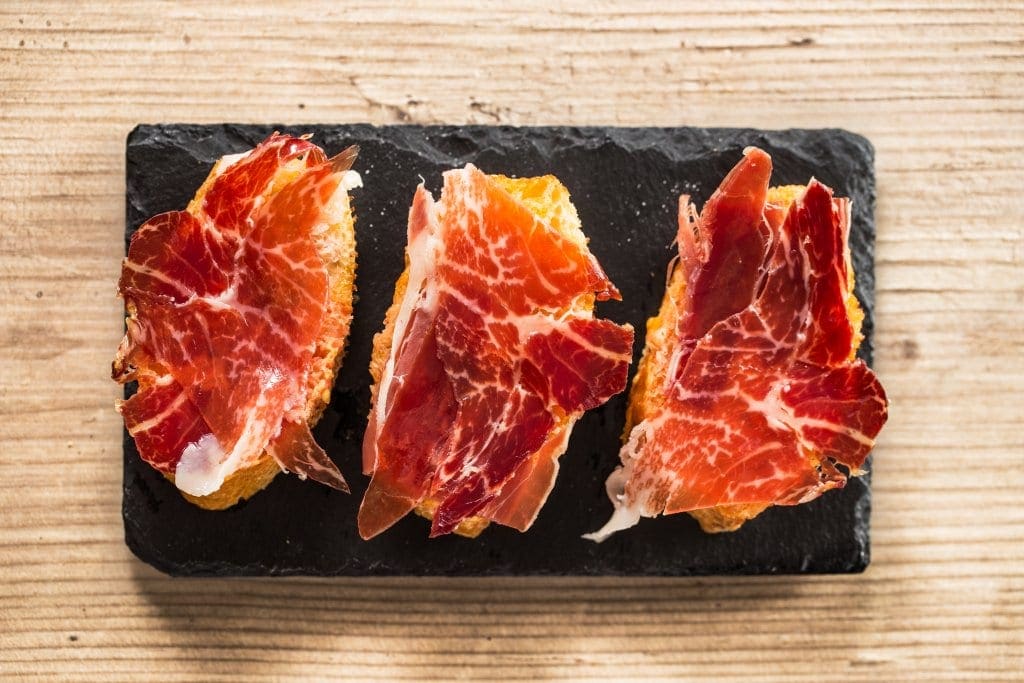
It has evolved from its humble origins as a rural peasant tradition into a highly prized item for connoisseurs of Spanish cuisine and all classes of Spanish society. Jamón Ibérico, meticulously crafted from a unique breed of Iberian pigs, has garnered global acclaim for its exquisite flavor, rightfully placing it at the pinnacle of cured hams. Select tapas bars across the country serve it, making it the undisputed champion of Spanish gastronomy. Its beauty lies in its simplicity – a soft, silky-textured ham with a deliciously sweet flavor and aroma.
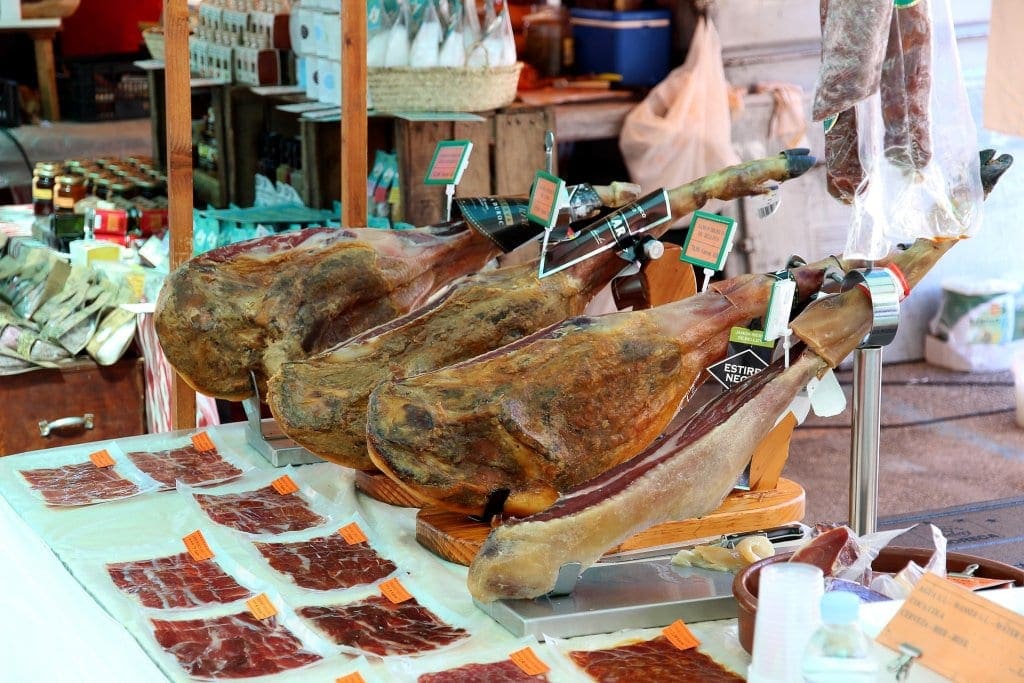
Andalusia’s mountains are renowned for producing some of the finest Jamón Ibérico, though this esteemed delicacy is also crafted in other regions across Spain. While Jamón Ibérico rightfully holds a prestigious position in Spain’s culinary heritage, it is just one facet, not the entirety, of the country’s rich jamón culture. Several categories and specialties of Jamón exist, with the finest examples commanding impressive prices, being in short supply, and facing high demand!
Ham has been a fundamental element of Spanish gastronomy and culture for centuries. Its origins trace back to the pre-Roman populations on the Iberian Peninsula, with the Phoenicians playing a pivotal role in introducing pigs to Spain. Romans documented the first accounts of Iberian ham production during their reign, elevating ham’s status with esteemed varieties from Pamplona, Teruel, and Tarragona. The trade’s significance prompted the minting of ham-shaped coins. Under Muslim rule, pork consumption declined, but during the Reconquest, eating pork became a symbol of Christianity, and hanging hams in prominent places became popular. Monasteries preserved culinary traditions through the Middle Ages, and pig breeding and ham production flourished. The history of the modern meat industry began in the Napoleonic era, with significant advancements in the 20th century. Today, ham continues to evolve and is revered in Spanish gastronomy and around the world.
High-quality Jamón Ibérico contains a significant proportion of oleic acid, the same monounsaturated fat associated with olive oil and the Mediterranean diet. But this is still cured ham: salty, rich, and best enjoyed in modest quantities. In Spain, that is usually the point — a few perfect slices, not a heaped plate.
While Italian Prosciutto and other hams are well known outside of Italy, Spanish “Jamón” (artisan-cured hams) is an expensive delicacy that has been a relatively recent best-kept secret in Spain. However, the secret is out, and Jamón is increasingly treasured by foodies worldwide. There are two main categories of Jamón: the Iberian Ham (Jamón Ibérico) and Mountain Ham (Jamón Serrano). Both are cured hams made by salting (with sea salt). Then hung to dry in cellars with natural ventilation for over a year. Serrano is usually aged for a year and a half, while the much more exclusive and expensive Ibérico is aged up to 3 years. Jamón Ibérico accounts for a fraction of Spain’s ham production and includes different subcategories of ultra-high-quality, sublime hams.
There are five broad categories of cured ham available in Spain today. They are at least partly differentiated according to the breed of pig used in their production.
Jamón Ibérico and Jamón Serrano are not variations on the same theme. The difference starts with the animal. Ibérico comes from the Iberian pig, a breed capable of laying down the kind of intramuscular fat that makes the finest hams glisten, soften, and melt on the tongue. Serrano, by contrast, is usually made from white pigs. It can be very good indeed, but it is generally leaner, firmer, saltier, and far less luxurious.
That does not make Serrano inferior by default. A good mountain-cured Serrano can be delicious. But the top of the Spanish ham pyramid belongs to Jamón de Bellota 100% Ibérico: acorn-fed, slow-cured, and sliced so thinly that the fat begins to melt almost before it reaches the tongue.
Jamón Ibérico is the most prized type of Spanish ham. It is produced exclusively from a variety of Iberian pig breeds, including the famous Black Iberian pig ‘Pata Negra,’ which ranges freely in the sparse oak forests (Dehesa) of southwest Spain. These pigs graze on the acorns from oak trees found in the Dehesas. Jamón Ibérico is further classified into several categories based on the pigs’ diet and the percentage of Iberian breed in the pigs, and aged anywhere between two and five years:
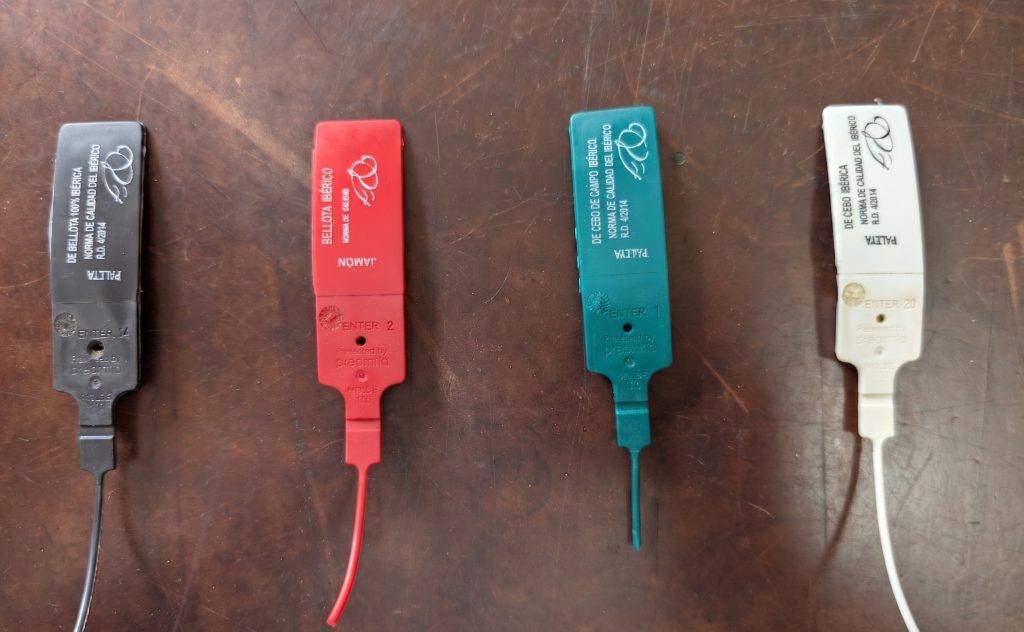
This is the most common ham, made from the meat of the white and/or non-Spanish breed of pig. However, the name Serrano refers explicitly to the cut of the ham rather than a breed used to produce the tasty Jamón. The best example is salt-cured ham, which is air-dried in the mountains (Serrano). This can be a delicious, cheaper alternative to the more expensive Jamón Ibérico. The Consorcio Serrano is the association that guarantees the quality and production methods of producers in Spain. It is produced as follows:
Jamón de Teruel is a variety of Serrano ham produced from white pigs, specifically a crossbreed of Landrace sows and Duroc boars, reared in Teruel, Aragón. Located in eastern Spain, Teruel experiences a continental climate with Mediterranean influences. Long, cold winters, dry conditions, and frequent clear days characterize the region. These pigs are fed on local cereals. After salting, the hams are hung in controlled rooms and natural drying sheds before being transferred to cellars for maturation under natural atmospheric conditions. Aged for at least 14 months, these hams are distinguished by their delicate, lightly salted flavor and smooth, pleasant aroma.
Jamón de Trévelez, another variety of Serrano ham, is exclusively made from a crossbred of a Landrace sow and Duroc-Jersey boar, raised in the area surrounding the village of Trevélez, situated in the high Alpujarras region of the Sierra Nevada. These pigs are raised on a diet consisting primarily of vegetable feeds. The ham is produced from the highest-quality legs, specifically selected for their soft, fatty meat. Due to the high elevation, less salt is required for ham curing, and the drying and aging processes are carried out naturally using traditional methods. The long, natural curing process, which extends over 14 months, helps release the ham’s distinctive aromas and flavors.
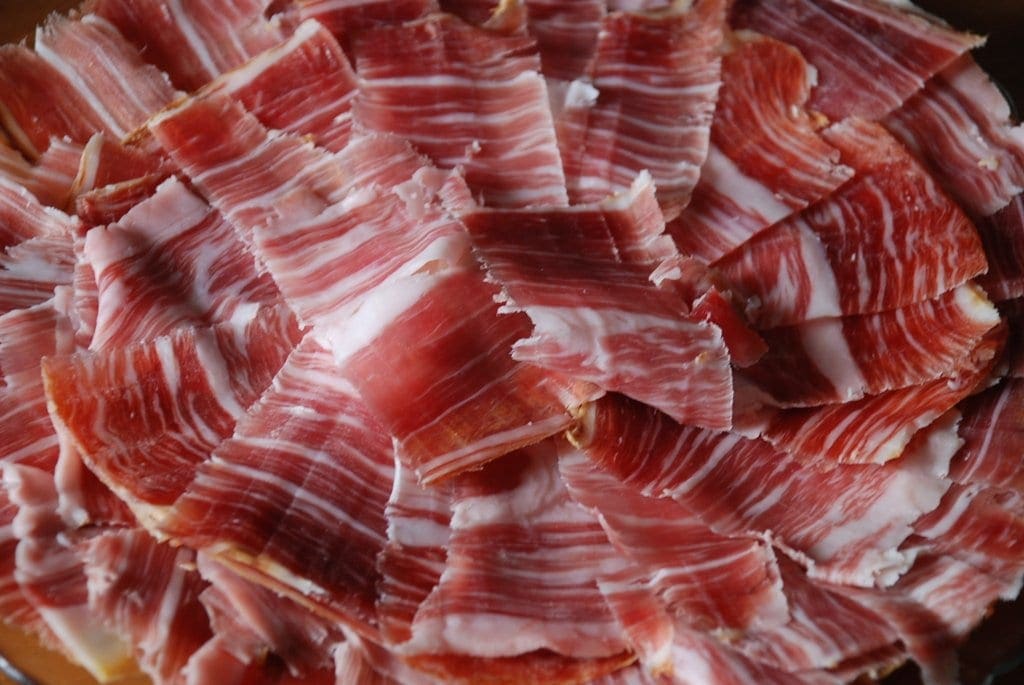
Guijuelo Jamón is a protected designation of origin in the southeast of the Salamanca province in Castilla y León. Although the ham is produced from boars, which may not be 100% purebred, it is still held in high regard in Spain. The animals may originate from several regions across Spain, including Andalucía, Extremadura, and Huelva. Still, the hams must have been cured and aged in the province to qualify as Guijuelo hams. Over 70 towns and villages in the region have the right to produce this succulent, flavorsome Jamón, which can be classified as Ibérico or the superior de Bellota, depending on the pig’s diet.
As with other high-quality Jamón, the Guijuelo curing and aging process can last three years, compared with the much shorter period for standard Serrano ham. The resulting product is sublime – Guijuelo Jamón is renowned for its juicy, tender texture and strong, almost overpowering flavor. It is also admired for its relatively low salt content compared to other quality Spanish hams – a benefit of Guijuelo’s arid climatic conditions, which allow for a much shorter curing process than in other parts of Spain.
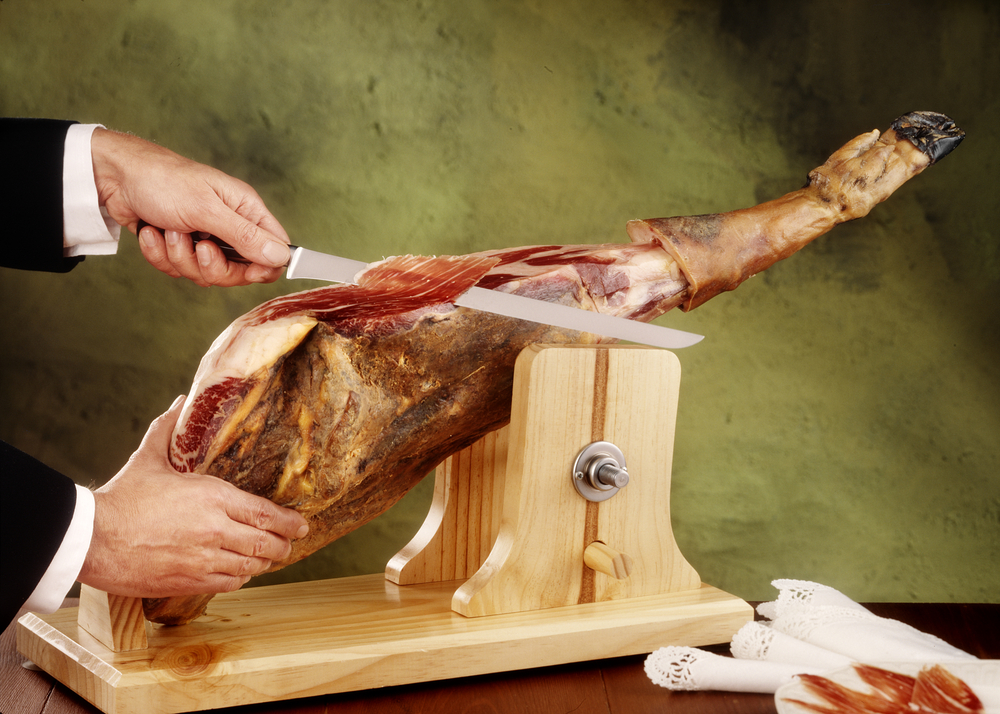
The ham leg (and hoof) is placed into a “jamonero,” a base that sits on the counter (seen in virtually all good bars and restaurants in Spain, as well as in private homes). Then the real art form is slicing the ham. It must be done by hand with an extra-sharp knife, sliced as thinly as possible. The art of cutting ham is seen in Spain as serious as the art of cooking or wine, and “ham slicers” are as highly regarded as top sommeliers. Spain Gourmet magazine recently published a fascinating article about the “Ham Slicer Extraordinaire” world champion Florencio Sanchidrián, who has sliced for dignitaries and celebrities as varied as Robert De Niro, Pope John Paul II, and, of course, the King of Spain, Juan Carlos – a well-known gourmet and lover of the”buena Vida” (the good life).
When selecting a wine to accompany Jamón, consider the type of Jamón: Jamón Serrano pairs well with light, fruity wines like Tempranillo or Grenache. For the richer, more intense Jamón Ibérico, aged reds such as Rioja or Ribera del Duero are excellent choices. The key is to balance the ham’s saltiness and richness with the wine’s acidity and body. White wines like Albariño or Fino Sherry can complement jamón, offering a refreshing contrast. Or have you ever considered Cava or even Rosé? The right wine does not smother jamón; it cuts through the fat, lifts the salt, and sends you back for another slice.
A Riojan institution, this long-standing tapas bar in Logroño serves only the finest Jamón Ibérico, accompanied by a wide selection of Riojan wines.
Website: Bodegon El Refugio
This chain of Jamón tapas bars in Madrid has an enormous selection of hams, from the basic range to the ultra-expensive and delicious Ibérico de Bellota.
Website: www.museodeljamon.com
Off the beaten track, this unassuming, blink, and you’ll walk past it tapas bar in Madrid offers delicious Jamón at reasonable prices and, crucially, doesn’t attract hordes of tourists!
Seville is packed with tapas bars, but La Flor stands out due to its wide selection of hams, reasonable pricing, and a fantastic selection of wines by the glass.
The Jamón supremo of Seville, Jotas, is where to pig out on sublime Jabugo Ibérico ham. Worth every cent!
Website: www.restaurantescincojotas.com
Joselito, Madrid
This Madrid establishment combines a retail shop with a restaurant, focusing entirely on the products of the famed Spanish ham producer Joselito.
website: www.joselito.com

Explore further
Discover private journeys, regional guides, and expert stories to help you plan an unforgettable trip through Spain.
19 tours
Luxury Food & Wine Journeys Across Spain’s Finest Regions
 6 days
Six days across Rioja Alta and Rioja Alavesa, with private tastings and Michelin-starred dining.
 1 day (ideal from Madrid)
From Madrid, discover Toledo-area wines, historic Toledo, and a gourmet lunch.
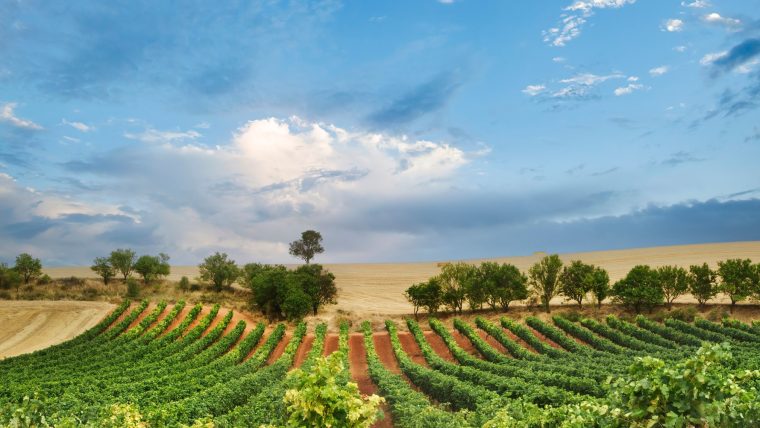
Compare Spain’s leading wine regions by signature grapes, scenery, best base, travel time, and ideal stay.
Explore regions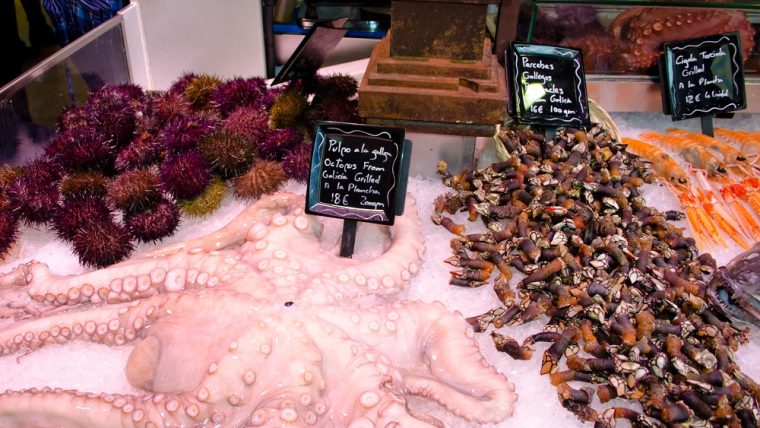
Spanish ham guide to Jamón Ibérico, Serrano, and other Spanish hams. Learn the types, how they differ, and how to serve and pair them.
Read article
Discover the rich flavors of Galician Gastronomy in our comprehensive guide! Indulge in mouthwatering seafood, savory empanadas, and Galician octopus. 🥟
Read article