Tell us more about the soils and climate of the Casablanca Valley?
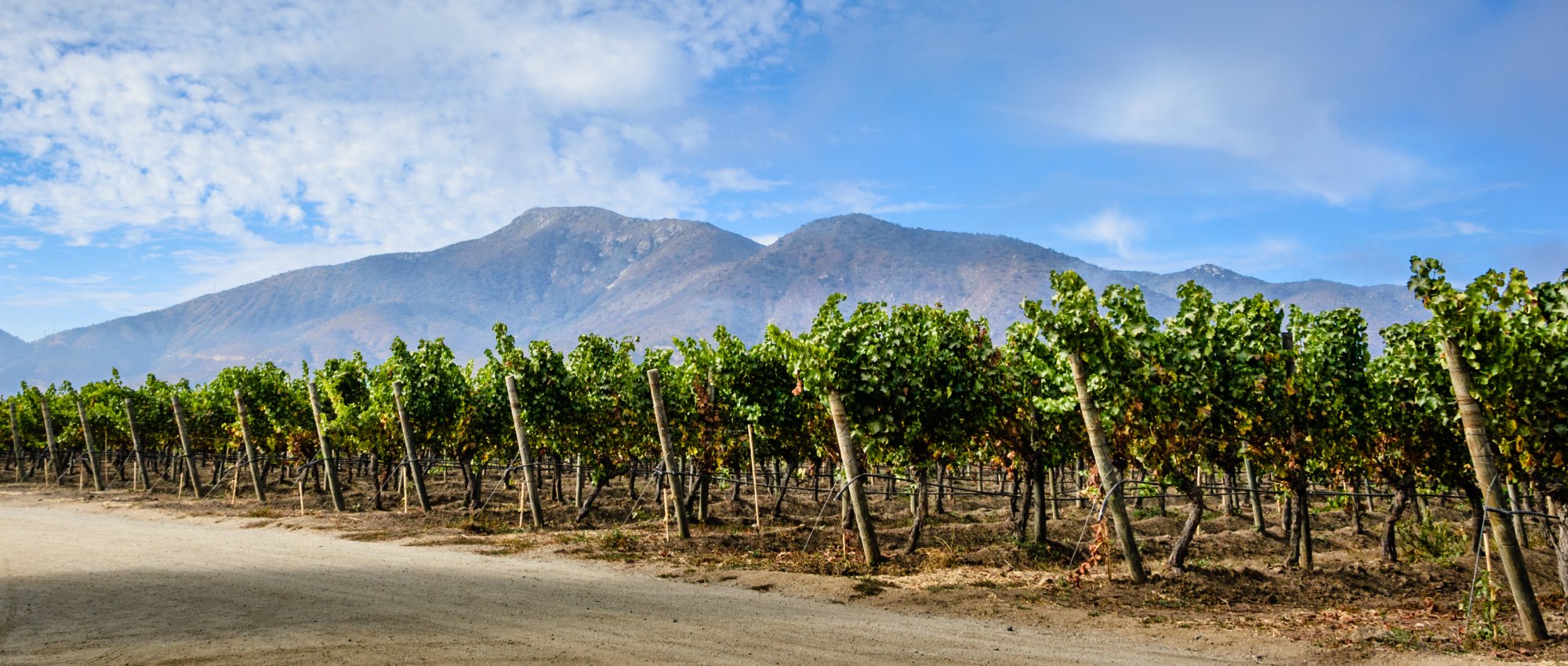
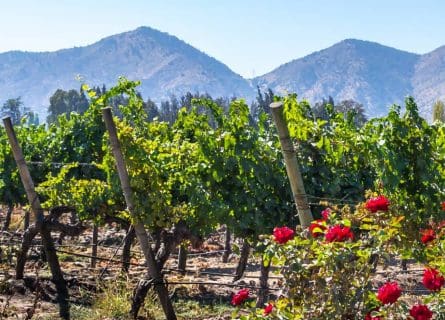
The coastal mountain range heavily influences the soils of Casablanca – this is a small mountain range where the elevation varies between 1,500 meters to sometimes 500 meters above sea level. Moreover, these mountains have a lot of red clay soils on top, around 15 cm up to 70-80 cm, then usually a decomposed granite layer mixed with the clay that gives an orange-yellow color to the soil; there are also granite pieces that have not decomposed. Meanwhile, on the valley floor, we have some darker clay and a lot of sandy soils, so there is a broad diversity of terroir in Casablanca.
Let us turn to the climate. It is what we call a cool (fresh) coastal climate because the mornings are quite cool because of the fog that comes from the ocean. This mist drifts into the valley, leading to cloudy mornings with low temperatures. However, it usually dissipates in the afternoon, leading to direct sunlight juxtaposed against brisk winds, which refreshes the vineyard. I would say that temperatures in the morning are around 12-15 °c and in the afternoon around 24-27°C – much depends on how near you are to the coast. This type of weather is highly conducive for growing white varieties, in addition to Pinot Noir, Syrah, Merlot, and Cabernet Franc.
The region has enjoyed enormous success with Burgundy varieties. What is the X factor?
Casablanca was planted 40 years ago, so the valley is a young region by the standards of Chilean viticulture. And yet, it is Chile’s oldest cool climate valley, with around 4000 hectares planted today. It is a destination where wineries and grape growers have been pushing the boundaries for white varieties, especially Sauvignon Blanc and Pinot Noir. The X factor is simply the climate and soils, combined with human talent, that elevates Casablanca to the first division ranks of Chilean wine regions. It has its own terroir, its own culture. It is a beautiful place full of forests and wild nature, close to the city.
Has the style of Chilean Chardonnay evolved since the 1990s?
Yes, it has undoubtedly evolved: starting with big oaky and buttery Chardonnays, passing through a time of very fruity and almost reductive style, to today, where I find more elegance and more balance in the wines. There is a very attractive expression of minerality and good freshness, but also good body and weight.
What other grape varieties have you been experimenting with in recent years?
We mainly cultivate Chardonnay, Sauvignon Blanc, and Pinot Noir, but we have also done some small trials with Syrah and Merlot.
Casablanca Wine Region Guide
Introduction
One of the most extraordinary aspects of the modern Chilean wine industry is the sheer variety of regions that have come to the fore in the 21st century. This is vividly illustrated by the rise of Casablanca in Chile, a coastal terroir developed (relatively) recently by ambitious winemakers in the 1980s. Motivated by a desire to produce world-class Chardonnay and Pinot Noir, investors have put Casablanca on the international map, with the acreage under vine increasingly significantly over the past 15 years. Dozens of wineries, including Santa Rita and Concha y Toro, now buy or source fruit from this beautiful valley. Much like the landscape, the best wines are utterly beguiling and impossible to resist.
Geography and terroir
Casablanca (white house) is now considered the most important subregion in the Aconcagua Valley. It is the first coastal-influenced vineyard to rise to prominence in the modern era, with some 3500 hectares under vine today. Hitherto ignored, Casablanca has become a major producer of fine Burgundy varietals and a growing volume of exceptional sparkling wine.
The vignoble is situated northwest of Santiago, approximately 100 kilometers from Chile’s handsome capital. To the north is Valparaiso and its iconic pastel-colored houses; the region’s tourist infrastructure has developed at an astonishing rate, set up to accommodate both regional and international visitors. Indeed, next to the Central Valley, Casablanca is probably one of Chile’s most renowned vineyards.
According to the promotional organization Wines of Chile:
“This is where our ‘cool climate wine revolution’ started when vines were first planted here in 1982. These forward-thinking pioneers were seeking to make fresher, more vibrant white wines, braving the area’s propensity for frosts but attracted to summer temperatures averaging around 77 °F.“
Climatic Challenges
Yet the valley’s geographical position presents challenges: Vineyards are located some distance from the Andes, so growers cannot rely on cool mountain air to freshen the vine canopy. In addition, water shortages can be a major issue here—snowmelt from the Andes is not available this far west. Devastating spring frost attacks can also occur with alarming frequency. However, few vintners can afford to prioritize anti-frost sprinklers in such a dry climate. As a result, viticulture can be an expensive business in Casablanca.
More positively, much of the region lies close to the Pacific, where marine breezes can be relied upon to soften the intense summer heat; the valley is heavily influenced by the Humboldt Current, a cold ocean current that originates in Antarctica. This important phenomenon, combined with cool ocean air, allows the production of cool-climate styles in an area surprisingly close to the equator! But, thanks to misty mornings and often extensive cloud cover, Casablanca enjoys a fairly elongated growing season.
All things being equal, this will yield small berries of highly aromatic fruit with vibrant acidity and ripe tannins. Chardonnay, Sauvignon Blanc, and Pinot Noir all benefit from a longer ripening period, helping to ensure that grape sugars and phenolic compounds are in perfect balance. In hotter climates, there is always a danger that sugar ripeness will race ahead of phenolic ripeness, leading to imbalances in sugars, acidity, and aromas.
Varied Soil Types and Water Management
According to Wines of Chile, Casablanca has various soil types, including friable granite, light sand, and heavier clay. The latter can retain moisture during the dry season, while sandy terroirs suffer from a vine malady caused by nematodes (parasitic worms) that attack vine roots. For this reason, Casablanca is one of the few Chilean destinations where growers must rely on disease-resistant rootstock despite the lack of phylloxera in this isolated part of South America.
A representative from WOS explained:
“The area has been able to develop thanks to a system of wells installed to harvest water,“.
They added that the vineyards closest to Santiago are
“somewhat warmer as the coastal mountain range here is higher, blocking more of the Pacific influence.“
Today, the region is heavily planted to Sauvignon Blanc – a signature Chilean export – in addition to Chardonnay, Pinot Noir, Merlot, and Syrah. The best wines are world-class – full of vibrant fruit, ripe acidity, and beautiful aromatics. They are great ambassadors for this beguiling nation.
Winemaking and regional classifications
Thirty years ago, Chilean Chardonnay was average at best. Grown in warmer regions, it yielded full-bodied whites of moderate acidity resembling the flabby excesses of 1980s California. Yet modern incarnations, produced in cooler sites across Casablanca, now rival the best labels from New Zealand, Australia, and Argentina. They are made with restraint and nuance, imitating the skilled artisans of the Côte-d’Or.
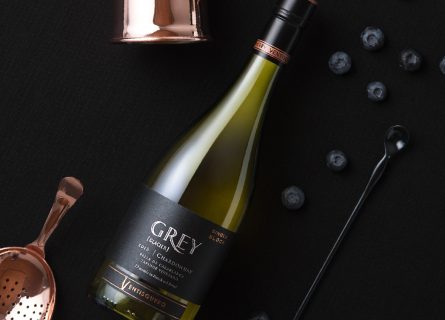
Ventisquero Grey Chardonnay is a textbook example. Using fruit sourced from the exceptional Tapihue vineyard (just 25 kilometers east of the Pacific Ocean), oenologist Felipe Tosso produces a very elegant and understated interpretation of the grape. Many critics (including Tim Atkin MW) have considered Tosso one of Chile’s top winemakers, and Tosso can coax Burgundian finesse out of New World Chardonnay.
Indeed, producing great and memorable Chardonnay requires a deft touch in the cellar: at every stage of the winemaking, human inputs can have a decisive impact on what ends up in your glass. Moreover, the Chilean approach to Chardonnay has undergone several profound changes since the 1990s. In brief, it has transitioned from being a rich mouthful of vanilla-infused oak to something far less obvious: a wine born of highly disciplined and selective craftsmanship. This typically involves little or no skin contact, careful pressing, cool fermentation, and maturation in used barrels. It yields a style that resembles Premier Cru Chablis, with a lower content of flavoring phenols, lighter and fresher color, and less oaky sweetness.
Innovative Techniques at Ventisquero
At Ventisquero, the initial handling of the (hand-harvested) fruit is gentle and sensitive – mechanical harvesting can never rival the skill and care shown by dedicated grape pickers. In Burgundy, the broken grapes are usually taken directly from the crusher to the press and pressed without delay. Some winemakers press whole bunches, releasing very clear juice with low levels of phenols. In this case, however, Felipe Tosso prefers to use a cold maceration to extract aromas before the main fermentation can begin. This will take place for about 14 hours in a controlled environment free of oxygen.
Traditionally, most Burgundians relied on wild yeast strains, vinifying their wines in oak barrels at moderately warm temperatures (72-77 °F) during the fall. This will produce a very structured expression of the grape, although higher temperatures can ‘burn out’ some of the flavor and aroma compounds. Mindful of this trade-off, Ventisquero undertakes a slow fermentation at low temperatures, using a mixture of wood (80 percent) and stainless steel. Only 10% new barrique is allowed in the production of Grey Chardonnay, which is highly conservative by the standards of the late 20th century. Once the fermentation is finished, the base wines are aged on their fine lees for 12 months, with regular stirring (bâtonnage) adding texture and richness to the white.
Casablanca: Chile’s Sonoma
Meanwhile, Chile’s top estates continue to source high-quality fruit from Casablanca’s privileged terroirs, with more investors arriving yearly. Syrah, Merlot, and Sauvignon Blanc are all mightily impressive, while Pinot Noir thrives in the coolest spots on the valley floor.
Casablanca has become Chile’s answer to Sonoma, with the added advantage of lower prices and arguably better wines.
Facts & Figures
-
Key wine styles
- Medium-bodied red and white wines
- a growing volume of sparkling
-
Appellation structure
- DO Casablanca
-
Hectares under vine
3,500 hectares
-
Average annual production
20 million liters per annum (entire Aconcagua region)
-
Approximate number of producers
Exclusive Expert Insights
Key Grape Varietals
-
White grape
Chardonnay
Chardonnay is a green-skinned grape varietal native to the Burgundy wine region in France and one of the most popular varieties worldwide. View grape -
White grape
Muscat
Muscat blanc is a white wine grape varietal popular in the Muscat d'Alsace, Moscato d'Asti and Beaumes-de-Venise regions. View grape -
White grape
Sauvignon Blanc
The sauvignon blanc grape varietal, originally from the Bordeaux region of France, is now one of the world's most loved white varieties. View grape -
White grape
Semillon
Explore the allure of the Semillon grape & its legendary connection to Sauternes. Unveil the history & flavors of this captivating varietal. Cheers! View grape -
White grape
Riesling
Discover Riesling's charm, a white grape from Germany's Rhine region, cherished in Alsace, France. Unveil its secrets and delights View grape -
Red grape Carménère
Carménère is a red wine grape from Bordeaux, France, once used for blending but is now mostly grown in Chile. Named for its crimson leaves in autumn, it's... -
Red grape
Merlot
Merlot is the most cultivated grape in Bordeaux and closely related to Cabernet Franc View grape -
Red grape
Malbec
Delve into Malbec, a dark, small grape native to France, cherished for its thick skin and exceptional flavors. 🍇🍷 View grape -
Red grape
Pinot Noir
Pinot Noir is one of the world’s great red wine grapes. Learn its flavors, food pairings, key regions, Burgundy styles, Champagne role, and why it is so difficult... View grape -
Red grape
Syrah
Discover Syrah, from Northern Rhône classics to Shiraz, with flavor profile, regions, aging potential, and food pairings. View grape
Casablanca gastronomy
Although relatively small in stature, Casablanca city offers a diverse selection of excellent restaurants, many of which boast incredible views of the surrounding landscape. On a vineyard-facing terrace, sip chilled Sauvignon Blanc and peruse the menu—many top chefs, attached to winery venues, use local produce to flex their culinary muscles. Freshly caught seafood, roast lamb, costillas de cerdo (pork ribs), and ceviche de jibia (cuttlefish ceviche) are all major highlights.
Author