Sicily Wine Region Guide
Volcanic Vineyards, Native Grapes and Historic Wine Regions
Introduction
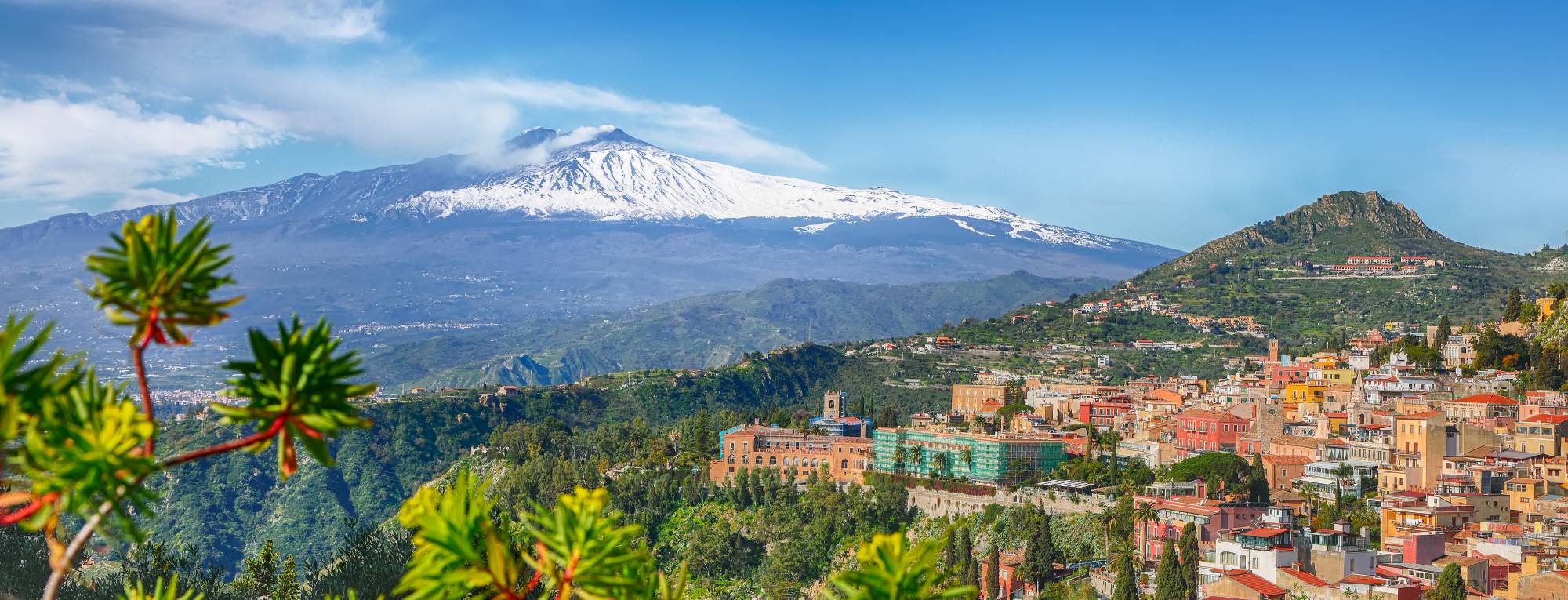
Sicily is home to Greek temples, dramatic coastlines, Baroque churches, and Mount Etna. There are stunning places to visit in Sicily, such as the Greek town of Taormina and the quintessentially Mediterranean Cefalù. It offers a surfeit of culture, intrigue, and culinary excitement. Yet, from our perspective, Sicily’s greatest asset is its vineyards; the Mediterranean’s largest island has become a modern source of exciting – and original – wines of great value. Granted, there are a smattering of French varieties cultivated in Sicily. However, its most compelling viticultural treasures are based on historic Sicilian varieties: Nerello Mascalese, Inzolia, Grillo, and Nero d’Avola. The dark days of bulk production and insipid plonk are over. Today, we all gaze in awe at the Sicilian grape renaissance.
History
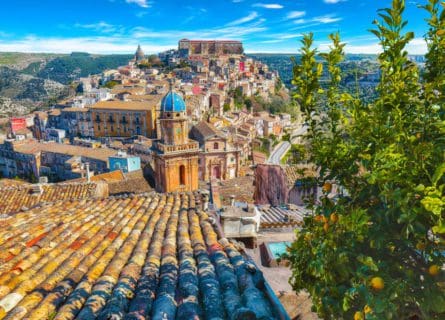
Sicily is a living, breathing museum, shaped by 25 centuries of foreign intervention and conquest. Greek settlers expanded viticulture across the island, and Sicilian wines later found an appreciative market in Roman Italy.
The Vandals, Ostrogoths, and Byzantines controlled Sicily for a time before the Muslim conquest began in 827. This was Palermo’s golden age, as Arab rulers encouraged trade and farming across the island. Although Islamic law prohibited the consumption of wine, viticulture survived, supported by demand for table grapes and raisins. The Normans invaded in 1061, and vineyards remained an important part of Sicily’s agricultural landscape under the rulers who followed.
In the late 18th century, British merchants helped transform Marsala into an internationally traded fortified wine. By the time Giuseppe Garibaldi landed in the town in 1860, Marsala was already famous for the wine of the same name.
For much of the 20th century, high yields, cooperatives, and bulk production defined the Sicilian wine industry. Large cooperative wineries processed vast volumes as quickly – and cheaply – as possible. But from the 1980s onward, ambitious producers began investing in lower yields, modern equipment, native varieties, and Sicily’s remarkable terroirs. Today, the island is a hotbed of fine wine, led by producers including Tasca d’Almerita, Planeta, Benanti, and Franchetti.
Geography and terroir
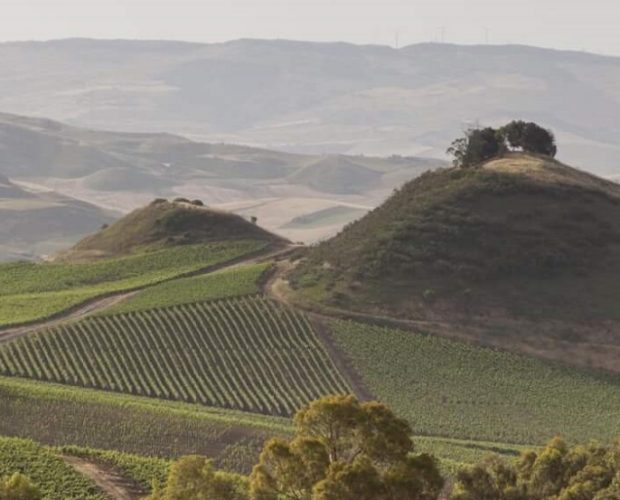
There is nowhere on earth quite like Sicily. The island is as rich and varied topographically as it is culturally – it is often said that it should be regarded as a continent rather than a mere island. You’ll find these terroirs and terrains to the west of Calabria, less than 20 kilometers from the mainland.
Yet, in many respects, Sicily is a very challenging place to grow vines and make wine. The southeastern tip of the island lies farther south than Tunis in North Africa, and summer temperatures can exceed 104°F during heatwaves. Water availability is an increasingly important concern, although irrigation requirements vary by site, rainfall, soil type, and farming approach. Sicily’s generally dry, windy climate can favor organic viticulture, but disease pressure varies by area and vintage, as the severe conditions of 2023 demonstrated. But inland, the landscape can be greener, partly because aspect and elevation can vary greatly in Sicily, particularly on the slopes of Mt. Etna.
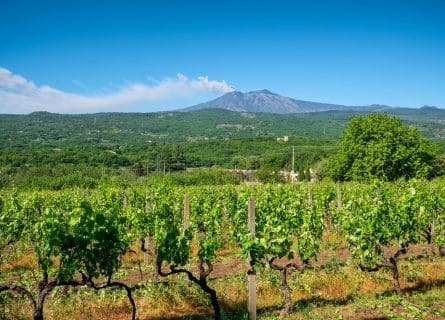
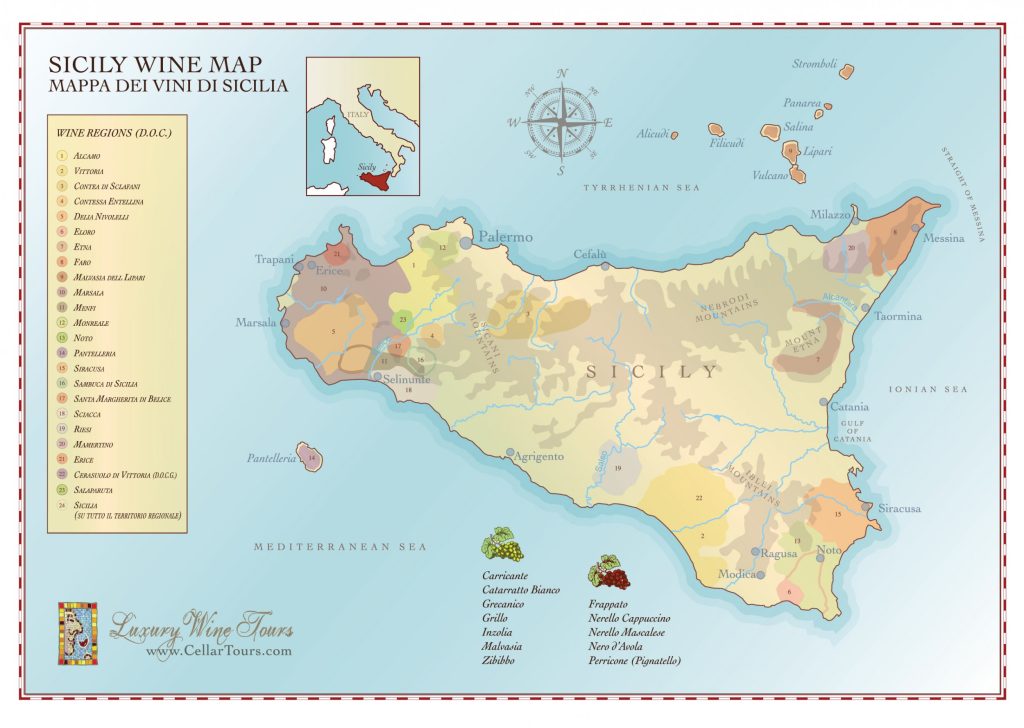
Yes, indeed – Europe’s highest active volcano has become Sicily’s leading fine-wine region. Located in the northeastern part of the island, Etna rises to more than 3,300 meters above sea level. However, its summit height changes with volcanic activity, and no vines are planted that high. Today, many ambitious wineries brave the genuine risk of an eruption to fashion delectable red and white wines from a palette of indigenous and imported grapes. With its mix of altitudes and soil types, Etna is one of Europe’s last viticultural frontiers, replete with centenarian vines and ancient volcanic terroirs.
Most vines are grown on Etna’s northern, southern, and eastern slopes, with diurnal temperature variation helping to avoid excessive alcohol and flabby wines. The signature red grape, Nerello Mascalese, can thrive at up to 1000m on the slopes of Etna, yielding delicate, aromatic reds that recall the best Nebbiolo wines of Piedmont. It is often blended with Nerello Cappuccio. Frappato, meanwhile, is an important ingredient in Cerasuolo di Vittoria DOCG, renowned for its lively acidity and crunchy red fruit.
Meanwhile, some remarkably fresh and saline whites are made here under the auspices of Etna Bianco DOC (Denominazione di Origine Controllata). Carricante is Etna’s leading white grape, responsible for wonderfully acidic wines that can improve in bottle for over a decade. Catarratto can also play an important supporting role. Grillo, traditionally used in the production of Marsala, is more closely associated with western Sicily.
The same could be said of Grecanico, another of Sicily’s hidden treasures: crisp and aromatic dry whites that the market consistently demands. Thankfully, sommeliers and influencers are helping to spread the word. Chardonnay can also succeed in selected higher-altitude or well-sited vineyards; Planeta’s long-established Menfi Chardonnay is one of the island’s best-known examples.
But it’s a different story with Nero d’Avola. It was the first Sicilian variety to gain traction abroad, delivering a rich mouthful of concentrated red fruit and silky tannins. Many of the best examples are in the Eloro DOC, located at the island’s southeastern tip. In addition, the limestone terroirs of Eloro and Noto in the southeast and Agrigento near the south-central coast have shown a real affinity for the grape, yielding surprisingly elegant reds that occasionally veer into portiness. That said, Nero d’Avola is robust and well adapted to dry conditions, although site, vine age, soil, and water availability strongly influence its response to heat and drought. In the vineyards of Cerasuolo di Vittoria (awarded DOCG status in 2005), Nero d’Avola is blended with Frappato, the yin to Nero’s yang.
Sweet Muscat is another worthy part of this story, most brilliantly realized on the volcanic island of Pantelleria. Back on Sicily itself, Planeta and Nino Pupillo have done much to save Muscat from irrelevance by producing fresher, brighter styles in Noto and Siracusa. No less fine are the Malvasias of the Aeolian islands to the northwest of Messina. Neither can we omit Marsala from this discussion – this venerable fortified wine has sadly become an anachronism for most consumers, which is a crying shame, as the best Marsalas can rival the depth of Port and the finesse of Oloroso Sherry. Hopefully, its day will come.
Planning a Wine Trip to Sicily
How should you approach wine tours in Sicily? The short answer is: do not attempt to see everything. Sicily’s key wine regions are widely dispersed;the drive from Etna to Marsala takes roughly five hours, which leaves little time for relaxed lunches, vineyard walks, and unhurried tastings. Ideally, allow a week for each side of the island, using one or two carefully chosen bases in both the east and west. Etna and the southeast combine the volcanic vineyards of Carricante and Nerello Mascalese with the Baroque towns and fragrant reds of Vittoria; in the west, you could easily spend a week exploring Menfi and Marsala, which offer Grillo, coastal vineyards, and fortified wines that deserve far more attention than they receive.
Please do not assume that every cellar is available for private tours without an appointment. The most rewarding estates often require an appointment, particularly during harvest; Sicily’s rural roads can be challenging to navigate, even for experienced drivers, and wine touring is far more relaxing with a private driver—particularly if everyone wants to participate in the tastings. Spring and autumn are generally the most agreeable seasons; the heat of high summer is better suited to the beach than a serious day of winery visits.
Planning resources
Winemaking and regional classifications
The idea of a ‘Sicilian fine wine’ used to be a contradiction in terms. But no longer. Today, Sicilian wineries showcase the latest equipment and techniques for crafting an astonishing variety of wine styles, ranging from tangy, salty whites to voluptuous reds with immense power and structure. Yet unlike the vineyards of Tuscany and Piedmont, an important designation is Terre Siciliane IGT (Indicazione Geografica Tipica), which offers the freedom and flexibility many producers require. One of the island’s most important associations is Assovini Sicilia, which represents around 100 wine companies of varying sizes. According to the association, its members generate more than 80% of the value of Sicily’s bottled wine.
Grape varieties may be indigenous, Italian, or international, with Syrah establishing a notable role in several parts of Sicily. As a result, winemaking philosophies will vary dramatically in Sicily, so generalizations are impossible. Across Sicily, the best zones retain freshness through altitude, maritime influence, aspect, or diurnal variation. Soils vary widely, from Etna’s volcanic formations to limestone, clay, sand, and calcareous terrain elsewhere.
Many Sicilian whites based on Carricante, Grillo, Catarratto, and Inzolia are fermented at controlled temperatures in stainless steel to preserve freshness and fruit. There is also a strong culture of blending on the island, and many leading red wines are aged in wood. However, producers increasingly use a range of vessels according to the wine and desired style, including concrete and large-format seasoned oak. The choice influences oxygen exposure, texture, and the prominence of oak flavors.
Facts & Figures
-
Key wine styles
- Aromatic, structured red and white wines
- a small volume of dessert wine
-
Appellation structure
1 DOCG, 23 DOCs and 7 IGPs
-
Hectares under vine
96,903 hectares (2024)
-
Average annual production
3.41 million hectoliters of wine and must (2021–2024 average)
-
Approximate number of wineries
1,000
The lowdown
After decades defined by high yields and bulk production, Sicily is now one of Italy’s most dynamic wine regions. Improved vineyard management, lower yields, and investment in modern cellar practices have allowed producers to focus increasingly on quality, regional identity, and native grape varieties.
But who would be brave enough to challenge the status quo? Several producers took the initiative, and others soon followed. Tasca d’Almerita and Donnafugata were important early advocates for quality, while Planeta demonstrated the potential of several Sicilian territories. On Etna, Benanti played a foundational role in the modern revival, followed by producers including Marco de Grazia and Andrea Franchetti. Their work helped refocus attention on Nerello Mascalese, Carricante, and the mountain’s varied contrade. Today, Etna’s wines are among Sicily’s most distinctive, combining freshness, aromatic complexity, and a strong sense of place.
Meanwhile, Sicily’s less famous (but equally important) subregions and appellations have also seen a shift toward domestic vines of late. In the early 21st century, the family firms of Tasca d’Almerita and Planeta did much to put modern Sicilian wine on the world map. Their early success with international varieties helped demonstrate that Sicily could produce ambitious wines for the global market.
Yet many wineries are now more interested in indigenous flavors than in the Merlot and Chardonnay that first won them international attention. This is a sensible move: today’s wine drinkers increasingly seek distinctive varieties and a clear sense of place. With a vine heritage as regionally varied as all its other assets, Few islands, after all, can answer with a cast as varied as Nero d’Avola, Frappato, Perricone, Grillo, and Zibibbo.
Key Grape Varieties
-
White grape
Catarratto
Catarratto is one of Sicily’s most widely planted white grapes, central to western Sicilian whites and Marsala and permitted in Etna Bianco. Modern examples range from light, fresh... View grape -
White grape
Carricante
Carricante is Etna’s defining white grape, retaining high acidity at altitude and producing citrus-led, saline wines capable of developing considerable complexity in bottle. View grape -
White grape
Chardonnay
Chardonnay is a green-skinned grape varietal native to the Burgundy wine region in France and one of the most popular varieties worldwide. View grape -
White grape
Grecanico (Garganega)
Grecanico Dorato, genetically identical to Garganega, is widely grown in Sicily and produces fresh dry whites with citrus, orchard-fruit, and herbal character. View grape -
White grape
Grillo
Discover Grillo, Sicily’s versatile white grape, from Marsala heritage to modern dry wines, flavor profile, food pairings, and producers. View grape -
White grape
Inzolia
Inzolia, also known as Ansonica, is a traditional Sicilian white grape associated particularly with western Sicily and Marsala. It produces gently aromatic wines with citrus, herbs, almonds, and... View grape -
White grape -
White grape
Malvasia
Malvasia delle Lipari is the aromatic white grape behind the Aeolian Islands’ historic dry and sweet wines. In the Malvasia delle Lipari DOC, it may be blended with... View grape -
Red grape
Frappato
Frappato is Vittoria’s aromatic red grape, known for floral, red-berry wines and its blend with Nero d’Avola in Cerasuolo di Vittoria DOCG. View grape -
Red grape
Nero d'Avola
Nero d’Avola is Sicily’s best-known red grape, producing wines from fresh and fruity to rich and structured, particularly in southeastern Sicily. View grape -
Red grape
Nerello Mascalese
Nerello Mascalese is Etna’s principal red grape, producing pale, structured wines with red fruit, high acidity, firm tannins and savory character. View grape -
Red grape Nerello Cappuccio
Nerello Cappuccio partners Nerello Mascalese in Etna Rosso and Faro DOC, adding color, perfume and softness to the blend. -
Red grape Nocera
Nocera is a rare northeastern Sicilian variety valued for its color, acidity, and savory red-fruit character. It plays an important role in the Faro and Mamertino appellations. -
Red grape Perricone
Perricone, also known as Pignatello, is a historic western Sicilian grape producing structured, savory reds with dark fruit, herbs, and firm tannins. -
Red grape
Syrah
Discover Syrah, from Northern Rhône classics to Shiraz, with flavor profile, regions, aging potential, and food pairings. View grape
Sicily gastronomy
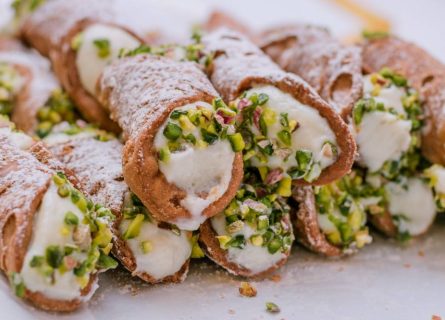
Sicilian gastronomy is the product of centuries of foreign occupation, creating one of Italy’s most diverse and multicultural food scenes. Witness fish couscous and pasta con le sarde (pasta with sardines, pine nuts, raisins, and fennel), sfincione (oily pizza topped with onions and caciocavallo cheese), and pasta alla norma, a heroic combination of pasta, basil, eggplant, tomato, and ricotta. Cannoli—crisp pastry shells filled with sweet ricotta—are among Sicily’s best-known desserts. Seafood is equally central to the island’s cooking. Involtini di pesce spada involves thinly sliced swordfish fillets rolled up and stuffed with breadcrumbs, capers, tomatoes, and olives. It’s a quintessential Sicilian dish that relies upon the best local ingredients money can buy.
Featured Sicilian Wineries
Menfi and Western Sicily 1 winery
Mount Etna 2 wineries
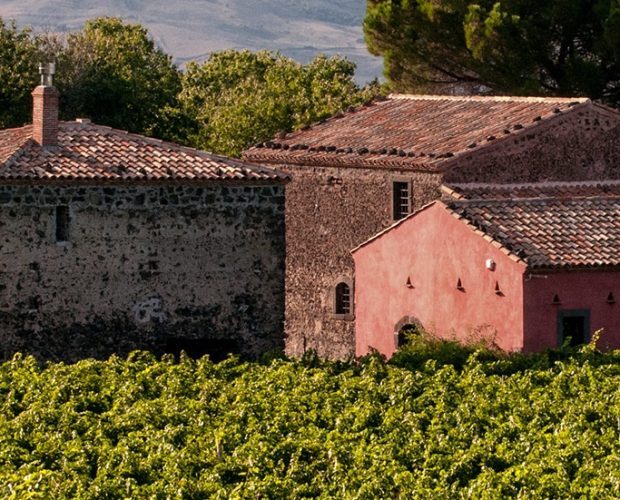
- Benanti Benanti helped lead Etna’s modern wine revival, producing distinctive Carricante and Nerello Mascalese wines across the volcano’s slopes. Visit website
- Graci Graci produces Carricante and Nerello Mascalese from high-altitude vineyards on Etna’s northern slopes near Passopisciaro. Visit website
Vittoria 2 wineries
- Arianna Occhipinti Arianna Occhipinti produces expressive Frappato and Nero d’Avola wines from organically farmed vineyards around Vittoria. Visit website
- COS COS is a pioneering Vittoria estate known for Frappato, Nero d’Avola, Cerasuolo di Vittoria DOCG and maturation in clay amphorae. Visit website
Marsala and Pantelleria 2 wineries
- Donnafugata Donnafugata spans Marsala, Contessa Entellina, Pantelleria, Vittoria and Etna, producing regional wines including Ben Ryé Passito di Pantelleria. View winery
- Marco De Bartoli Marco De Bartoli revitalized Marsala’s wine heritage through Grillo, traditional oxidative wines and acclaimed expressions from Pantelleria. Visit website
Central Sicily 2 wineries
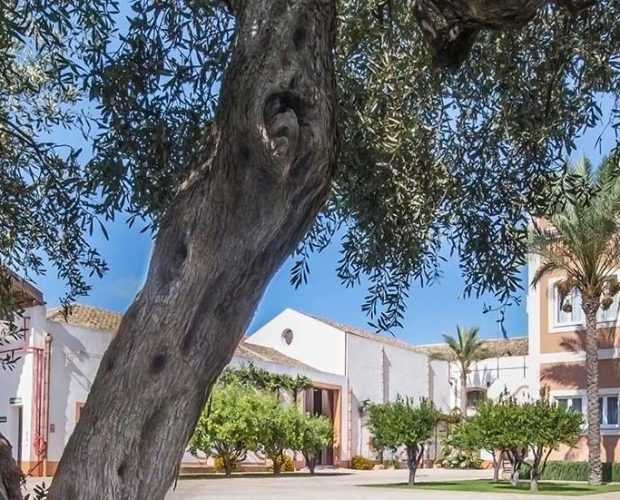
- Feudo Montoni Feudo Montoni farms high-altitude vineyards in central Sicily, producing distinctive Nero d’Avola, Catarratto and Grillo wines. Visit website
- Tasca d’Almerita Discover the aristocratic charm of Tasca d'Almerita, a renowned Sicilian estate producing ultra-high-quality wines since 1830. View winery
Salina, Aeolian Islands 1 winery
Further Reading
Nero d’Avola Grape Variety: The Spice of Sicily
August 14, 2021
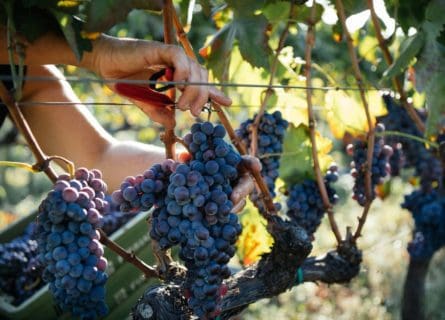
Nero d’Avola is Sicily’s best-known red grape, producing wines from fresh and fruity to rich and structured, particularly in southeastern Sicily.
Read article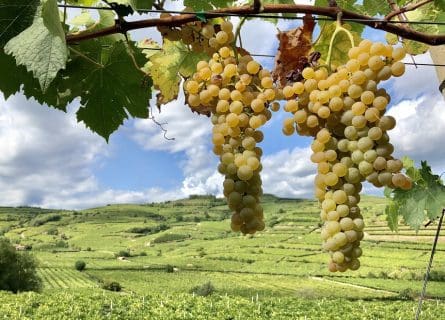
Garganega Grape Variety: The Magic Behind Soave
December 7, 2022
Grecanico Dorato, genetically identical to Garganega, is widely grown in Sicily and produces fresh dry whites with citrus, orchard-fruit, and herbal character.
Read article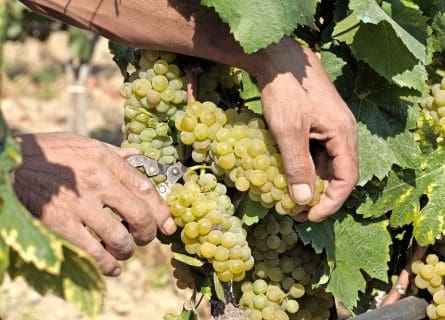
Greco Grape Variety
December 17, 2022
Discover Greco: Campania's Opulent White Wine with a Twist. Experience the Unique Flavors of Irpinia's Best Whites
Read article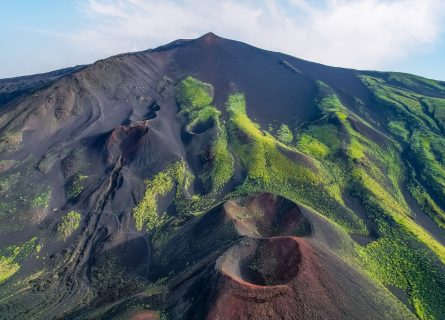
Mount Etna’s Wine Revolution: The Burgundy of Sicily
January 1, 2026
Explore the unique flavors of Mount Etna Wine and discover the beauty of Sicily's wine regions and sunny landscapes.
Read article
Sardinian Cuisine: The Mediterranean’s Culinary Melting Pot
June 29, 2021
Sardinian Gastronomy: Explore a Culinary Paradise! Discover breathtaking Sardinian flavors and exclusive enogastronomic delights on this enchanting island.
Read article
Demystifying Italian Wine Labels: A Guide for Curious Drinkers
April 8, 2025
Decode Italian wine labels easily with our guide. Understand symbols, terms, and traditions to enhance your wine experience.
Read articleAuthor