Your winery is one of Chile’s great wine pioneers – tell us more?
My grandfather established Viña Echeverría in 1930 in the region of Curicó. At that time, the majority of Chilean wine was considered low quality and mostly consumed domestically. Still, as his vineyards were located next to the train station, as an engineer, he pioneered a pipeline that pumped the wine onto containers on the trains, which took the wine to Santiago to be bottled.
In 1990, Viña Echeverria commenced the journey of bottled wine for exportation and, created the Echeverria brand, and was the first to use state-of-the-art technology. In Chile, Viña Echeverria pioneered the use of clear bottles for Sauvignon Blanc and established it as a 100% export winery.
Since 2017, Viña Echeverria has pioneered the production of natural wine, which now makes up over 50% of its production.
What factors drew Echeverria’s founders to the vineyards of Curicó?
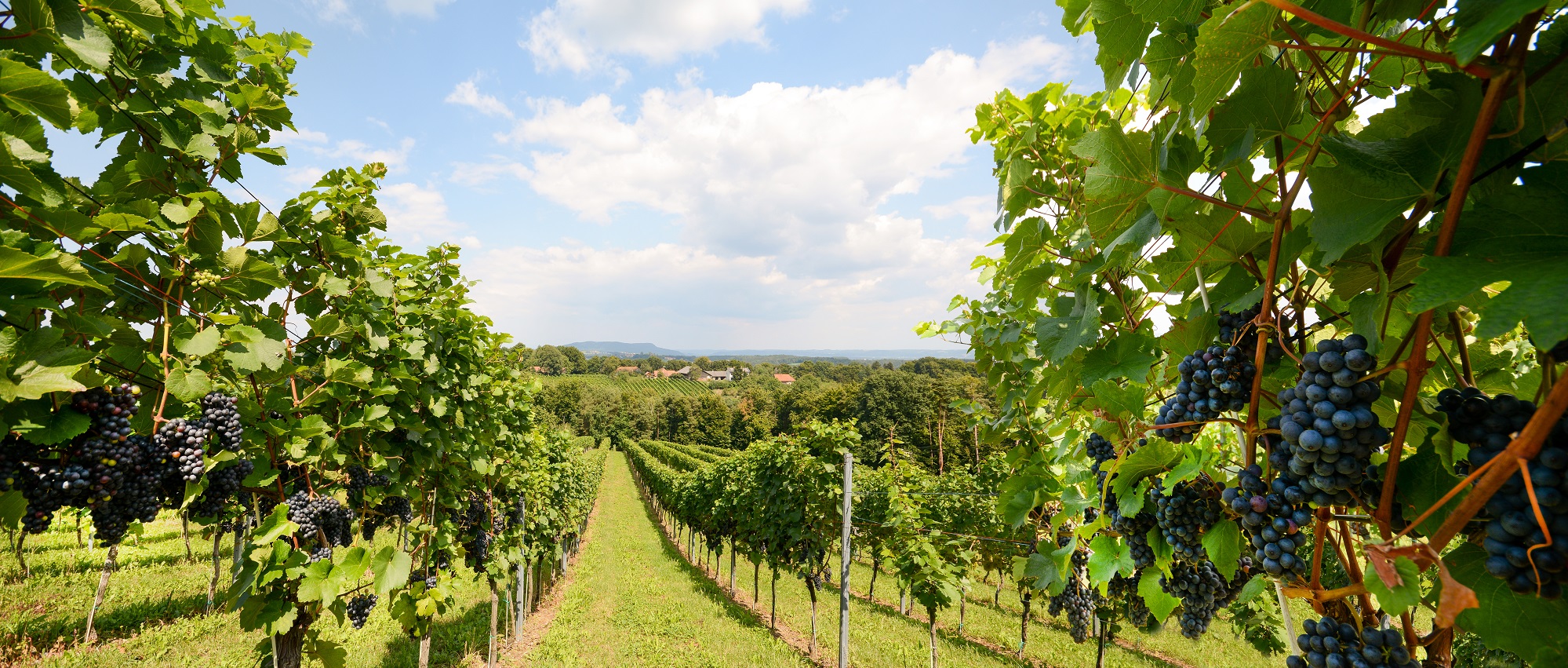
The Curicó Valley is one of Chile’s oldest wine regions. Located 200km south of Santiago, this privileged viticultural zone, with its cold nights, warm, dry days, intense sunlight, and long growth season, is ideally suited to produce healthy plants and grapes. Here, diversity is king, thanks to the cooling influence of the oceanic breezes through the coastal mountains’ valleys, allowing both red and white grapes to achieve outstanding fruit aromas and exceptional color concentration. Over 30 varieties of grapes are grown here – more than any other wine region in Chile.
Can you give us an overview of the region: soils, elevation, and climate?
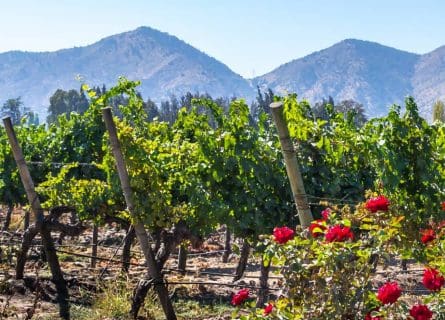
Viña Echeverria is located in the eastern part of the Curico Valley, closer to the Andes Mountains. Its location here between the Andes and coastal mountains allows for diurnal temperature variation, producing high acid and sugar content, as the grapes’ exposure to sunlight increases the ripening qualities. In contrast, the sudden drop in temperature at night preserves the balance of natural acids in the grape. It has well-drained soils, dry and low-humidity soils, which avoid the development of fungi and diseases, with low incidents of mildew and botrytis. In addition, there is a great diversity of white and red varieties and a long growing season.
Have you been experimenting with new varietals recently?
With our natural wine range, we’ve been having a lot of fun trying new varietals, such as Carignan and Moscatel de Alejandria, from ancestral plantings in the Maule and Curico regions. We also have some great, cool-climate Pinot Noir from Malleco, which is right by the ocean!
Further south, we have been venturing towards the region of Itata, which has some of the highest concentrations of old vines in the Americas, typically dry-farmed. Here, people still ride around in horses and carts and trade vegetables in the market—it’s like a trip back in time.
Cinsault and Chasselas are two grape varieties we want to add to some of our natural blends.
Outside of wine, we have also started making natural ‘gin’ with a wine base. The Andean pre-cordillera contains a wealth of botanicals, such as boldo, aji verde, and calabate.
Curicó Wine Region Guide
Introduction
Described as a “hidden gem for natural wine enthusiasts,” Curicó nonetheless entered the world of Chilean viticulture as a reliable producer of fruity – and affordable – red and white wines. Located approximately 185 kilometers south of Chile’s capital, Santiago, this sizable vineyard was developed feverishly in the late 20th century, attracting domestic and international investment – Spanish firm Familia Torres has worked hard to lift Curicó’s reputation over the past 15 years. Today, the region is renowned for its very drinkable Cabernet Sauvignon and aromatic Sauvignon Blanc, albeit relatively few expensive wines are made in this part of the Central Valley. To damn with faint praise, it is something of a South American workhorse, supplying consumers with well-made drops that often cost less than $25.
And yet, there is more than meets the eye here. In addition to a growing number of low-intervention and natural wines, some pretty spectacular Cabernets are made in Curicó, including Miguel Torres’s Manso de Velasco and Punti Ferrer Conforme. The area’s temperate climate, allied to high-potential soils, can yield excellent wines based on classic varietals if the volumes are controlled and the winemaking is up to scratch. There are two sides to this Chilean ‘factory,’ despite what you may have heard.
Geography and terroir
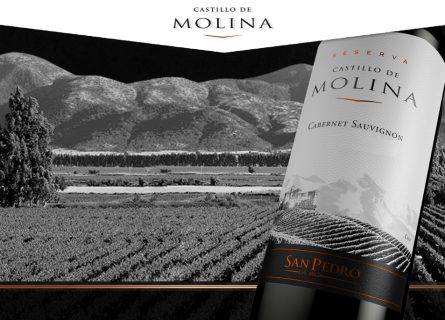
Just to the south of the Colchagua valley are the vineyards of Curicó – the Central Valley’s most complex and enigmatic region. Boasting some very fertile soils and favorable growing conditions, Curicó has traditionally been associated with straightforward and fruity wine, which is pleasant to drink and freely available.
Yet it is increasingly difficult to give an incisive overview of this Chilean behemoth as ambitious winemakers, motivated by rising global competition, set their sights on breaking the glass ceiling. No longer is this a destination where mediocrity rules the roost. Today, supermarket labels exist alongside award-winning icon wines.
The area under vine (22,000 hectares) is extensive, stretching from the southern border of Colchagua to beyond Molina. It is home to the San Pedro winery and its 1200 ha of vineyards—the largest single parcel in South America.
According to Wines of Chile,
“With a winemaking tradition dating back to the 19th century, the Curicó (Kou-ree-KOH )Valley is home to some very old vine stock. Farmers were attracted to the area’s Mediterranean climate of hot sunny days followed by cold nights. Spaniard Miguel Torres revitalized the industry here in the 1980s, and today, it is home to some of the country’s largest producers.”
However, depending on the vines’ location, one will encounter significant differences in macroclimate. There are two central winegrowing areas in the Curicó Valley: a large subregion on the western flank of the Andes and a smaller area further west towards the Pacific.
At first glance, it would appear that the latter has a decisive advantage in terms of climate: many of Chile’s premier viticultural zones benefit from cool marine air and coastal fogs that drift into the vines. Unfortunately, the Coastal Range (a series of mountains) extends far enough east in Curicó to block any maritime influence, so this section of the Valle Central does not share the good fortune of Casablanca and Aconcagua in the north.
However, average rainfall in the valley is about 10 times higher than in the cooler-climate vineyards of Coquimbo. At the same time, spring carries a very real risk of frost attacks in September and October. Meanwhile, growers in the eastern part of Curicó – closer to the Andes – benefit from cool air that travels down from the mountain slopes, helping to moderate summer heat.
For that reason, the region’s leading climats (vineyard sites) are often found near the cooler eastern towns of Curicó and Molino, where ripeness occurs at a slower and more even rate. Nevertheless, irrigation is usually required in the Central Valley, particularly in the Teno zone that occupies the northern half of Curicó. Indeed, without the Andean meltwater that feeds the Lontue and Teno Rivers, viticulture would be extremely challenging here.
The vineyards of Lontue, meanwhile, are located in the southern half of the Curicó Valley DO. Irrigated by the Lontue and Mataquito Rivers, the zone’s limestone soils ( relatively uncommon in the wider region) can produce some exceptional dry whites and berry-scented Cabernet and Merlot. As elsewhere, diurnal temperature variation and cool mountain air deliver vibrant acidity levels and aromatic, well-structured wines.
In addition to Riesling and Chenin Blanc, Sauvignon Blanc does very well here. But there are also significant outcrops of alluvial – and colluvial – soils, containing a fertile mixture of clay, silt, and sand. These loamy terroirs, fairly ubiquitous in the Central Valley, can deliver excessive yields unless a plant’s vigor is strictly controlled. Of course, bulk winegrowers have little interest in curtailing a potentially very large crop.
Winemaking and regional classifications
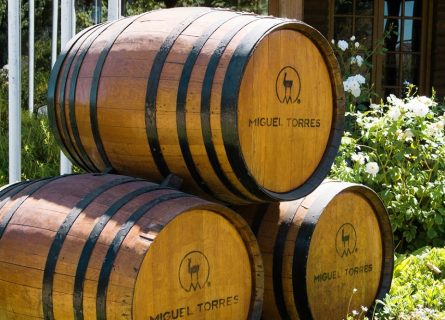
Curicó is one of South America’s most versatile wine regions, juggling diverse styles and stakeholders; boutique wineries, family-run vineyards, and influential multinationals make their home in the valley. Therefore, it is very difficult to generalize the quality of wine made here, which ranges from prosaic supermarket Cab to old vine Syrah, carefully and sensitively matured in oak barrels for 18 months. There are wines that will dazzle you and bottles of plonk that will leave you cold.
Yet, despite having achieved success with a number of different varietals, Bordeaux blends (and single-varietal Cabernet) continue to win the most awards – and attract the highest prices. Miguel Torres Manso de Velasco, Aresti Codigo de Familia 380, and Vina Alto Roble’ Patagon’ Family Reserve are three standout wines, with a noticeably softer fruit profile and brighter acidity than is often detected in Maipo reds.
Indeed, as long ago as 1985, the Torres family, Spain’s leading innovators and climate change activists, proved that Curico would be a standout terroir for the grape, provided the vineyards were cultivated on infertile soils. Today, Manso de Velasco has a (deserved) reputation for being one of Chile’s top Cabernets: elegant and restrained, with supple tannins and beautiful aromatics. It was the first red to properly challenge Maipo’s hegemony based on fruit sourced from centenarian vines – now protected as a national monument.
The winemaking, too, is exemplary. Only the finest bunches are used, grown on alluvial soils with a sandy clay loam texture and a large volume of different-sized gravel fragments. Sophisticated sorting tables are invaluable here, helping the staff to discard green or shriveled berries. Effective selection reduces the need for a lengthy extraction as the fruit is of top-notch quality.
Like many Chilean producers, Torres prefers to perform precise fermentation with native yeasts in stainless steel tanks, keeping the temperature under 78°F. The wine will be pumped over two or three times a day for nine days as the sugar turns into alcohol. As the vinification begins to subside, the young wine will be allowed to macerate for 19 days, extracting tannin and flavor.
Malolactic fermentation will then take place in 100% French oak barrels, converting malic to lactic acid. The wines are then aged in a mixture of French oak barrels and German oak foudres for 18 months—13% new wood, 28% second-use barrel, and 59% German oak foudre.
The 2019 vintage was awarded 95 points by leading critic Tim Atkin MW, described the wine as having an
“intense dark ruby color and exquisite aroma with the classic notes of small black and red fruits. Herbal nuances such as lemon verbena and bay leaf. Palate of great elegance, with enveloping and soft tannins, long fruity and spicy accords that are complemented towards the end with fine notes of wood.“
Thirty-five years ago, few buyers or sommeliers took Curicó seriously as a producer of fine wine.
Today, the best Cabernets are widely accepted as some of the finest in South America, thanks to the pioneering work of Miguel Torres and his contemporaries. Even Maipo’s greatest celebrities admire the gentleness and poise that define the best Curicó wines, offering a different (but equally valid) interpretation of this seminal grape.
Facts & Figures
-
Key wine styles
- Medium-to-full-bodied red and white wines
- a small volume of sparkling
-
Appellation structure
- DOs Curicó Valley, Licanten
-
Hectares under vine
22,000
-
Average annual production
376,762,802 liters per annum (Curicó and Maule)
-
Approximate number of producers
20 wineries
Exclusive Expert Insights
Key Grape Varietals
-
White grape
Chardonnay
Chardonnay is a green-skinned grape varietal native to the Burgundy wine region in France and one of the most popular varieties worldwide. View grape -
White grape
Muscat
Muscat blanc is a white wine grape varietal popular in the Muscat d'Alsace, Moscato d'Asti and Beaumes-de-Venise regions. View grape -
White grape
Pinot Gris
Pinot Gris is a white-wine grape variety originally from Burgundy. It is thought to be a mutant clone of Pinot Noir. View grape -
White grape
Sauvignon Blanc
The sauvignon blanc grape varietal, originally from the Bordeaux region of France, is now one of the world's most loved white varieties. View grape -
White grape Sauvignon Gris
Sauvignon Gris is a pink-berried mutation of Sauvignon Blanc, originally likely from Bordeaux but now also prominent in Chile. It is a relatively obscure grape, making up only... -
White grape
Semillon
Explore the allure of the Semillon grape & its legendary connection to Sauternes. Unveil the history & flavors of this captivating varietal. Cheers! View grape -
White grape
Riesling
Discover Riesling's charm, a white grape from Germany's Rhine region, cherished in Alsace, France. Unveil its secrets and delights View grape -
White grape
Viognier
Viognier comes from the northern Rhône valley AOC of Condrieu and is where its most famous white wines are produced. View grape -
Red grape
Cabernet Sauvignon
Learn what Cabernet Sauvignon tastes like, where it grows best, why it matters in Bordeaux, and how to pair and serve this age-worthy red grape. View grape -
Red grape
Cabernet Franc
Cabernet Franc is particularly important on Bordeaux’s Right Bank, bringing perfume, freshness and structure to Merlot-led blends. View grape -
Red grape Carmenere
Carménère is a red wine grape from Bordeaux, France, once used for blending but is now mostly grown in Chile. Named for its crimson leaves in autumn, it's... -
Red grape
Merlot
Merlot is the most cultivated grape in Bordeaux and closely related to Cabernet Franc View grape -
Red grape
Malbec
Delve into Malbec, a dark, small grape native to France, cherished for its thick skin and exceptional flavors. 🍇🍷 View grape -
Red grape
Pinot Noir
Pinot Noir is one of the world’s great red wine grapes. Learn its flavors, food pairings, key regions, Burgundy styles, Champagne role, and why it is so difficult... View grape -
Red grape
Syrah
Discover Syrah, from Northern Rhône classics to Shiraz, with flavor profile, regions, aging potential, and food pairings. View grape
Curicó gastronomy
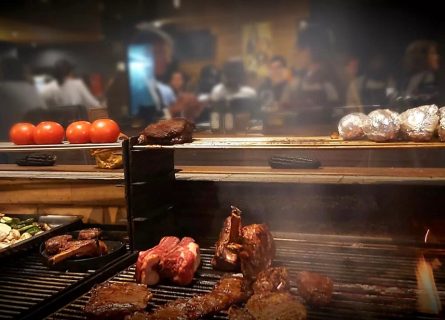
Like many of Chile’s smaller urban areas, Curicó has many excellent restaurants and bars, covering cheap-and-cheerful parrillas (grill restaurants), sophisticated fine dining amidst the vines, and everything in between. Some good Italian eateries can be found in the center. Miguel Torres’ signature restaurant is one of the best in the Central Valley; European classics such as Osobuco and mushroom risotto provide a nice counterpart to more hearty Chilean fare. A diverse selection of wine by the glass, featuring a standout old vine Carignan, adds a touch of elegance to complete the experience.
Explore further
Continue Exploring Chile
Discover private journeys, the complete wine region guide, and expert stories from across Chile.
Private Wine Tours in Chile
Maipo, Casablanca and Colchagua woven into one Chilean wine journey.
Guides to Chile’s Wine Regions
Chilean Wines: A Journey from Historic Roots to Global Acclaim
Explore regions
Chilean Malbec: A Guide to Regions, Taste, and Wines to Try
Explore Chilean Malbec, from its Bordeaux origins to Chile’s best regions, flavor profile, food pairings, and standout producers.
Read article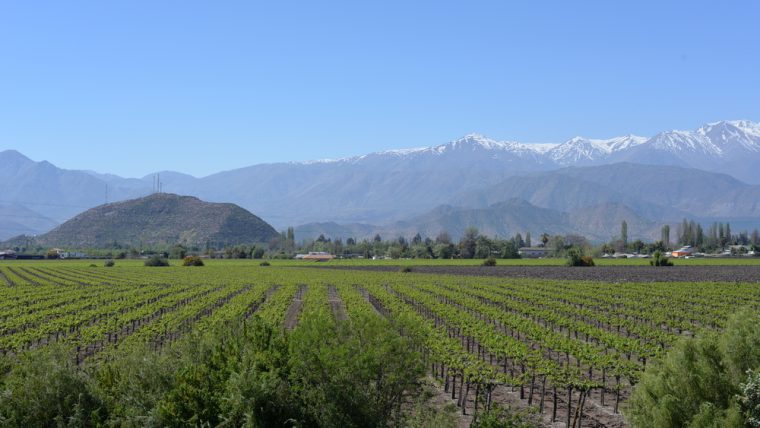
The Best Chilean Icon Wines: 10 Bottles to Know
Discover 10 of Chile’s leading icon wines, from Seña and Almaviva to Don Melchor and Viñedo Chadwick, with tasting notes, regions and key details.
Read articleAuthor