You founded one of Chile’s most innovative wine projects – tell us more about its inception?
Garage was a hobby for years. We were searching for something missing from the trade at the time. This pursuit became more serious when Alvaro (PhD wine scientist) joined us. The experiments became small batches we later commercialized as parcels— each from a small vineyard. We ended up far from the beaten track of the usual suspects/growers in the Maule on the Coastal Range. The farms were smaller, and we were more comfortable working with small farmers. We got more involved and focused on farming.
The trade back then was fixated on the large scale. We had to muster countless painstaking workarounds to survive the early years. We learned to silk-screen bottles (before short-run digital printing existed), waxed capsules with crayon wax, and welded our own small lagar-like tanks from repurposed stainless steel for the cellar. Most importantly, we got involved in farming with the vignadores and developed a model to farm parcels. These pulled us closer to the earth, the farming, and the people.
Innovation does not always involve more technology, leading to more efficient production and cheaper products. Reinterpreting existing methods with a focus on quality can be more effective than scalability. Sometimes, we must look back to find a way forward. Almost all of our parcels are less than 5,000 bottles of wine to this day.
The old vines of the Maule will never produce more kilos than modern clones, and they cannot be mechanized, so they will never be cheaper to farm. However, with innovative regenerative agriculture, they can produce complex and rare fruit and wine—and today’s consumers prize this. Old vines are an innovative business with a 75-year barrier to entry: the 75+ years they take to grow!
Maule was historically associated with bulk wines and large volumes in the 20th century. When did this start to change?
There are hundreds of years of history-making wine in Maule. Historically, Maule was all about local wines and local producers, where people drank wine grown in their own village—most likely a neighbor. Farmers grew wheat, fruit, and vegetables, had livestock, and made wine. Farming was mixed, and many of the farms further from the beaten track remain mixed today.
By the 20th century farmers produced wine in the Maule for more than 350 years. What began as local wine (and church wine) became a brisk business in the hands of various Basque and Catalan families. It was a popular wine sent in rail cars from the Maule to Santiago to be bottled. By the early 1900s, when the French varieties were recognized amongst the well-to-do [even exported], the popular wine in Chile was sourced in the Maule. All of this history, local and Santiaguino, is what allowed the vineyards to grow old, and viticulture-wise, so we can appreciate old vine concentration and complexity today.
Chile’s French varietals have since traveled the world and made a name for themselves as competitive French-like wines. Over the past 10-15 years, the world has been exposed to Chile’s original old-vine wines of Pais, Cinsault, Cariñena, Moscatel, and Semillon.
Can you give us an overview of the soils and climate of the Maule Valley?
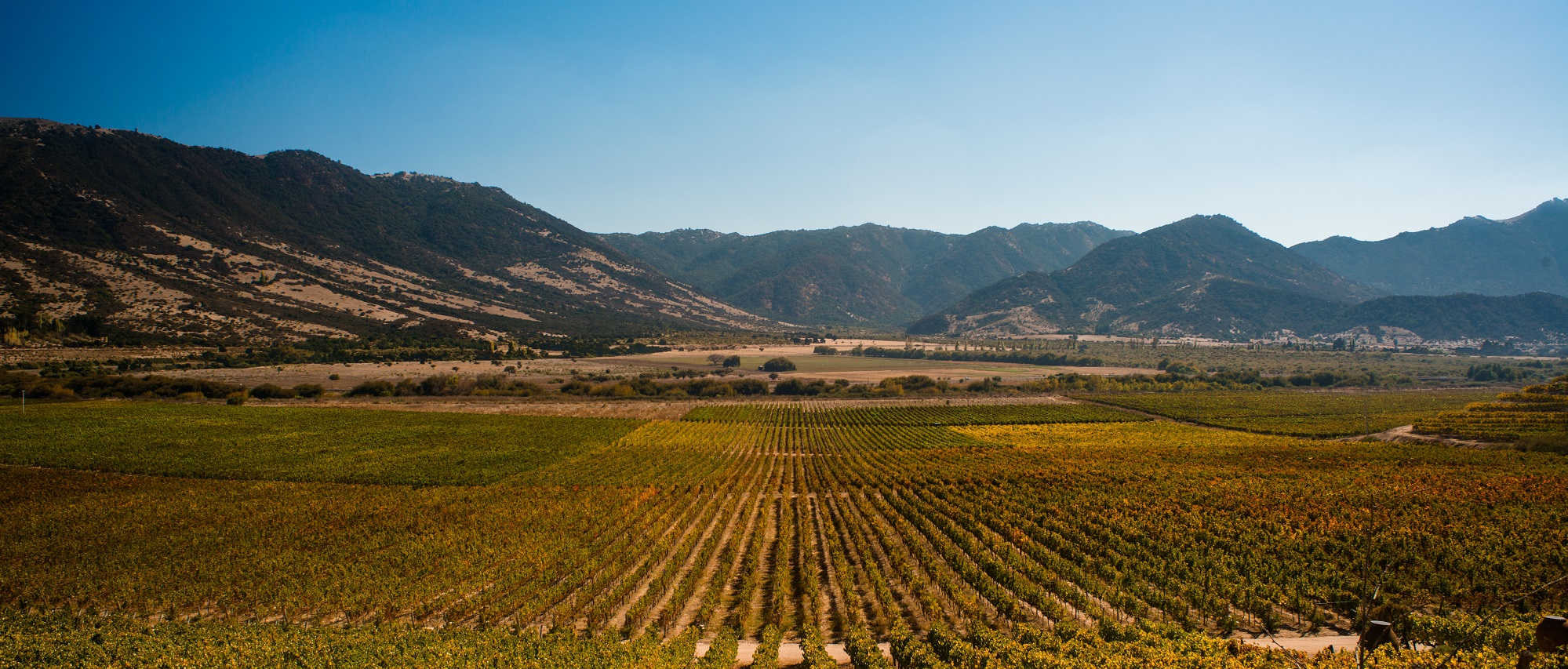
We work in a particular part of the Maule, closer to the coast, in the Coastal Range mountains. South America has two mountain ranges. The original mountains are the Coastal Range, 100 – 110 million years older than the Andes. Think of Argentina on the Andes facing East and Chile on the Coastal Range facing East.
For me, the decomposed granite and schist of these mountains are the treasure of the Maule, Itata and BioBio alongside their old vines. We produce wines of 12 – 12.5 alcohol naturally. They are terrific to enjoy over lunch and return to the office. Our top-shelf Cru Truquilemu typically has 12.7 – 12.8 alcohol. It took some getting used to for many tasters in Chile and abroad.
Apart from the splendid Carignan, which other varieties really thrive here?
Pais, Garnacha, Semillon and Malbec. Remember that Malbec first came to South America through the port of Concepcion and was planted in San Rosendo. We have a Malbec that is only 132 km from San Rosendo.
There are also Criolla varieties like San Francisco. San Francisco comes from the crossing of Listen Prieto and Moscatel, which came from Europe. Note: Criolla refers to grapes born of crossing varieties once they are in the Americas. It is a tragic misnomer on the part of the Argentines to have used this name for the Listen Prieto in Argentina. As more DNA analysis is done and we discover more unique Criolla crossings like San Francisco, we are selling ourselves short.
Have you been adversely impacted by climate change in the region, and how have you managed the fallout?
The effect of climate change is very complex. That is not a way of saying it is not real. We have had more, not less, water over the past couple of years— sometimes flooding. This is because the dew point is changing, and what once fell as snow in the Andes can now fall as rain all at once. Think of snow in the mountains like a battery that charges up in winter and then gives back [water] over the long summer as it melts. With so much water falling during the winter, we must adapt farming techniques to take better advantage. We should be planting vineyards in key lines and not in straight rows. Straight was simpler for tractors and mechanization, but modern tractors can drive in curves! We are working to adapt a few old vineyards to keyline design, maximizing the use of existing plants while strategically layering additional vegetation to enhance biodiversity and soil health. It is slow work.
Maule Wine Region Guide
Introduction
Unlike Maipo, the vineyards of Maule in the Valle Central (Chile) have no established pedigree of quality winemaking. First planted to vines in the 1600s, Maule was transformed into Chile’s leading producer of bulk wine by wealthy landowners in the 20th century, delivering gigantic crops of Pais and other less-than-noble red varieties. In a direct parallel to the development of San Juan across the border, Maule’s reputation was (almost) irrevocably destroyed by the gallons of plonk exported in the 1900s.
Not that Maule’s climate – and topography – has much in common with central Argentina. Indeed, Maule receives far more rainfall than San Juan, so much so that it is possible to dry farm grapes here, including a growing volume of old vine Carignan and exceptional Cabernet Sauvignon. Its modern transformation began 25 years ago, lifted by the pioneering work of Barbara Banke – the owner of Kendall-Jackson wines – and Miguel Torres. In 2024, the demand for cheap and cheerful wine has not yet subsided – large companies continue to produce anonymous blends from high-yielding vines. Yet a new generation is now beginning to focus on raising quality, inspired by the success of their Argentine neighbors.
Geography and terroir
The southernmost vineyard of the expansive Central Valley, Maule, is a very large and complex region. Much of the vignoble (over 50,000 hectares under vine) was traditionally dedicated to bulk wine production, dominated by Carmenere, Malbec, Cabernet Sauvignon, and Pais. Known as Mission in California and Criolla Chica in Argentina, genetic tests have discovered that Pais is none other than Listán Prieto. This ancient variety was taken from the arid plains of Castilla La Mancha in mainland Spain, where it has since become extinct.
However, Pais continues to thrive in the fertile soils of Chile’s Valle Central – it remains one of South America’s most robust grape varieties. Flexible, unfussy, drought-resistant, and easy to grow, it is no wonder that the first settlers planted great swathes of Pais across the Chilean landscape.
Today, it has been overshadowed by first-division Bordeaux grapes, albeit some 15,000 hectares are still cultivated in the country.
Nevertheless, if the yield is not controlled (Pais is naturally vigorous), the resulting wine can be insipid: low in acid and high in sugar. Fortunately, Miguel Torres Jr has demonstrated that this maligned European import can make very drinkable vino. At the same time, natural wine producers have also developed a bit of a crush on the grape. These unlikely allies continue to show Pais in a whole new light.
Ambitious winegrowers, meanwhile, are increasingly able to survive without selling large crops to the major companies, allowing them to focus on lower yields and higher quality. There is a great deal of untapped potential in Maule—volcanic soils and delicate bush vines, for example.
Yet the region is the largest in the Central Valley, bordered by Curicó to the north and Bío Bío in the south. Spanning over 95 kilometers, this expansive region lies approximately 290 kilometers south of Chile’s capital, Santiago. In this stunning landscape lies a great variety of terroirs and mesoclimates, including vineyards planted in the Andean foothills and plantations on low-lying valley terrain. As elsewhere, the secret is to avoid the richly fertile colluvial and alluvial soils, where generous harvests are all too easy to obtain.
According to Wines of Chile:
“Unlike many other growing regions in Chile, the Maule (Mow-leh )Valley has no maritime influence but relies on the cold winds blowing down from the Andes at night. This big diurnal temperature shift modifies the area’s Mediterranean climate, enabling slower ripening. Maule’s wines run the gamut – from easy-drinking, more market-driven wines made from fruit grown on the flatter, fertile valley floor to fascinating, ‘geek appeal’ bottlings.
“Around the town of Linares, sandy soils produce elegant wines. And from the coolest areas in Alto Maule, Sauvignon Blanc and Pinot Noir are turned into award-winning wines. New vineyards are also springing up along the area’s Pacific coast.“
This is one of Maule’s greatest advantages. Indeed, the valley receives twice the annual rainfall of Santiago, most of which occurs during winter, greatly reducing the risk of rot and fungal diseases in the spring and summer. A cooler macroclimate, allied to intense sunlight, can produce wines of elegance and finesse, with sugar, acid, and tannin in perfect balance. This is partly due to altitude and partly a concomitant of the Maule River’s cooling influence, which is responsible for depositing silt, clay, and sand particles on the valley floor.
However, Maule also has outcrops of high-potential granite, red clay, and gravel. Most, if not all, of the region’s best wines are made from climats planted on the higher slopes, where diurnal temperature variation and free-draining soils yield richly fruity varietal wines.
Winemaking and regional classifications
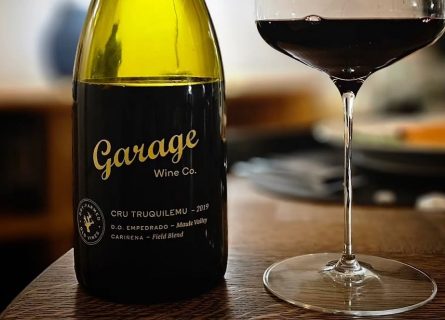
Maule’s viticultural output covers both extremes, from bush vine Carignan gently matured in old wood by the team at Garage Wine Co. to high-volume dross that is best forgotten. The former will cost over $80 per bottle, while the latter can sell for less than $3 ex-cellar. But, while profit is ultimately king, we know what you’d prefer to read about!
Founded by Derek Mossman Knapp, Pilar Miranda, and Alvaro Peña in 2003, Garage Wine Co represents the best aspects of Maule’s somewhat fragmented wine culture. Sourcing berries from “a series of individual parcels, small lots/bottlings of 8 -22 barrels that include a series of dry-farmed field-blends of Carignan, Garnacha, Monastrell, País, Cinsault and Cabernet Franc grown on pre-phylloxera rootstock,” it produces a broad range of exceptional styles. From its humble origins as a small-scale project – vintages were literally made in Derek’s garage – the firm has become one of Chile’s most impressive producers. It has won the respect of sommeliers and buyers worldwide, seduced by the immense depth and concentration that Peña and Knapp manage to coax out of these precious old vines.
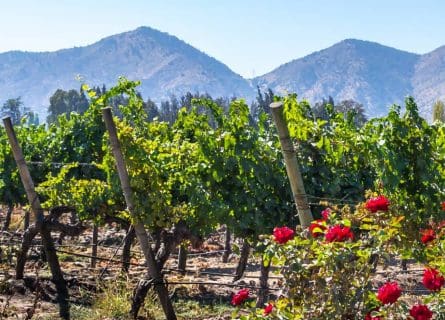
Of course, the team will insist that most blood and sweat occur in the vineyard. According to the owners: “The vineyards are on the old Coastal Range of mountains closer to the Pacific — Chile’s other mountains. These are older and cooled more slowly, so they have granitic soils, many with intrusions and cracks for roots to get deep down into.
“When GWCo speaks of the provenance of our wines however we mean more than just the geology of the terroir. This is a good start, but we are convinced the farming practices that have evolved over generations have as much to do with the wines’ personalities as the soils.”
Equally, we should not downplay the role of oenology in revealing – and accentuating – the nuances that flow from Maule’s soils, vines, and topography. Employing a minimum intervention philosophy, every fermentation at the winery takes place without adding chemical and harmful inputs, relying on wild yeast strains to kick-start the vinification in the fall.
One of Maule’s most outstanding red wines is Cru Truquilemu, a very special blend of Syrah and Carignan that is the jewel in Knapp’s crown. It is made with understatement and panache, incorporating a percentage of stems in the fermentation to add much-desired weight. This is pretty standard practice in the Rhône and Burgundy: winemakers argue that stems help to regulate fermentation temperature while enhancing structure and complexity. In this case, a mixture of whole clusters and crushed berries are used, vinified in open-top lagars (large vats) with indigenous yeasts.
Manual punch down is employed to gently extract flavor, color, and tannin from the grape skins, while lignified stems are incorporated to avoid carbonic maceration occurring in the intact fruit. A relatively cool fermentation encourages primary fruit aromas and flavors to emerge before malolactic charts its leisurely path over 11 months. Finally, the wine is matured in “Nadalie Noisette Toast barrels” over two winters – Garage Wine Co never ages in new barrique.
The results in bottle are a testament to Knapp and Miranda’s founding philosophy: authentic wines that are (largely) made in the vineyard but nonetheless reflect the company’s emphasis on unintrusive, hands-off cellar work. Meanwhile, the legendary Miguel Torres Jr continues investing in Pinot Noir vineyards in the Empedrado DO, one of Maule’s up-and-coming terroirs found to the southwest of Talca. The first vintages have shown enormous potential – a one-day rival to Aconcagua and the cool-climate styles of Casablanca. The future of premium winemaking is indeed looking very bright.
Facts & Figures
-
Key wine styles
- Full-bodied red and white wines
- a growing volume of sparkling
-
Appellation structure
- DOs Maule Valley, Empedrado
-
Hectares under vine
50,000
-
Average annual production
376,762,802 liters per annum (Curicó and Maule)
-
Approximate number of producers
31
Exclusive Expert Insights
Key Grape Varietals
-
White grape
Chardonnay
Chardonnay is a green-skinned grape varietal native to the Burgundy wine region in France and one of the most popular varieties worldwide. View grape -
White grape
Muscat
Muscat blanc is a white wine grape varietal popular in the Muscat d'Alsace, Moscato d'Asti and Beaumes-de-Venise regions. View grape -
White grape
Pinot Gris
Pinot Gris is a white-wine grape variety originally from Burgundy. It is thought to be a mutant clone of Pinot Noir. View grape -
White grape
Sauvignon Blanc
The sauvignon blanc grape varietal, originally from the Bordeaux region of France, is now one of the world's most loved white varieties. View grape -
White grape Sauvignon Gris
Sauvignon Gris is a pink-berried mutation of Sauvignon Blanc, originally likely from Bordeaux but now also prominent in Chile. It is a relatively obscure grape, making up only... -
White grape
Semillon
Explore the allure of the Semillon grape & its legendary connection to Sauternes. Unveil the history & flavors of this captivating varietal. Cheers! View grape -
White grape
Riesling
Discover Riesling's charm, a white grape from Germany's Rhine region, cherished in Alsace, France. Unveil its secrets and delights View grape -
White grape
Viognier
Viognier comes from the northern Rhône valley AOC of Condrieu and is where its most famous white wines are produced. View grape -
Red grape
Cabernet Sauvignon
Learn what Cabernet Sauvignon tastes like, where it grows best, why it matters in Bordeaux, and how to pair and serve this age-worthy red grape. View grape -
Red grape
Cabernet Franc
Cabernet Franc is particularly important on Bordeaux’s Right Bank, bringing perfume, freshness and structure to Merlot-led blends. View grape -
Red grape Carmenere
Carménère is a red wine grape from Bordeaux, France, once used for blending but is now mostly grown in Chile. Named for its crimson leaves in autumn, it's... -
Red grape
Merlot
Merlot is the most cultivated grape in Bordeaux and closely related to Cabernet Franc View grape -
Red grape
Malbec
Delve into Malbec, a dark, small grape native to France, cherished for its thick skin and exceptional flavors. 🍇🍷 View grape -
Red grape Pais
-
Red grape
Pinot Noir
Pinot Noir is one of the world’s great red wine grapes. Learn its flavors, food pairings, key regions, Burgundy styles, Champagne role, and why it is so difficult... View grape -
Red grape
Syrah
Discover Syrah, from Northern Rhône classics to Shiraz, with flavor profile, regions, aging potential, and food pairings. View grape
Maule gastronomy
Ideally situated for exploring the cellar doors and restaurants of the Maule Valley, the small city of Talca is one of Chile’s less captivating urban areas. Yet it offers some fascinating history – Chile’s 1818 Declaration of Independence was signed here – and a good number of atmospheric dining venues and bars. In convivial surroundings, residents and tourists sip Maule Carignan and feast upon lamb brochettes, ribs, smoked trout (fresh from the river) and abadejo a pil pil (pollock in garlic sauce)—delicious, hearty, and honest local fare.
Further Reading
The Best Chilean Icon Wines: 10 Bottles to Know
April 23, 2020
Discover 10 of Chile’s leading icon wines, from Seña and Almaviva to Don Melchor and Viñedo Chadwick, with tasting notes, regions and key details.
Read article
Chilean Malbec: A Guide to Regions, Taste, and Wines to Try
December 5, 2017
Explore Chilean Malbec, from its Bordeaux origins to Chile’s best regions, flavor profile, food pairings, and standout producers.
Read articleAuthor