Cellar Tours Insight
— Since 2003, Cellar Tours has planned private wine journeys through the world’s leading wine regions, pairing tailor-made itineraries with VIP winery visits, fine dining, and expert regional guidance.
Winery Overview
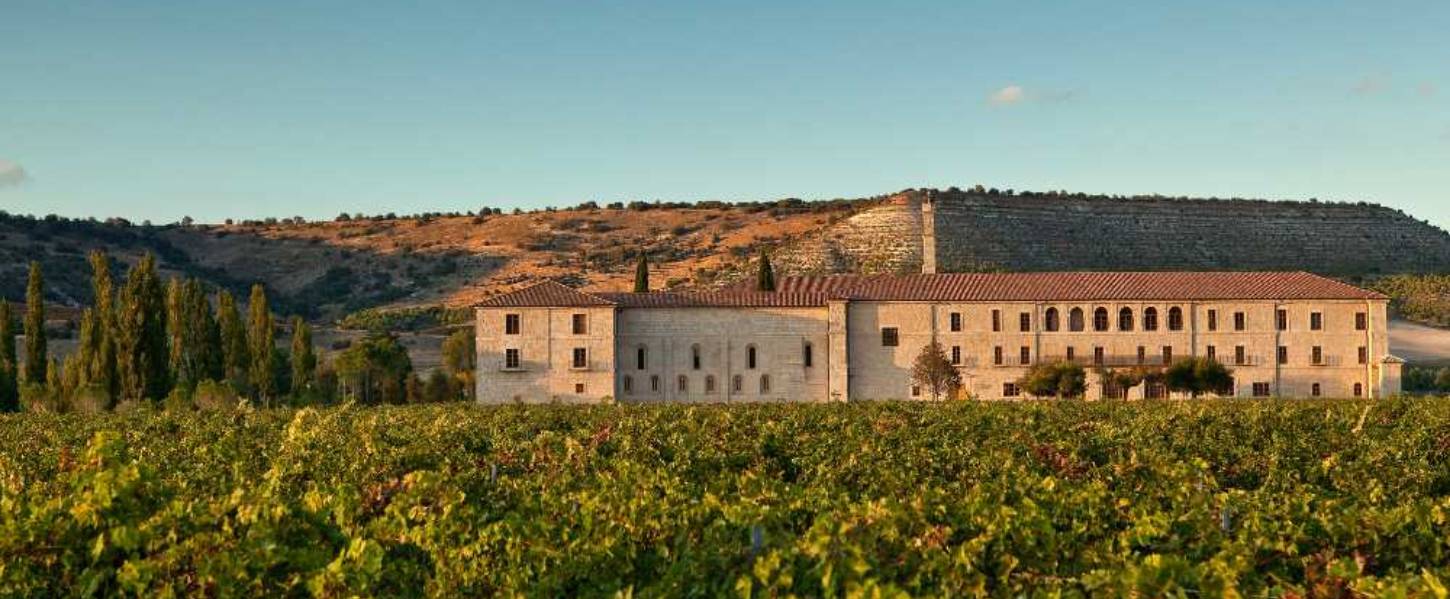
The winery is located in a monastery founded in 1145 by the aristocratic Doña Mayor. She was the very wealthy daughter of Count Ansúrez, Lord of Valladolid (the city at the heart of the Ribera del Duero wine region). The Abbey was one of many monastery fortresses built during the Christian “Reconquest” in the region of Castile (which means “castle”). The grounds around the Abadia Retuerta property were donated to the church by the aristocratic owners. However, they left “terras et vineas” (land and vines) to the French-based order of St. Norbert, which began this estate’s history of producing wine.
Fast forward to the 21st century, Abadía Retuerta entered a new chapter under the ownership of the esteemed Swiss pharmaceutical group. First, Novartis purchased 210 hectares of vineyards in 1988. Then, in 1991, under the direction of Pascal Debeck, a French winemaker, they began replanting the vines, and in 1996, they produced their first wine.
Also, they painstakingly restored the monastery to its former glory, transforming it into a luxurious hotel that offers an unparalleled blend of refined accommodations and immersive cultural experiences. Amidst this captivating backdrop, Abadia Retuerta continues to produce wines that captivate the senses and push the boundaries of winemaking artistry.
Its rise to prominence reached its pinnacle in 2005 when it earned the esteemed title of “Best Red Wine of the World” at the prestigious International Wine Challenge in London. This accolade catapulted Abadía Retuerta into the global spotlight and sparked an unprecedented demand for its exceptional wines, resulting in frequent sell-outs.
Pascal remains involved with Abadía Retuerta as a consultant; however, the day-to-day operations are managed by Ángel Anocíbar, who has successfully restored the estate’s former winemaking excellence.
Even though Tempranillo reigns supreme, the slopes below the Douro River are also home to carefully cultivated French varieties like Cabernet Sauvignon, Merlot, Syrah, and Petit Verdot. The winery employs small crane-operated tanks and treats each pago (parcel) separately, guided by gravity during vinification. French oak is used exclusively for aging. The winery also employs a unique system of fans and gas heaters in the vineyards to ensure the spring frost doesn’t damage the vines. When the temperature drops, the system automatically starts. The fans circulate warm air generated by the gas heaters over the vines, reducing the risk of damage from the cold.
Today, with their meticulous attention to detail, unwavering commitment to quality, and boundless ambition, Abadía Retuerta crafts an exquisite range of wines that have garnered resounding acclaim in the wine press. Revered as “modern classics,” their wines seamlessly blend tradition and innovation, resulting in captivating expressions embodying Ribera del Duero’s unique terroir. Each bottle from Abadía Retuerta tells a story of craftsmanship, passion, and a profound respect for the rich heritage that permeates this extraordinary winery.
Explore the charm and history of Ribera del Duero wine tastings in Northern Spain. Discover the world-class winemaking and rugged landscapes that make this region unique.
Explore Albillo Mayor and Albillo Real in Arribes, Ribera del Duero, Madrid and Galicia, where each region gives these grapes a distinctive expression.
With a passion for food & drink that verges on the obsessive, wine writer James Lawrence has traveled the world in search of the perfect tipple. To date, nothing has surpassed the 1952 R. López de Heredia Viña Tondonia Rioja Reserva, tasted in the cobweb-filled cellars with owner María José. Meanwhile, James has written for a wide variety of publications, including The Telegraph, Decanter, Harpers Wine & Spirit, The Drinks Business, and Wine Business International. He lives in South Wales and returns to his former university city, Bilbao, as much as possible.
To provide the best experiences, we use technologies like cookies to store and/or access device information. Consenting to these technologies will allow us to process data such as browsing behavior or unique IDs on this site. Not consenting or withdrawing consent, may adversely affect certain features and functions.
Functional
Always active
The technical storage or access is strictly necessary for the legitimate purpose of enabling the use of a specific service explicitly requested by the subscriber or user, or for the sole purpose of carrying out the transmission of a communication over an electronic communications network.
Preferences
The technical storage or access is necessary for the legitimate purpose of storing preferences that are not requested by the subscriber or user.
Statistics
The technical storage or access that is used exclusively for statistical purposes.The technical storage or access that is used exclusively for anonymous statistical purposes. Without a subpoena, voluntary compliance on the part of your Internet Service Provider, or additional records from a third party, information stored or retrieved for this purpose alone cannot usually be used to identify you.
Marketing
The technical storage or access is required to create user profiles to send advertising, or to track the user on a website or across several websites for similar marketing purposes.