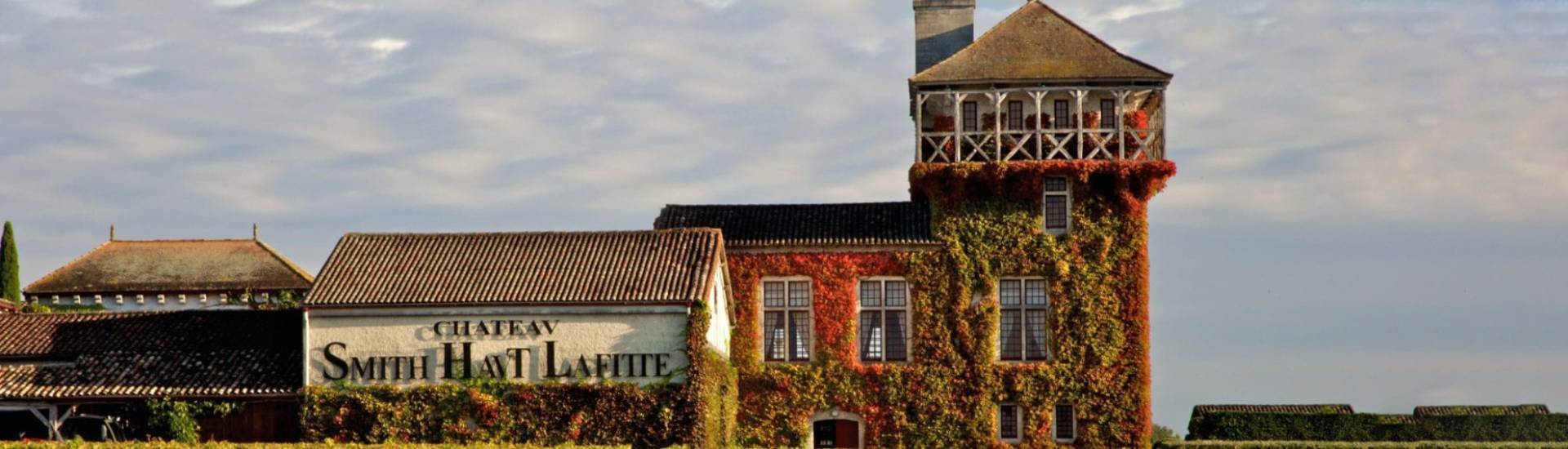
Château Smith Haut Lafitte Winery Guide
Winery Overview
Beautiful Château Smith Haut Lafitte is far more than simply a top-flight wine estate in Bordeaux. It symbolizes how passion and investment can transform a once-obscure property into a beacon of superlative winemaking and high-end wine tourism. Smith Haut Lafitte is now one of Pessac-Léognan’s benchmark estates, admired for red and white wines that combine concentration, polish, and Graves finesse. Unlike their compatriots further north in Médoc, white production is equally important to the growers in the Pessac-Léognan region south of Bordeaux; Smith Haut Lafitte’s white is widely regarded as one of the finest around. But as if excellent winemaking wasn’t enough, the estate also serves as a center of luxury tourism and gastronomy, home to La Grand’Vigne at Les Sources de Caudalie, one of Bordeaux’s leading Michelin-starred restaurants that attracts foodies from miles around on a delicious food-and-wine pilgrimage through this historic and very scenic region.
Vines were first planted south of Bordeaux by the Romans; wine has been made in Graves for far longer than in the Médoc. The property we know today as Smith Haut Lafitte was named after Georges Smith, one of the first owners of this magnificent Château. After Smith died, the estate, as is often the case in Bordeaux, passed through a succession of new owners until 1902, when it caught the eye of a major merchant house, Eschenauer. At first, the firm was unwilling to buy the Château outright, so they leased Smith Haut Lafitte for decades before finally deciding to take the plunge and buy it in 1958. They took good care of the estate for many years; however, its reputation and the wines remained sound rather than lauded. Smith Haut Lafitte’s true Renaissance came in 1991, when the Cathiard family bought it; the new owners, the late Daniel Cathiard and Florence Cathiard, brought entrepreneurial energy, investment, and ambition to the property, who knew how to elevate Smith Haut Lafitte to greatness. An exciting chapter in the estate’s history would begin.
Since taking ownership of the property in the 1990s, the Cathiards have invested unprecedented time and money in reinvigorating winemaking and installing a fine hotel and restaurant on the grounds. Of course, their priority was winemaking, and to that end, they renovated the winery and built a new barrel cellar. More recently, the cellar was renovated again in 2014, and a new Stealth Cellar was constructed – a unique building in Bordeaux – to reduce energy consumption. The project reflects the estate’s broader focus on lower-impact, precision-led winemaking. The family also sought out legendary wine consultants Michel Rolland and Stephane Derenoncourt, who helped raise Bordeaux’s standards to the highest level. However, this was only part of the Cathiards’ master plan. They set their sights on completely rebuilding the Château, which now serves as their primary home. They sought to bring an exciting new level of tourism to the region, which had traditionally ignored such endeavors. After discovering a disused mineral spring on their property, Florence Cathiard opened the Sources de Caudalie Spa and luxury hotel, featuring two award-winning restaurants and a line of prestigious beauty products.
Today, it’s hard not to lavish high praise on this shining example of how outsiders can transform a once humdrum Château. The hotel and restaurant spread the region’s renown. Still, more importantly, both the red and white wines are consistently superb, a testament to the expertise of technical director Fabien Teitgen. They remain exquisite, quintessentially refined for all their richness and concentration, and, yes, unmistakably Graves.
Château Smith Haut Lafitte can be included as part of a private Bordeaux itinerary with Cellar Tours, featuring expert-led tastings in Pessac-Léognan, Graves, and other landmark Bordeaux appellations.
Wines produced
-
Château Smith Haut Lafitte Rouge — Grand Vin
- Cabernet Franc
- Cabernet Sauvignon
- Merlot
- Petit Verdot
The estate’s flagship red Pessac-Léognan, usually Cabernet Sauvignon-led with Merlot, Cabernet Franc, and a small proportion of Petit Verdot. A structured, age-worthy Graves red, typically matured in French oak. -
Château Smith Haut Lafitte Blanc — Grand Vin
- Sauvignon Blanc
- Sauvignon Gris
- Semillon
A leading dry white Bordeaux, generally Sauvignon Blanc-dominant with Sémillon and Sauvignon Gris depending on the vintage. Barrel fermentation and oak aging give texture while preserving citrus, floral, and mineral notes. -
Les Hauts de Smith Rouge
The estate’s approachable red second wine, made from Bordeaux red varieties and designed for earlier drinking than the Grand Vin. -
Les Hauts de Smith Blanc
- Sauvignon Blanc
A fresh, barrel-influenced dry white, usually Sauvignon Blanc-focused, offering a more immediate expression of the estate’s white-wine style. -
Le Petit Haut Lafitte Rouge
- Cabernet Sauvignon
- Merlot
A companion/second-label red focused on earlier accessibility, generally built around Cabernet Sauvignon and Merlot. -
Les Hauts de Smith Blanc
- Sauvignon Blanc
A fresh, barrel-influenced dry white, usually Sauvignon Blanc-focused, offering citrus, stone-fruit, and mineral notes in a more accessible style.
Winery Contact Details
Château Smith Haut Lafitte
33650 Bordeaux Martillac
France
- Email [email protected]
- Tel (33) 0557 83 11 22
- Fax (33) 0557 83 11 21
- Website Visit website
Facts & Figures
-
Appellation
- AOC Pessac-Léognan
-
Founded
- Origins: 14th century
- named by George Smith in 1720
-
Area under Vine
78 hectares
-
Age of vines
38 years+
-
Oak barrel origin
- French
-
Winemaker
- Fabien Teitgen
-
Owner
- Cathiard family
-
Production
- Approximately 18,500 cases
-
Grape varietals
- Cabernet Sauvignon, Merlot, Cabernet Franc, Petit Verdot, Sauvignon Blanc, Sauvignon Gris, Semillon
Grape Varieties Used by the Winery
-
White grape
Sauvignon Blanc
The sauvignon blanc grape varietal, originally from the Bordeaux region of France, is now one of the world's most loved white varieties. View grape -
White grape -
White grape
Semillon
Explore the allure of the Semillon grape & its legendary connection to Sauternes. Unveil the history & flavors of this captivating varietal. Cheers! View grape -
Red grape
Cabernet Franc
Cabernet Franc is particularly important on Bordeaux’s Right Bank, bringing perfume, freshness and structure to Merlot-led blends. View grape -
Red grape
Cabernet Sauvignon
Learn what Cabernet Sauvignon tastes like, where it grows best, why it matters in Bordeaux, and how to pair and serve this age-worthy red grape. View grape -
Red grape
Merlot
Merlot is the most cultivated grape in Bordeaux and closely related to Cabernet Franc View grape -
Red grape
Petit Verdot
Petit Verdot is a full-bodied red wine grape varietal used in classic Bordeaux blends and originates in southwestern France View grape
Explore further
Continue Exploring France
Discover private journeys, the complete wine region guide, and expert stories from across France.
 21 tours
Country tours
Private Wine Tours in France
Unveiling France's Finest: Customized VIP Wine Tours and Gourmet Escapes
 1 day (ideal from Bordeaux)
Private tour
Private Wine Tour in the Médoc
A private full-day journey through the Médoc’s classified-growth château country from Bordeaux
 14 days
Private tour
14-Day Private Food & Wine Tour of France
Paris, Champagne, Burgundy, Lyon and Bordeaux in one grand French journey.
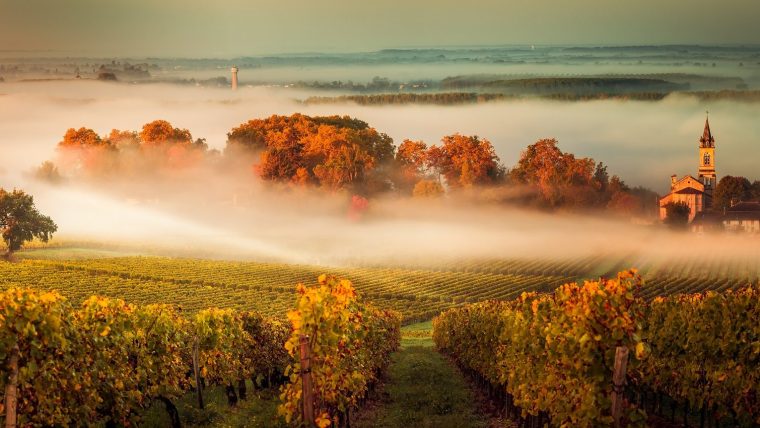
Wine regions
Best Wine Regions in France
Compare France’s leading wine regions by grapes, wine styles, scenery, best base and ideal stay
Explore regions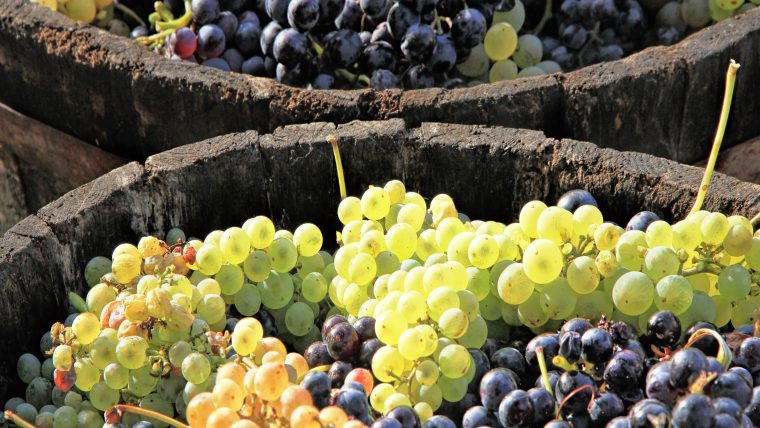
Article
French Grape Varietals
Explore France's exquisite grape varietals: from Bordeaux's Cabernet Sauvignon to Burgundy's Pinot Noir. Savor the diverse flavors of French wine! 🍷
Read article
Article
What Does Bordeaux First Growth Mean?
Explore Bordeaux First Growth: Prestigious wines, history, terroir & estates. Elevate your wine experience and plan your trip!
Read articleAuthor